Substrate inoculation
Introduce the fungus to well-decayed hardwood chips or thoroughly rotted leaf litter collected from a healthy, pesticide-free woodland to mimic its natural lignicolous habitat and improve establishment.

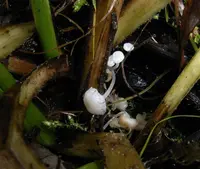
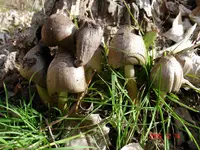
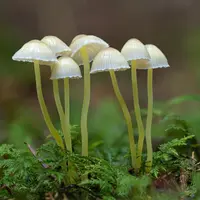
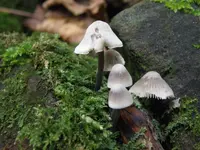
Hemimycena candida is a small saprotrophic fungus, not a true plant, known for its tiny white caps on slender, fragile stems. It typically appears on decaying wood, leaf litter, or mossy substrates in damp forests.
This species is found in temperate regions, including parts of Europe and North America, where it helps decompose organic matter. Its delicate structure and need for consistently cool, moist, shaded conditions make it challenging to cultivate intentionally, so information on how to care for Hemimycena candida at home is very limited.

Care Difficulty
Moderate Care

Light Preference
Shade

Water Requirements
Keep Soil Moist

Temperature Preference
Cool Climate

Hardiness Zone
Unknown

Soil Texture
Loamy, Peaty, Organic-rich

Soil pH
Acidic (5.5–6.5)

Soil Drainage
Moist but well-drained

Fertilization
Minimal (feed rarely)
Scan your plant to receive care tips personalized for your specific plant
Available on iOS and Android
This small woodland fungus prefers cool, shaded conditions with only brief, gentle sun exposure.
This saprophytic fungus depends on consistently moist, but not waterlogged, organic material rather than direct watering.
This fungus develops best in cool, moist conditions typical of shaded woodland ground.
This tiny saprotrophic fungus does not have specific humidity requirements in typical outdoor woodland conditions.
This species grows naturally on very decayed wood rather than true soil, so replicating a soft, woody substrate is more useful than adjusting garden soil.
This fungus is not well suited to conventional container growing, since it depends on colonizing naturally decaying wood in situ rather than pot substrates.
This delicate saprophytic fungus typically gains all required nutrients from decaying wood or leaf litter and does not need added fertilizer.
Hemimycena candida does not require pruning in the horticultural sense, since it is a small, short-lived fungus rather than a garden plant.
In cultivation, this fungus is managed by renewing its substrate rather than conventional repotting or transplanting.
Propagation focuses on spreading mycelium rather than producing new plants in the usual horticultural sense.
In natural settings this fungus needs no special winter care, as the mycelium survives within protected decaying wood or litter.

Plant Health Check
Not sure what's wrong with your plant? Check your plant's health inside the app.
This fungus produces very small, delicate white caps, often only a few millimeters wide, that can make them look like scattered sugar grains on decaying wood or plant debris.
It lives as a saprotroph, meaning it feeds on dead organic matter such as fallen leaves, twigs, and small woody debris, helping to break them down and recycle nutrients in forest ecosystems.
Despite being easily missed due to its size, it has a broad distribution across temperate regions and is regularly recorded in Europe and parts of North America on damp forest floor litter.
This tiny white mushroom is not considered edible. It is too small, insubstantial, and poorly studied for food use. For safety, it should be treated as inedible and left for observation rather than consumption.
Keep your plants happy and healthy with plant identification, disease detection, and easy care guidance.