Seasonal division timing
Lift and divide clumps every 3–4 years in late winter or very early spring, just as new shoots appear, to prevent congestion and maintain strong flowering stems.

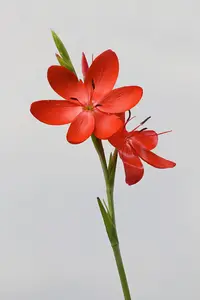
The scarlet river lily, Hesperantha coccinea, is a clump-forming, rhizomatous perennial grown for its bright late-season flowers. It produces slender, upright stems with narrow, grass-like leaves and vivid red, pink, or occasionally white star-shaped blooms. Flowers often appear in succession, extending interest into autumn.
This species is native to moist stream banks and wet meadows in South Africa, so it naturally prefers cool, damp conditions and reliably moist soil. It is considered relatively easy to grow where winters are mild and soil does not dry out for long periods. Gardeners who learn how to care for scarlet river lily often find it a dependable choice for damp borders, pond edges, or moisture-retentive containers.

Care Difficulty
Moderate Care

Light Preference
Full Sun

Water Requirements
Keep Soil Moist

Temperature Preference
Cool Climate

Hardiness Zone
6–9

Soil Texture
Loamy, Clay, Organic-rich

Soil pH
Slightly acidic (6.5–7.0), Neutral (7.0)

Soil Drainage
Moist but well-drained

Fertilization
Light (every 4–6 weeks)
Scan your plant to receive care tips personalized for your specific plant
Available on iOS and Android
This species prefers bright conditions with direct sun during the cooler parts of the day.
This plant performs best in consistently moist, but not stagnant, soil.
This plant prefers mild, cool-summer conditions with protection from hard frost.
This species handles typical home humidity but benefits from slightly moist air in heated or air-conditioned rooms.
Hesperantha coccinea prefers moist, well-aerated soil that never stays waterlogged.
This species is suitable for containers, especially where garden soil is too dry or poorly drained.
Nutrient needs for scarlet river lily are moderate, with most benefit during the active growing season.
Pruning Hesperantha coccinea is straightforward and mainly focused on tidiness and flowering performance.
This species is more often transplanted in garden beds than repotted, as clumps gradually expand over time.
Propagation of Hesperantha coccinea is commonly done by division, with seeds used less often for home growing.
Winter care needs depend on climate, as this plant is moderately hardy but sensitive to severe, prolonged freezes.

Plant Health Check
Not sure what's wrong with your plant? Check your plant's health inside the app.
The flowers typically open more fully in late afternoon and evening, which is reflected in the former genus name Schizostylis, and they can close partially in dull or cold weather to protect reproductive parts from damage.
In its native range in South Africa and Lesotho, this species grows along stream margins and damp grasslands, often experiencing fluctuating water levels yet tolerating short dry spells through its fibrous, rhizomatous root system.
Unlike many South African ornamentals, this plant can tolerate light frosts and survive outdoors in relatively cool temperate regions, especially when soil is moisture-retentive and winter drainage is good.

Garden selections and hybrids derived from this species have been introduced widely in the UK and other cool climates, where their late-season flowering (often from late summer into autumn) provides one of the few bright scarlet displays in ornamental borders when many other perennials are already fading.
Lack of flowers often comes from insufficient light, overcrowded clumps, or nutrient imbalance. Divide congested rhizomes every few years, provide a sunny position, and avoid very high‑nitrogen fertilizer, which promotes leaves instead of flowers.
Keep your plants happy and healthy with plant identification, disease detection, and easy care guidance.