Hesperomyces virescens Care

Hesperomyces virescens

About Hesperomyces virescens

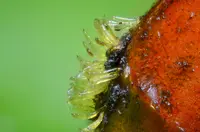
Hesperomyces virescens is not a typical houseplant but a tiny parasitic fungus that grows on the outer surface of certain insects, especially lady beetles. It forms minute, club-shaped yellow to greenish structures that are visible only at close range, anchored directly to the host’s body.

This species occurs worldwide, mainly wherever its beetle hosts live, including gardens, agricultural fields, and natural habitats. It does not grow in soil or pots and cannot be cultivated like normal plants, so information on how to care for Hesperomyces virescens mainly concerns laboratory or research settings rather than home culture.

Main Plant Requirements

Care Difficulty

Moderate Care

Light Preference

Partial Shade

Water Requirements

Moderate Water

Temperature Preference

Warm Climate

Hardiness Zone

Unknown

Soil Texture

Loamy

Soil pH

Slightly acidic (6.5–7.0)

Soil Drainage

Well-drained

Fertilization

Minimal (feed rarely)

Get Personalized Care Plan

Scan your plant to receive care tips personalized for your specific plant

Available on iOS and Android

How to Care for the Hesperomyces virescens

This microscopic fungus lives on the bodies of lady beetles, so its light needs follow the beetle’s habitat rather than typical plant requirements.

  • Aim for outdoor conditions with 4–8 hours of bright, indirect daylight where host beetles naturally occur, such as field edges, gardens, or hedgerows.
  • Provide partial shade during intense midday sun, favoring morning sun and filtered afternoon light to avoid overheating the beetles that carry Hesperomyces virescens.
  • In summer, reduce exposure to harsh, reflective surfaces; in cooler seasons, choose sites with open sky so beetles receive enough light for normal activity.

This species is an external fungus on lady beetles, so moisture conditions must suit the insect host and surrounding habitat, not a potted plant.

  • Focus on the beetle’s environment rather than direct watering; avoid spraying beetles heavily, since prolonged surface moisture can stress them and alter fungal balance.
  • Maintain habitats with moderate soil moisture and good drainage, such as garden beds or field margins that neither stay waterlogged nor bone-dry for long periods.
  • In hot, dry periods, light habitat irrigation that moistens the upper 2–5 cm of soil supports vegetation and microclimate stability without drenching insects directly.

This fungus persists on lady beetles across a broad outdoor temperature range, but extreme cold or heat can reduce host survival and thus its presence.

  • Optimal activity for many host beetles occurs around 65–80°F (18–27°C), where normal movement and mating provide opportunities for the fungus to spread.
  • Short exposures near 40°F (4°C) are tolerated by overwintering beetles, but hard frosts below 32°F (0°C) for extended periods can sharply reduce host numbers.
  • Sustained temperatures above 90°F (32°C), especially with low humidity, may stress beetles; provide access to shaded vegetation and cooler refuges to buffer extremes.

Humidity is not a relevant care factor for Hesperomyces virescens, which lives externally on insect hosts rather than in a typical plant-growing environment.

Soil preparation is not applicable, as this fungus develops on the cuticle of live insects instead of rooting in a substrate.

  • Avoid attempting to culture it in potting mixes, compost, or garden soil, as its biology requires a living host surface.
  • Laboratory growth requires specialized media and controlled conditions, not standard horticultural substrates used for terrestrial plants.
  • Hesperomyces virescens care instructions in hobby settings focus on managing affected insect hosts, not altering any soil environment.

This species is not suitable for container growing because it does not form roots or live in pots, but instead parasitizes insects.

This microscopic fungus is an obligate ectoparasite on ladybird beetles and does not require intentional fertilization in cultivation.

Pruning is not a relevant care practice for Hesperomyces virescens because it forms tiny thalli directly on insect hosts rather than on roots, stems, or leaves.

Transplanting focuses on the insect host, since this fungus lives attached to adult beetles rather than in soil or pots.

  • Repotting is not applicable, because the organism does not grow in containers or substrates like typical plants.
  • Management instead involves controlling or relocating the beetle population that carries the fungus.
  • If beetles are kept in culture, maintain their housing hygienically and avoid overcrowding to limit fungal spread.
  • Any movement of hosts should be gentle to reduce stress and maintain stable temperature and humidity.

Propagation of this species is highly specialized, relying on direct spore transfer between beetles during contact or mating and not on standard plant propagation methods.

Specific winter care is usually unnecessary, as this fungus overwinters on or with its beetle hosts rather than in soil or as a free-living plant.

Care Tips

Host inspection routine

Use a hand lens (10–20×) every 1–2 weeks to inspect ladybird beetle hosts, checking legs, elytra edges, and abdominal segments for early-stage fungal thalli so you can track the parasite load accurately over time.

Controlled host density

If maintaining colonies of ladybird beetles in culture, keep population density moderate and separate heavily colonized individuals to reduce stress, cannibalism, and uncontrolled spread of the fungus among hosts.

Stable microclimate chamber

House infected beetles in a small, well-ventilated container or insect rearing chamber with stable temperature and airflow to avoid condensation, which can promote secondary pathogens that may damage both beetles and fungal structures.

Gentle handling protocol

When manipulating beetles for study or documentation, chill them briefly in a refrigerator (5–10 min at 40–50°F) to slow movement, then handle with a fine, soft brush to avoid dislodging mature fungal thalli.

Microscopy-friendly mounting

For detailed observation of Hesperomyces virescens care instructions in a lab context, transfer single thalli from dead hosts onto permanent microscope slides using fine needles and a drop of mounting medium, labeling host species, date, and collection site for future reference.

Common Pests and Diseases

host lady beetle stress

This condition appears when the lady beetle host is weakened by heavy fungal load, poor nutrition, or environmental stress. Symptoms include reduced movement, shortened lifespan, and higher mortality in infected beetle populations.

Solution

Reduce stress on captive or cultured lady beetles by providing varied, pesticide‑free prey, stable temperatures around 68–77°F, moderate humidity, and shelter. Regularly cull heavily infected or non‑viable beetles to lower fungal pressure and support more balanced Hesperomyces virescens care instructions in managed colonies.

secondary bacterial infection

This disease can develop when tiny skin wounds created by fungal thalli on the beetle surface allow bacteria to enter. Symptoms include darkened patches, softening of tissues, and faster death of already infected beetles.

Solution

Maintain clean rearing containers, remove dead beetles daily, and avoid overcrowding so surfaces dry quickly between cleanings. If working with research or culture colonies, separate severely affected beetles and disinfect housing equipment with hot water and mild detergent between batches.

predatory mite attack

These insects, or more precisely small arachnids, sometimes feed on surface fungi and damaged areas of lady beetles, disturbing or consuming fungal thalli. Symptoms include patchy loss of thalli and visible tiny, fast‑moving mites on beetles or container walls.

Solution

Inspect culture containers regularly and replace heavily contaminated substrate or paper linings. Use fine mesh lids, avoid introducing material from outdoor mite‑rich environments, and, if needed in research settings, move valuable beetles to freshly cleaned containers to preserve stable fungal colonies.

entomopathogenic fungi

This disease group includes fungi such as Beauveria and Metarhizium that infect lady beetles directly, sometimes competing with or overwhelming existing Hesperomyces thalli. Symptoms include white or greenish fungal growth covering dead beetles and rapid collapse of small host groups.

Solution

Lower humidity peaks by improving ventilation, avoid constant condensation on container walls, and remove any beetles that show fuzzy external growth at once. Discard and replace all porous materials (paper, bark, fabric) from affected setups and clean hard surfaces thoroughly before reintroducing new hosts.

Interesting Facts

Obligate insect parasite

This fungus is an obligate ectoparasite of adult lady beetles, growing on the outside of their bodies and tapping nutrients from the host’s cuticle and body fluids without penetrating deep into internal organs.

Host specificity patterns

Although described originally from the harlequin ladybird Harmonia axyridis, it can infect several coccinellid (lady beetle) species, with distinct genetic lineages often associated with different hosts.

Sexual structures exposed

Its reproductive bodies, called thalli, are fully exposed on the beetle surface and produce sexual spores (ascospores) directly to the surrounding environment rather than from within a typical mushroom or mold-like structure.

Botan icon

Did you know?

Hesperomyces virescens is widely used as a model organism to study Laboulbeniales fungi, because it can be tracked on living beetle populations in the field, allowing researchers to investigate parasite transmission, host behavior, and the ecological impacts of microscopic fungal parasites in real time.

FAQs about Hesperomyces virescens

This fungus lives externally on insects, mainly lady beetles, and does not infect mammals, birds, or reptiles. Current evidence shows no toxicity to humans or pets through normal contact, since it does not colonize vertebrate tissues.

Grow Healthy Plants with Botan Care

Keep your plants happy and healthy with plant identification, disease detection, and easy care guidance.

Botan plant care app — identify plants on mobile

Explore More Plants