Dead Moll's Fingers Care (Xylaria longipes)

Dead Moll's Fingers

About Dead Moll's Fingers

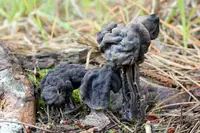
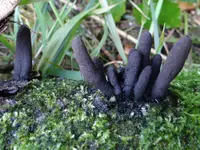
Dead Moll's Fingers (Xylaria longipes) is a wood-decay fungus, not a leafy houseplant. It forms short, club-shaped black fruiting bodies that resemble charred fingers. These usually appear on fallen hardwood branches, especially beech and maple, in temperate forests of Europe and North America.

It plays an important role in breaking down dead wood and recycling nutrients in forest ecosystems. In cultivation it is uncommon and better suited to experienced growers, since it needs consistently moist, decaying wood and stable conditions. Those who wish to learn how to care for Dead Moll's Fingers should focus on mimicking its cool, shaded woodland habitat with good airflow and gentle, even moisture.

Main Plant Requirements

Care Difficulty

Moderate Care

Light Preference

Shade

Water Requirements

Keep Soil Moist

Temperature Preference

Cool Climate

Hardiness Zone

Unknown

Soil Texture

Loamy, Organic-rich

Soil pH

Acidic (5.5–6.5)

Soil Drainage

Moist but well-drained

Fertilization

Minimal (feed rarely)

Get Personalized Care Plan

Scan your plant to receive care tips personalized for your specific plant

Available on iOS and Android

How to Care for the Dead Moll's Fingers

This wood-decay fungus prefers low, forest-like light rather than direct open sun.

  • Provide full shade to dappled shade, with at most 1–2 hours of weak early-morning sun; avoid direct midday or afternoon sun to prevent drying of the substrate.
  • Mimic a woodland floor by placing Dead Moll's Fingers under tree canopies, logs, or leaf litter where light is filtered through foliage.
  • In summer, protect fruiting bodies from intense light and drying winds; in winter, reduced day length is acceptable as long as the woody substrate remains moist.

Moist, not waterlogged, wood is the key requirement for this fungus rather than a standard soil-watering routine.

  • Keep the host wood or woody mulch consistently damp, allowing only the outer 1–2 cm to dry slightly before rewetting, especially during warm, dry periods.
  • Use well-drained but moisture-retentive substrates; standing water or sour-smelling, slimy wood indicates overwatering and poor aeration.
  • If Xylaria longipes patches shrink, disappear quickly, or the substrate cracks, increase moisture with deep, infrequent soakings rather than light daily sprinkling.

This species thrives in cool to mild woodland conditions and tolerates moderate seasonal variation.

  • Optimal activity usually occurs around 50–75°F (10–24°C), typical of shaded forest floors in spring and fall.
  • Fruiting bodies tolerate brief drops near 25–30°F (-4– -1°C), but repeated hard freezes or exposed, icy conditions can damage visible structures.
  • Sustained heat above 85°F (29°C), especially with dry air and full sun, can halt fruiting; maintain shade and substrate moisture during hot spells to reduce stress.

This wood-decay fungus tolerates a broad humidity range but fruits best in consistently moist air.

  • Aim for 60–90% humidity around fruiting wood, mimicking damp woodland conditions.
  • Dry air slows or distorts fruiting bodies; tips may shrivel and surfaces crack.
  • Increase humidity by keeping colonized wood in a shaded, sheltered spot, using windbreaks or loose covers that trap moisture without sealing off fresh air.

Xylaria longipes develops on dead hardwood rather than true soil, so focus on substrate structure instead of standard potting mixes.

  • Use dense, undecayed hardwood logs or thick branches, avoiding soft, crumbly, or heavily rotted pieces that collapse quickly.
  • Keep the wood in contact with leaf litter or coarse, organic-rich debris to maintain moisture and mimic a forest floor microhabitat.
  • Avoid waterlogged ground or standing water under the wood, which encourages competing fungi and bacterial rot.
  • If placing wood over soil, choose a loose, well-drained, slightly acidic base layer of leaf mold, bark chips, and coarse compost to support gas exchange.

This species can be grown in containers only by housing inoculated hardwood inside a vessel rather than planting it in potting soil.

  • Choose a heavy, low, and wide container to keep the log stable as fruiting bodies emerge and shift weight distribution.
  • Raise the wood on small spacers inside the container so air can circulate underneath while moisture-retentive debris surrounds it.
  • Use a breathable container material such as unglazed clay or slatted wood to slow but not stop evaporation, preventing anaerobic conditions around the substrate.

Xylaria longipes grows as a saprophytic fungus on dead wood and does not benefit from conventional plant fertilization.

Pruning is not relevant for Xylaria longipes, as it is a wood-decaying fungus rather than a leafy plant or shrub.

Cultivation of Xylaria longipes in containers is uncommon, but moving colonized wood can be done with care.

  • Transplant only during mild, stable weather to reduce stress on the fungal mycelium in the wood.
  • Move entire colonized logs or branches without breaking them, keeping the wood as intact as possible.
  • Place the colonized wood in a shaded, moist, well-ventilated outdoor spot that mimics its natural woodland habitat.
  • Avoid frequent disturbance; leave the wood undisturbed so the fungus can re-establish and fruit again.

Propagation of Xylaria longipes is specialized and usually handled by experienced cultivators or researchers rather than home growers.

This fungus is naturally cold hardy in temperate regions and generally needs no special winter care when growing on outdoor dead wood.

Care Tips

Select proper substrate

Use well-seasoned hardwood logs or thick branches from beech, maple, or oak that are free of fungicides and heavy decay, since Xylaria longipes fruits most reliably on dense, relatively sound wood.

Control moisture exposure

Place the inoculated wood somewhere shaded and sheltered from direct rainfall, such as under a shrub canopy or on the north side of a building, to keep the substrate consistently damp but not waterlogged and reduce competitive mold growth.

Encourage air circulation

Raise logs slightly off the ground on bricks or wooden blocks so air can move around them, which helps prevent anaerobic conditions and limits unwanted fungal competitors.

Rotate fruiting wood

Every few months, gently turn or reposition the colonized wood to expose different surfaces, which can stimulate new fruiting bodies and extend the productive life of the substrate when growing Dead Moll's Fingers.

Monitor for competitors

Inspect the wood regularly and remove obvious fast-growing soft fungi or moss by hand or with a soft brush, reducing competition so the Xylaria colony can continue to develop and fruit.

Common Pests and Diseases

Wood-decay competition fungi

This disease involves other wood-decay fungi colonizing the same log or branch and outcompeting the existing fruiting bodies. Symptoms include shrinking, distortion, or overgrowth of the Dead Moll's Fingers structures by other fungal cushions or brackets.

Solution

Remove heavily overgrown sections of the substrate and, if cultivating, provide fresh hardwood with clean, uncolonized surfaces to maintain a stable culture. Keep moisture moderate and airflow steady so the preferred mycelium stays vigorous and less vulnerable to displacement.

Wood-boring beetle larvae

These insects tunnel through the same dead hardwood that supports the fungus, breaking up the internal structure of the wood. Symptoms include fine wood dust, exit holes, and collapsing or drying fruiting bodies as the substrate decomposes too quickly.

Solution

Trim and discard the most heavily infested wood pieces and switch to sound, beetle-free hardwood for culture. Store logs off the ground in a dry but shaded, ventilated spot to reduce future beetle activity and prolong the usable life of the substrate.

Mite colonization

These pests feed on fungal tissue and spores, often seen as tiny moving dots on or around the fruiting bodies. Symptoms include patchy surface damage, dulled color, and slow shrinking of Dead Moll's Fingers clusters.

Solution

Gently brush or rinse affected areas with a light stream of water and allow the wood to dry on the surface with good airflow. If cultivating indoors, reduce overcrowding of culture pieces, lower surface humidity slightly, and isolate heavily affected sections to limit spread while maintaining overall Xylaria longipes care stability.

Interesting Facts

Clubbed deadwood specialist

This fungus fruits mainly on decaying hardwood, especially maple and beech, and often causes a type of soft rot deep inside the wood while remaining almost invisible until the black clubs appear.

Distinctive long foot

The species name longipes means long foot and refers to the noticeably elongated, often pale stem that sets it apart in the field from related black club fungi.

Dual surface texture

Mature fruitbodies show a rough, warted upper portion packed with spores, while the lower stem stays smoother and paler, a combination that helps confirm identification under close inspection.

Botan icon

Did you know?

DNA studies have shown that this species, once confused with similar black club fungi, forms its own distinct genetic lineage, which helped clarify older misidentifications in European and North American mycological records.

FAQs about Dead Moll's Fingers

Yes, this fungus can be cultivated on hardwood pieces placed in a container, as long as the wood stays consistently moist and shaded. Ventilation is important. Container culture mainly suits observation and study rather than decorative display.

Grow Healthy Plants with Botan Care

Keep your plants happy and healthy with plant identification, disease detection, and easy care guidance.

Botan plant care app — identify plants on mobile

Explore More Plants