urnflower alumroot Care (Heuchera elegans)

Also known as: Urn-flowered Alumroot
urnflower alumroot

About urnflower alumroot

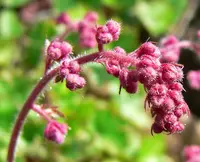
Urnflower alumroot, Heuchera elegans, is a compact perennial from rocky slopes in California. It forms low mounds of scalloped leaves topped with airy stems of small, urn-shaped pink flowers.

This plant is grown mainly for its delicate blooms and tidy habit, which suit rock gardens, shaded borders, and naturalistic plantings. It stays relatively small and dense, so it works well at the front of beds.

Heuchera elegans prefers light shade, moderate moisture, and well-drained, gritty soil. Once established, it can handle short dry spells, which makes it easier to care for urnflower alumroot in many home gardens.

Main Plant Requirements

Care Difficulty

Moderate Care

Light Preference

Partial Shade

Water Requirements

Moderate Water

Temperature Preference

Cold Hardy

Hardiness Zone

5–8

Soil Texture

Loamy, Sandy, Organic-rich

Soil pH

Acidic (5.5–6.5), Slightly acidic (6.5–7.0)

Soil Drainage

Moist but well-drained

Fertilization

Minimal (feed rarely)

Get Personalized Care Plan

Scan your plant to receive care tips personalized for your specific plant

Available on iOS and Android

How to Care for the urnflower alumroot

Heuchera elegans prefers bright, gentle light that avoids harsh afternoon sun in most climates.

  • Provide 3–5 hours of morning sun with light or dappled shade in the afternoon; north or east exposures suit urnflower alumroot best.
  • In hotter regions, give more filtered or partial shade to prevent leaf scorch, especially during summer afternoons.
  • In cooler or coastal climates, it can tolerate more direct sun; watch foliage color and crisping edges as signs of excess light or too much shade.

Heuchera elegans favors evenly moist, well-drained soil rather than constant wetness or drought.

  • Water when the top 2–4 cm of soil feels dry, aiming for moisture that sinks in quickly without pooling on the surface.
  • Increase checks in hot, windy weather; reduce watering in cool seasons but never let the root zone bake completely dry for long periods.
  • Yellowing, limp leaves and blackened crowns suggest overwatering or poor drainage, while crisp, drooping foliage signals underwatering.

This species grows best in mild conditions and tolerates a range of garden temperatures with suitable protection.

  • Optimal growth occurs around 60–75°F (16–24°C), supporting steady foliage development and flowering.
  • Plants are generally hardy to about 10–20°F (-12 to -6°C) with mulch; extended colder periods may damage crowns or roots.
  • During heat above 85°F (29°C), provide shade and consistent soil moisture, as prolonged extremes can stress plants and fade leaves.

Humidity is a minor factor for urnflower alumroot, which usually performs well in typical outdoor conditions.

  • Target 30–60% humidity; this range is met in most outdoor garden settings without intervention.
  • Plants tolerate relatively dry air but may show crisping leaf edges or slow growth in prolonged hot, arid conditions.
  • If foliage shows stress during very dry, windy periods, group plants near other perennials or use light mulch to moderate moisture loss around the crown.

Heuchera elegans prefers loose, well-aerated soil that holds moisture evenly yet drains freely.

  • Use a loamy mix enriched with organic matter such as compost or leaf mold to support steady moisture and nutrient availability.
  • Ensure drainage is fast by avoiding heavy clay; amend dense soils with coarse sand or fine grit plus compost to open the structure.
  • Aim for slightly acidic to neutral pH, around 6.0–7.0, where nutrient uptake and root health are most stable.
  • Avoid waterlogged or compacted sites, which increase risk of root and crown rot, and keep the crown just above soil level to prevent rotting.

This species is well suited to container growing for shaded patios, balconies, or entryways.

  • Choose a wide, relatively shallow pot that matches the fibrous, surface-leaning root system and supports the plant’s mounding habit.
  • Select a heavier container material, such as ceramic or clay, to keep foliage mounds stable in wind and reduce tipping.
  • Use a potting mix that drains quickly yet retains some moisture, and elevate the container slightly so drainage holes never sit in standing water.

Heuchera elegans responds well to light, consistent feeding but does not need heavy fertilization.

  • Use a balanced, slow-release granular fertilizer (for example 10-10-10) or a thin layer of compost in early spring.
  • Apply fertilizer at half the label strength to avoid salt buildup and leaf burn in urnflower alumroot.
  • Feed once in early spring and again in midsummer during active growth for container plants; once in spring is enough in-ground.
  • Stop feeding in late summer to allow growth to harden before winter and avoid soft, frost-sensitive foliage.

Pruning Heuchera elegans focuses on cleaning and refreshing the clump rather than reshaping it.

  • In early spring, remove all dead, damaged, or winter-burned leaves at the base with clean hand pruners or scissors.
  • After flowering, snip off spent flower stalks at the crown to keep plants tidy and encourage possible rebloom.
  • Thin out crowded or older leaves through the season to improve air flow and reduce fungal issues.
  • If stems become woody and elongated, trim back lightly and mound soil around the crown to maintain a compact habit.

Heuchera elegans is usually grown in the ground, with transplanting or occasional repotting done mainly to refresh crowded plants.

  • Plan to lift and divide clumps every 3–4 years in early spring or early fall when temperatures are mild.
  • Transplant when growth declines, crowns heave out of the soil, or roots circle a container and drain holes.
  • Dig widely around the root zone, keep as much soil attached as possible, and replant at the same depth to reduce stress.
  • Water thoroughly after moving, shade for a few days if conditions are hot, and keep soil evenly moist until re-established.

Heuchera elegans is commonly propagated by division, with seeds or basal cuttings used less often for home growers.

  • Divide mature clumps in early spring or early fall, separating sections with healthy roots and 1–2 crowns each.
  • Replant divisions immediately into moist, well-drained soil, firming gently and watering to settle out air pockets.
  • Take short basal stem cuttings with a small piece of crown, root in a loose, slightly moist mix, and provide bright shade.
  • Sow fresh seed on the surface of a fine seed mix, keep at 60–68°F with light, and avoid covering seeds heavily.

Heuchera elegans is generally cold hardy but benefits from simple winter care to protect the crown and roots.

  • Apply a 5–7 cm layer of loose mulch after the ground cools to insulate roots and reduce freeze–thaw heaving.
  • Avoid letting wet leaves or heavy mulch sit directly on the crown to limit rot in winter.
  • In very cold or exposed sites, cover with breathable fabric during severe freezes, especially for young plants.
  • Move containers into a sheltered, unheated area where temperatures stay just above freezing and soil does not dry out completely.

Care Tips

Crown protection

Plant with the crown level to slightly above the soil surface and avoid piling mulch against it to reduce crown rot, a common loss point when growing urnflower alumroot.

Summer shade cloth

In hotter regions, rig a 30–40% shade cloth over afternoon sun exposures during heat waves to prevent leaf scorch and prolong foliage quality through summer.

Divide at edge

Divide only the vigorous outer ring of an older clump every 3–4 years, discarding woody centers, to maintain dense foliage and healthier new growth.

Slug and weevil patrol

Set low, flat boards or tiles near the plants to trap slugs overnight and inspect leaf undersides and crown bases regularly for vine weevil notches or larvae so control can start early.

Leaf litter mulching

Use a thin layer of shredded deciduous leaves as mulch in fall instead of heavy bark, which better mimics woodland conditions and reduces winter crown heaving from freeze–thaw cycles.

Common Pests and Diseases

Vine weevils

This pest feeds on foliage as adults while the larvae eat the roots and crowns, causing sudden wilting and collapse, especially in containers or raised beds.

Solution

Inspect plants at night and hand-pick adult beetles, then apply a targeted entomopathogenic nematode drench to the soil in late summer to control larvae. Refresh tired potting mix, destroy severely damaged plants, and avoid overwatering so the crown and roots recover more easily.

Rust

This disease causes orange, brown, or rust-colored pustules on the undersides of leaves, often with yellow or pale spots above, leading to early leaf drop on heucheras.

Solution

Remove and discard affected leaves promptly and improve air circulation by thinning crowded plants and avoiding overhead watering. In recurrent cases, use a labeled fungicide for rust on ornamentals and rotate nearby plantings to reduce humidity around the foliage.

Powdery mildew

This disease produces white or gray powdery patches on leaves and stems, leading to distorted growth and reduced vigor, especially in humid, shaded sites with poor airflow.

Solution

Increase spacing between plants, water at the base in the morning, and remove heavily infected leaves. For persistent outbreaks, apply a sulfur or potassium bicarbonate fungicide labeled for powdery mildew on ornamentals, following all label directions.

Black vine weevil larvae

This pest lives in the soil and chews on fine roots and the crown, causing stunting, yellowing, and plant collapse, often while the foliage still looks relatively intact at first.

Solution

Gently lift and inspect the root ball if plants decline, discarding any that are heavily infested and destroying the larvae. Drench surrounding soil with biological controls such as beneficial nematodes and avoid replanting heucheras in the same spot until activity has clearly decreased.

Leaf spot

Symptoms include small brown, tan, or purple lesions on leaves that may merge into larger blotches, making foliage look tattered and stressed.

Solution

Remove and dispose of spotted leaves, then adjust watering so leaves dry quickly and the crown is not constantly damp. If the problem recurs, apply a broad-spectrum ornamental fungicide and maintain better spacing and mulching to limit splash spread from soil to leaves.

Interesting Facts

Endemic to California

Heuchera elegans occurs naturally only in a small area of the San Gabriel Mountains in southern California, where it grows on rocky canyon slopes and cliffs.

Specialist hummingbird plant

In its native range, this species is a notable nectar source for hummingbirds, which are attracted to its drooping, tubular pink flowers and act as primary pollinators.

Shade-tolerant cliff dweller

Unlike many sun-loving rock plants, it often grows in bright shade or dappled light on steep, rocky substrates, anchoring itself in crevices where organic matter and moisture accumulate.

Botan icon

Did you know?

Heuchera elegans is considered rare in the wild and is listed by the California Native Plant Society as a plant of conservation concern due to its very limited natural distribution in the San Gabriel Mountains.

FAQs about urnflower alumroot

This species is mostly evergreen in mild climates, keeping foliage through winter, but may be semi-evergreen or partly deciduous in colder areas. Old or winter-damaged leaves can be trimmed in early spring to keep clumps tidy.

Grow Healthy Plants with Botan Care

Keep your plants happy and healthy with plant identification, disease detection, and easy care guidance.

Botan plant care app — identify plants on mobile

Explore More Plants