Coral Bells Care (Heuchera 'Fire Chief')

About Coral Bells

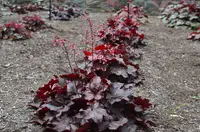
Coral bells Heuchera 'Fire Chief' is a compact perennial grown mainly for its colorful foliage rather than its flowers. It forms tidy mounds of ruffled leaves that range from deep red to burgundy, with small airy flower spikes above the foliage in season.

This plant originates from North American woodland species, so it is naturally adapted to partial shade and cool, humus-rich soils. Its clumping habit and moderate growth rate make it suitable for borders, containers, and mixed plantings.

Heuchera 'Fire Chief' is considered relatively easy to grow when given well-drained soil and consistent moisture without waterlogging. Its hardiness, shade tolerance, and low maintenance needs help gardeners learn how to care for Coral Bells with confidence.

Main Plant Requirements

Care Difficulty

Moderate Care

Light Preference

Partial Shade

Water Requirements

Moderate Water

Temperature Preference

Cold Hardy

Hardiness Zone

4–9

Soil Texture

Loamy, Sandy, Organic-rich

Soil pH

Acidic (5.5–6.5), Slightly acidic (6.5–7.0)

Soil Drainage

Moist but well-drained

Fertilization

Light (every 4–6 weeks)

Get Personalized Care Plan

Scan your plant to receive care tips personalized for your specific plant

Available on iOS and Android

How to Care for the Coral Bells

Heuchera 'Fire Chief' performs best in bright, indirect light conditions outdoors.

  • Provide 3–5 hours of gentle morning sun with afternoon shade, or dappled light under taller plants or trees to protect leaves from scorch.
  • In cooler climates, it tolerates more sun, while in hot summers it benefits from filtered light or partial shade, especially from 12–4 p.m.
  • Too much intense sun fades and crisps foliage, while deep shade in Coral Bells causes weak growth and reduced leaf color contrast.

Heuchera 'Fire Chief' prefers evenly moist, well-drained soil without long periods of saturation.

  • Water when the top 3–5 cm of soil feels dry, applying a deep soak rather than frequent light splashes, especially during active growth in spring and early summer.
  • Use soil rich in organic matter that drains freely; persistent puddling, sour smell, or collapsing crowns indicate overwatering and possible root rot.
  • In hot, dry spells, monitor leaves for wilting or crisp edges as a sign to water sooner, while in cool or rainy seasons extend the interval between waterings.

This perennial tolerates a wide temperature range but grows best in moderate conditions.

  • Optimal growth occurs around 60–75°F (16–24°C), with robust foliage and steady root development in spring and early fall.
  • Mature plants typically survive winter lows to about -20°F (-29°C) in the ground with mulch, but sudden freeze-thaw cycles can heave crowns upward.
  • In hot climates above 85°F (29°C), provide afternoon shade and consistent soil moisture, as prolonged heat and dry soil stress foliage and reduce vigor.

Heuchera 'Fire Chief' tolerates a wide humidity range and rarely needs special humidity management outdoors.

  • Aim for 30–60% humidity; typical outdoor conditions in most regions are adequate for Coral Bells.
  • Plants tolerate dry air if soil moisture is kept steady, but prolonged hot, very dry winds can cause leaf crisping.
  • Signs of humidity stress include browning leaf edges and limp foliage; use windbreaks or light shade cloth in exposed, arid sites.

Heuchera 'Fire Chief' performs best in loose, well-aerated, consistently moist but not waterlogged soil.

  • Use a loamy mix with 40–60% garden soil or topsoil, 20–30% compost, and 20–30% coarse material such as pine bark fines or perlite.
  • Ensure fast drainage; raised beds or slightly mounded planting areas prevent water from pooling around the crown.
  • Target a slightly acidic to neutral pH of 6.0–7.0 for reliable nutrient uptake and root health.
  • Avoid heavy, compacted clay, standing water, or pure sand; amend with compost and coarse grit to improve both aeration and moisture retention.

This cultivar is very suitable for container growing on patios, balconies, and shaded entrances.

  • Choose a wide, shallow-to-medium depth pot to match its fibrous, shallow root system and help prevent crown rot.
  • Select a heavier material such as ceramic or stone in windy sites to keep foliage-heavy containers stable.
  • Use a container 5–8 cm wider than the root ball so the mix dries evenly and does not stay wet at the center.

This cultivar responds well to light, consistent feeding in nutrient-poor soils, but Coral Bells do not need heavy fertilization.

  • Use a balanced, slow-release fertilizer (around 10-10-10) or a thin layer of compost in early spring.
  • Feed every 6–8 weeks during active growth, stopping by late summer to avoid soft, frost-tender growth.
  • Apply at half the label strength for container plants to prevent salt buildup and root burn.
  • Keep granules off the leaves and crown, and water thoroughly after feeding to distribute nutrients.

Pruning Heuchera 'Fire Chief' is simple and mainly helps maintain tidy foliage and encourage fresh growth.

  • In early spring, trim away dead, damaged, or discolored leaves at the base with clean scissors or hand pruners.
  • After flowering, cut spent flower stalks down to the crown to promote renewed leaf growth and a neater look.
  • Remove crowded or older leaves through the season to improve air flow and reduce fungal issues.
  • Avoid cutting into the central crown; focus on individual leaves and stalks to preserve plant vigor.

This plant is usually grown in garden beds but can be transplanted or potted when root congestion or decline appears.

  • Check for roots circling the pot, water draining too quickly, or slowed growth as signs a move is needed.
  • Transplant or repot in early spring or early fall, when temperatures are mild and moisture is more consistent.
  • Plan on repotting containers every 2–3 years into a slightly larger pot with well-drained, organic-rich mix.
  • Handle the root ball gently, loosen circling roots, water thoroughly after planting, and shade for a few days to reduce stress.

This cultivar is most reliably propagated by division rather than by seed.

  • Divide clumps in early spring or early fall when temperatures are cool and soil is moist.
  • Lift the plant, gently shake off soil, and separate sections, ensuring each division has healthy roots and several shoots.
  • Replant divisions at the same depth in well-drained soil, spacing them to allow airflow and future spread.
  • Water thoroughly after planting and keep soil evenly moist, not waterlogged, until new growth is established.

Heuchera 'Fire Chief' is generally cold hardy but benefits from simple winter preparation in colder climates.

  • In late fall, apply a 5–7 cm layer of mulch around the root zone, keeping it just clear of the crown.
  • Leave most healthy foliage in place to shield the crown from freeze–thaw cycles.
  • In very cold or exposed sites, consider a light, breathable cover to reduce wind desiccation.
  • Move container-grown plants into a sheltered, unheated area where the soil can stay cold but not freeze solid.

Care Tips

Mulch For Color

Apply a thin 2–3 cm layer of fine bark mulch around the crown in spring to stabilize soil moisture and temperature, which helps foliage color stay richer through summer.

Divide To Rejuvenate

Every 3–4 years, lift and divide congested clumps in early spring or early fall, replanting only the firm outer sections so the plant keeps dense foliage and avoids a bare, woody center.

Crown Positioning

Set the crown so it sits just at or slightly above soil level and gently backfill around exposed roots rather than burying them, which prevents crown rot and keeps growth compact.

Summer Shade Adjustment

In hotter regions, use temporary shade cloth or plant near taller perennials that cast light afternoon shade, which reduces leaf scorch and extends the peak display period when growing Coral Bells.

Winter Heave Control

In cold climates, check plants in late winter for frost heave and gently press lifted crowns back into the soil, then refresh the mulch to protect roots from further freeze–thaw movement.

Common Pests and Diseases

Vine weevils

This pest chews semi-circular notches in the leaf edges, while its larvae feed on the roots and crowns, causing sudden wilting and plant collapse.

Solution

Inspect foliage at night and hand-pick adult weevils, then use a soil drench with beneficial nematodes targeting larvae in spring and late summer; replace severely damaged plants and avoid overly loose potting mixes that favor larval movement.

Rust

This disease causes orange to brown pustules on the undersides of leaves, often with pale or yellow spots on the upper surface, leading to premature leaf drop.

Solution

Remove and discard affected leaves, improve air circulation, avoid overhead watering, and if needed apply a labeled ornamental fungicide as a protective spray during warm, humid periods.

Powdery mildew

This disease produces white to gray powdery patches on leaves and stems, which can lead to distortion and reduced vigor in dense clumps.

Solution

Increase spacing and airflow, water at the base in the morning, remove heavily infected foliage, and use a sulfur or potassium bicarbonate-based fungicide if cultural changes are not sufficient.

Black vine weevil larvae

This pest feeds on the fibrous roots and crown tissue below soil level, causing stunting, yellowing, and sudden collapse, especially in container-grown plants.

Solution

Gently unpot suspect plants to check for C-shaped white grubs, discard heavily infested stock, and apply biological nematodes to the potting mix or bed soil to reduce larval populations as part of long-term Heuchera 'Fire Chief' plant care.

Crown rot (soilborne)

This disease causes the crown to turn brown and mushy, with leaves wilting and collapsing despite moist soil, often in poorly drained or waterlogged sites.

Solution

Remove and discard affected plants including surrounding soil, improve drainage with raised beds or amended soil, avoid planting crowns too deep, and water only when the top layer of soil has begun to dry to limit favorable conditions for soilborne fungi.

Interesting Facts

Stable foliage color

This cultivar holds its deep wine-red foliage color through most of the season, even in higher light, while many other heuchera cultivars fade or green out as temperatures rise.

Compact mounding habit

It forms a dense, rounded mound typically under 30 cm tall, which results from selective breeding for tight internodes rather than the looser rosettes seen in many older coral bells types.

Contrasting flower display

The plant produces airy, light pink flower spikes above the dark foliage, creating a strong color contrast that was a key selection trait during its introduction to ornamental horticulture.

FAQs about Coral Bells

Browning leaves often result from heat stress, low humidity, or sun scorch on older foliage. Poor drainage and root rot can also cause margins to crisp. Remove damaged leaves and improve airflow, mulch, and soil structure.

Grow Healthy Plants with Botan Care

Keep your plants happy and healthy with plant identification, disease detection, and easy care guidance.

Botan plant care app — identify plants on mobile

Explore More Plants