Climbing Guinea flower Care (Hibbertia scandens)

Also known as: Golden Guinea vine, Guinea gold vine, Snake Vine
Climbing Guinea flower

About Climbing Guinea flower

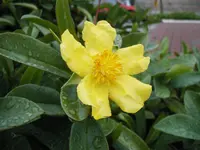
Climbing Guinea flower (Hibbertia scandens) is an evergreen, twining vine or scrambling groundcover grown for its bright yellow, star-shaped flowers and glossy green leaves. It suits trellises, fences, or large containers and can also spill over walls or banks.

This species is native to coastal eastern Australia, where it grows in light woodland and sandier coastal sites. It is generally considered robust and forgiving, which makes it straightforward to care for Climbing Guinea flower in mild, frost-free climates.

The plant prefers bright light, free-draining soil, and moderate moisture, but tolerates short dry spells once established. Its vigorous growth and adaptability make it suitable for many gardens, provided it has support and protection from hard frost.

Main Plant Requirements

Care Difficulty

Easy Care

Light Preference

Full Sun

Water Requirements

Moderate Water

Temperature Preference

Tropical / Frost Sensitive

Hardiness Zone

9–11

Soil Texture

Sandy, Loamy, Organic-rich

Soil pH

Acidic (5.5–6.5), Slightly acidic (6.5–7.0)

Soil Drainage

Well-drained

Fertilization

Minimal (feed rarely)

Get Personalized Care Plan

Scan your plant to receive care tips personalized for your specific plant

Available on iOS and Android

How to Care for the Climbing Guinea flower

This vigorous vine thrives with bright light and some direct sun for strongest growth and flowering.

  • Provide 4–6 hours of direct morning sun with light afternoon shade; hot western or all-day sun can scorch leaves and fade Climbing Guinea flower blooms.
  • Tolerates partial shade, but in less than 3–4 hours of sun per day flowering decreases and stems stretch, becoming sparse and leggy.
  • In cooler months, accept more direct sun; in hot summers, use filtered light from overhead trees or structures to reduce heat stress and leaf burn.

This twining shrub prefers evenly moist, well-drained soil rather than constant wetness or drought.

  • Water when the top 3–5 cm of soil feels dry; soak the root zone deeply, then allow excess to drain away to avoid standing water.
  • Use a free-draining soil or bed with added coarse sand or fine gravel; poor drainage leads to yellowing leaves, soft stems, and root rot in Hibbertia scandens.
  • In hot, dry periods, expect more frequent watering and watch for wilting or crisp leaf edges, while in cool or rainy seasons extend the interval between waterings.

This plant prefers mild, frost-free conditions and stays healthiest without extreme cold or prolonged heat.

  • Aim for consistent growth in 60–80°F (16–27°C); flowering is strongest in the warmer part of this range with good light and moderate humidity.
  • Tolerates brief dips to about 28–30°F (-2 to -1°C), but repeated frost damages young shoots and may kill exposed tips, especially in windy sites.
  • Handles short hot spells up to 90–95°F (32–35°C) if soil moisture is stable; mulch roots and provide some afternoon shade during very hot, dry periods.

This species handles a wide humidity range and usually does not need special humidity management indoors or outdoors.

  • Target 40–60% humidity for best foliage and flowering performance, similar to average indoor and sheltered outdoor conditions.
  • Plants tolerate brief dips below 30% humidity but may show leaf edge browning and slower growth if kept very dry for long periods.
  • If air is extremely dry and hot, grouping plants or placing a shallow water tray nearby can slightly raise humidity around Climbing Guinea flower.

Hibbertia scandens prefers light, well-drained soil that does not stay wet after watering or rain.

  • Use a sandy or sandy-loam mix with moderate organic matter, such as 50% all-purpose potting mix, 30% coarse sand, and 20% compost.
  • Ensure fast drainage so water runs through within seconds; soggy, compacted, or clay-heavy soil encourages root rot and weak growth.
  • Aim for slightly acidic to neutral pH around 6.0–7.0; avoid strongly alkaline soil that can limit nutrient uptake and cause yellowing leaves.
  • Improve aeration and structure by blending in coarse sand, fine gravel, or pine bark chips rather than relying only on compost or peat.

This vine is well suited to container growing when given stable support and sharp drainage.

  • Choose a wide, heavy container to counterbalance climbing growth and reduce the risk of tipping in wind or when the vine is fully leafed out.
  • Select a pot deep enough for a moderately spreading root system, leaving 5–8 cm of space at the top to make thorough watering easier.
  • Use a free-draining potting mix and raise the container slightly off the ground so drainage holes never sit in pooled water, preventing root suffocation.

This vigorous climber benefits from modest feeding to support flowering but does not need heavy fertilization.

  • Apply a balanced slow-release fertilizer (e.g. 8-8-8 or 10-10-10) at half strength at the start of spring.
  • Supplement with light liquid feed every 4–6 weeks in active growth if leaves pale or flowering weakens.
  • Use compost or well-rotted organic mulch around the root zone instead of frequent high-salt fertilizers.
  • Avoid feeding in late fall and winter to prevent soft, frost-tender growth on Climbing Guinea flower.

Thoughtful pruning helps keep Hibbertia scandens tidy, within bounds, and flowering well.

  • Carry out main pruning in late winter or early spring before strong new growth starts.
  • Remove dead, damaged, or rubbing stems first, then thin very crowded shoots to improve light and air flow.
  • Shorten overly long vines to control spread and encourage branching and more flowering sites.
  • Use clean, sharp secateurs and make angled cuts just above a leaf node to reduce dieback.

This species is more often grown in the ground, but container plants or young stock may need occasional repotting or transplanting.

  • Look for roots circling the pot, pushing through drainage holes, or noticeably slowed growth as signals to move it.
  • Schedule repotting or garden transplanting for spring, after frost risk, so roots re-establish in warming soil.
  • Expect container plants to need a size upgrade every 2–3 years, using a free-draining, sandy mix.
  • Water thoroughly before and after moving, keep the root ball intact, and shade for several days to limit transplant shock.

Hibbertia scandens is commonly propagated from cuttings and sometimes by seed or simple layering.

  • Take 8–10 cm semi-ripe stem cuttings in late spring or summer, removing lower leaves.
  • Dip the cut base in rooting hormone and place in a moist, free-draining mix under bright, indirect light.
  • Keep humidity high with a vented cover and maintain temperatures around 68–75°F until roots form.
  • Sow fresh seed in a gritty mix, just covered, and maintain gentle warmth plus consistent moisture for germination.

This plant is only lightly frost tolerant and needs some winter attention in cooler regions.

  • In climates below about 25–30°F, grow in containers so plants can be moved to a bright, frost-free spot over winter.
  • Mulch the root zone with 5–8 cm of bark or coarse compost in fall to buffer soil temperature swings.
  • In marginal zones, shelter outdoor vines against a warm wall and reduce watering so soil stays barely moist.

Care Tips

Secure Climbing Supports

Install sturdy mesh, wires, or a trellis before planting and loosely tie new shoots with soft ties so the stems can climb and form a dense, stable wall of foliage and flowers.

Encourage Lush Coverage

Pinch or lightly tip-prune young, flexible stems several times during the growing season to stimulate side shoots and create a fuller screen or groundcover rather than a few long, sparse vines.

Protect From Wind Burn

In exposed sites, run the vine along a fence or windbreak and fix stems at multiple points so foliage does not whip in strong winds, which can tear leaves and reduce flowering.

Use Root Zone Mulch

Apply a 5–8 cm layer of organic mulch around, but not touching, the base to keep roots cool, reduce moisture swings, and limit weed competition that can slow growing Climbing Guinea flower.

Monitor For Scale

Inspect stems and older leaves every few weeks for small, shell-like scale insects and treat early with horticultural oil, taking care to coat both sides of the foliage for effective control.

Common Pests and Diseases

Scale insects

This pest feeds on stems and leaf undersides, causing yellowing, leaf drop, and sticky honeydew that can lead to sooty mold. Infestations often build up on older, woody sections of the vine and along trellis supports.

Solution

Prune and discard heavily infested stems, then wipe remaining scale with a cloth or cotton pad dipped in diluted alcohol or insecticidal soap. For outdoor plants, encourage natural predators such as lady beetles and repeat treatments every 7–10 days until new growth is clean; this is a key aspect of Hibbertia scandens care in warm climates.

Two-spotted spider mites

These insects are tiny sap-suckers that cause fine stippling, dull foliage, and in heavier cases, light webbing on the undersides of leaves. Symptoms include bronzing and premature leaf drop during hot, dry periods or on plants grown against hot walls or fences.

Solution

Rinse foliage thoroughly with a strong but gentle stream of water, especially the undersides of leaves, and increase humidity around the plant where possible. If mites persist, apply a horticultural oil or insecticidal soap, repeating weekly until new leaves appear clean and undamaged.

Sooty mold

This disease appears as a black, soot-like coating on leaves and stems that grows on the sugary honeydew excreted by sap-sucking insects such as scale or aphids. Symptoms include reduced photosynthesis, dull appearance, and sometimes leaf yellowing when coverage is heavy.

Solution

First control the underlying insect problem, then wash affected leaves with lukewarm water and a small amount of mild soap, gently wiping to remove the fungal coating. Improve air movement around the vine through light pruning and avoid overhead watering late in the day to help foliage dry quickly.

Leaf spot

This disease causes small to medium brown or black spots on leaves, sometimes with a yellow halo, which can coalesce and lead to premature leaf drop. Symptoms include more severe damage in crowded, shaded areas with poor air circulation or prolonged leaf wetness.

Solution

Remove and discard affected leaves and any fallen debris around the base of the plant to reduce reinfection. Improve spacing and airflow, water at soil level rather than overhead, and in persistent cases use a labeled copper or chlorothalonil-based fungicide according to directions, focusing on new growth.

Caterpillars

These insects chew irregular holes in leaves and can strip soft new growth, especially on young plants or those used as screening on fences. Symptoms include frass (small dark droppings) on lower leaves or nearby surfaces and ragged leaf edges.

Solution

Hand-pick caterpillars where practical and prune out heavily damaged tips. For repeated problems, apply a biological control such as Bacillus thuringiensis (Bt) in the evening, targeting young larvae and reapplying after rain as directed on the product label.

Interesting Facts

Coastal dune specialist

This species naturally occurs along sandy coastal dunes and headlands of eastern Australia, where its woody stems help stabilize loose soils under salty wind conditions.

Flexible climbing habit

Although often used as a groundcover, this plant can climb several meters by twining its long stems through supports rather than using tendrils or adhesive roots.

Extended flowering season

In mild climates it can produce bright yellow, many-petaled flowers for much of the year, with peak blooming typically in the warmer months.

FAQs about Climbing Guinea flower

This species performs best outdoors in a mild, frost-free climate with good air movement and space to climb or trail. Indoors it often becomes weak and prone to pests unless light levels and humidity are carefully managed.

Grow Healthy Plants with Botan Care

Keep your plants happy and healthy with plant identification, disease detection, and easy care guidance.

Botan plant care app — identify plants on mobile

Explore More Plants