Strict exclusion zone
Establish a fenced or clearly marked no-access area around young trees so that people, pets, and livestock cannot come into contact with sap, leaves, or fruit.

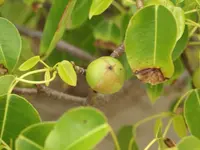
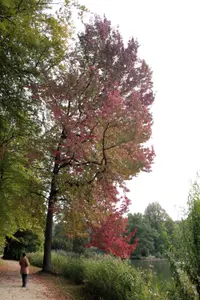
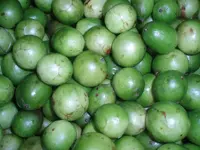
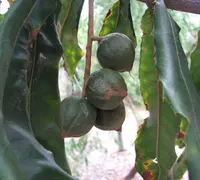
The manchineel tree, Hippomane mancinella, is a coastal evergreen native to tropical regions of the Americas and the Caribbean. It often grows as a small to medium tree with dense, glossy foliage and small greenish fruits that resemble apples.
This species naturally occurs on sandy beaches, mangrove edges, and salty coastal soils, where it helps stabilize shorelines. It is extremely hazardous, so any attempt to care for manchineel requires expert knowledge, strict safety measures, and secure placement away from people and animals.
It favors full sun, warm and humid conditions, and well-drained, sandy or coastal soils, but its extreme toxicity makes it unsuitable for ornamental or household growing in typical home settings.

Care Difficulty
Hard Care

Light Preference
Full Sun

Water Requirements
Moderate Water

Temperature Preference
Tropical / Frost Sensitive

Hardiness Zone
11–12

Soil Texture
Sandy, Loamy, Organic-rich

Soil pH
Acidic (5.5–6.5), Slightly acidic (6.5–7.0)

Soil Drainage
Moist but well-drained

Fertilization
Minimal (feed rarely)
Scan your plant to receive care tips personalized for your specific plant
Available on iOS and Android
This highly toxic coastal tree is adapted to intense tropical sun but still has specific light needs.
This species prefers moist, well-drained coastal soils and does not tolerate prolonged drought when young.
This tropical coastal tree requires warm conditions and has very low cold tolerance.
Humidity is not a key factor for Hippomane mancinella, which tolerates a broad range of ambient conditions.
This coastal tree prefers fast-draining, sandy soil that does not stay waterlogged.
This species is generally unsuitable for long-term container growing due to its size, vigor, and extreme toxicity.
This coastal tree generally needs no fertilization when grown in native, nutrient-poor sites.
Hippomane mancinella is rarely pruned except for safety and structural reasons.
Transplanting is infrequent and should be done only when young due to the tree’s extensive root system and toxic sap.
Propagation of Hippomane mancinella is specialized and not recommended for routine home culture due to extreme toxicity.
This tropical to subtropical tree is not frost hardy and needs protection in any climate with freezing temperatures.

Plant Health Check
Not sure what's wrong with your plant? Check your plant's health inside the app.
The milky sap of this species contains strong irritant diterpene esters that can cause severe skin inflammation and temporary eye injury, even from contact with rainwater that has washed over the bark or leaves.
The small, apple-like fruits are dangerously poisonous if eaten and can cause intense burning of the mouth and throat, severe gastroenteritis, and systemic poisoning in humans and many animals.
Along tropical Caribbean shorelines, this tree acts as a windbreak and erosion barrier, stabilizing sandy beaches with its deep root system while withstanding salt spray and strong coastal winds.

Historical records describe indigenous peoples reportedly using the sap of this tree to poison arrow tips and contaminate water supplies, reflecting long-standing recognition of its extreme toxicity in Caribbean and Central American cultures.
Every part of this species is extremely toxic to humans and animals. Sap, smoke, leaves, and fruit can cause severe skin burns, eye damage, intense gastrointestinal distress, and even death. Strict avoidance and clear warning signs are essential.
Keep your plants happy and healthy with plant identification, disease detection, and easy care guidance.