Contain Spreading Habit
Grow this plant in sunken containers, aquatic baskets, or lined sections of a pond to prevent rhizomes from spreading into natural waterways or overtaking other marginal plants.

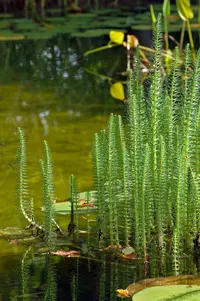
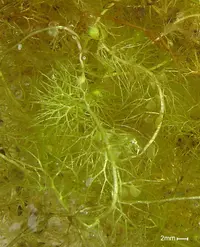
Common mare's-tail (Hippuris vulgaris) is a perennial aquatic plant that typically grows in shallow water, ponds, and slow-moving streams. It forms dense stands of upright, jointed stems that resemble small bottlebrushes or miniature conifer shoots.
This species is native to cool and temperate regions of the Northern Hemisphere and often roots in muddy or silty substrates. It spreads both by creeping underwater stems and by seed, which allows it to colonize suitable wet habitats quickly.
Its preference for full sun, consistently wet conditions, and low-maintenance growth makes it useful in naturalistic ponds and water gardens. Understanding how to care for common mare's-tail starts with recognizing its strong need for stable, saturated or submerged conditions.

Care Difficulty
Moderate Care

Light Preference
Full Sun

Water Requirements
Aquatic

Temperature Preference
Cold Hardy

Hardiness Zone
3–8

Soil Texture
Loamy, Silty, Organic-rich

Soil pH
Slightly acidic (6.5–7.0), Neutral (7.0)

Soil Drainage
Waterlogged tolerant

Fertilization
Minimal (feed rarely)
Scan your plant to receive care tips personalized for your specific plant
Available on iOS and Android
This aquatic perennial prefers bright conditions but adapts well to cooler, shallow-water habitats.
This species is adapted to standing water and saturated soils rather than typical garden watering cycles.
This cold-hardy aquatic plant tolerates a wide range of outdoor temperatures in temperate climates.
This aquatic species demands constant saturation rather than typical air-humidity management.
Hippuris vulgaris thrives in permanently wet, low-oxygen soils typical of shallow ponds and marsh edges.
This species can grow in containers if they function as mini-ponds or permanently flooded tubs.
This aquatic native needs minimal feeding, as common mare's-tail is adapted to low-nutrient water.
Pruning Hippuris vulgaris is mainly for containment and tidiness in managed ponds.
Transplanting Hippuris vulgaris focuses on managing clumps in ponds or baskets rather than classic repotting.
Hippuris vulgaris is commonly propagated when controlling or expanding pond plantings.
This species is very cold hardy and usually needs little specific winter care in ponds.

Plant Health Check
Not sure what's wrong with your plant? Check your plant's health inside the app.
This aquatic species often produces two distinct growth forms, with finely spaced underwater whorls and more compact, horse-tail-like shoots that emerge above the water surface in shallow areas.
Hippuris vulgaris is naturally distributed across much of the Northern Hemisphere and survives freezing winters by persisting through hardy underwater rhizomes that resume active growth as soon as water warms in spring.
Populations of this species typically occur in still or slow-moving, relatively nutrient-poor waters, so its presence can indicate low to moderate nutrient levels and relatively stable, undisturbed freshwater habitats.

Fossil evidence shows that close relatives of Hippuris vulgaris were already present in Northern Hemisphere wetlands during the late Tertiary period, indicating that this lineage has occupied cool, shallow freshwater habitats for millions of years with relatively little morphological change.
This species produces very small, often inconspicuous flowers, especially when grown in shallow water or containers. Limited nutrients, low light, and lack of seasonal temperature change further reduce flowering, but this does not indicate poor overall health.
Keep your plants happy and healthy with plant identification, disease detection, and easy care guidance.