

Log preparation
Before inoculation, use freshly cut, disease-free hardwood logs and rest them 2–4 weeks after cutting so natural antifungal compounds decline and the mycelium can colonize more quickly.

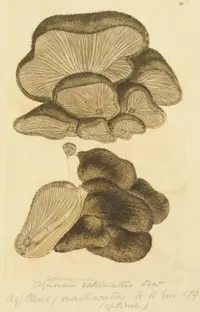
Hohenbuehelia mastrucata, often called woolly oyster, is a saprophytic fungus that decomposes dead wood rather than a traditional leafy plant. It forms small, shell-like caps covered in dense, felted hairs, giving a woolly, gray to brown appearance that resembles a fuzzy oyster shell.
This species occurs mainly in temperate forests, especially in Europe, where it grows in clusters on decaying hardwood. It is not typically cultivated, so information on how to care for woolly oyster at home is limited.
In general, it prefers cool, shaded, consistently moist conditions and a substrate rich in decaying wood. Its need for stable humidity and specific dead-wood substrates makes it more suitable for experienced fungus growers than casual indoor gardeners.

Care Difficulty
Moderate Care

Light Preference
Partial Shade

Water Requirements
Moderate Water

Temperature Preference
Warm Climate

Hardiness Zone
Unknown

Soil Texture
Loamy, Organic-rich

Soil pH
Slightly acidic (6.5–7.0)

Soil Drainage
Moist but well-drained

Fertilization
Minimal (feed rarely)
Scan your plant to receive care tips personalized for your specific plant
Available on iOS and Android
This fungus prefers bright, indirect woodland-style light rather than harsh open sun.
Moisture for Hohenbuehelia mastrucata should stay consistently damp but never waterlogged.
This species thrives in cool to mild conditions with stable, moderate temperatures.
This fungus prefers moderately moist air but adapts well to typical indoor humidity if the substrate stays evenly damp.
This saprophytic fungus relies on a consistently moist, well-aerated substrate rather than traditional garden soil.
This species can be grown successfully in containers if the substrate and water management are tightly controlled.
This fungus needs only light feeding when grown as a cultivated culture rather than in natural, nutrient-rich wood.
Pruning for Hohenbuehelia mastrucata focuses on hygiene and productivity rather than shaping.
Cultivated Hohenbuehelia mastrucata is usually managed by renewing or moving its substrate rather than classic pot repotting.
Propagation of this fungus is usually done through mycelium-based methods rather than true seeds.
Outdoor cultures of this fungus are moderately cold sensitive and need some winter management in climates with hard freezes.

Plant Health Check
Not sure what's wrong with your plant? Check your plant's health inside the app.
The fruiting bodies form small, densely clustered caps covered with coarse, woolly hairs, which trap moisture and protect the underlying tissue on exposed wood surfaces.
The stem and lower cap surface often develop a gelatinous, translucent layer that helps the fungus cope with repeated wet–dry cycles on decaying logs and stumps.
This species is a saprotrophic fungus that colonizes well-rotted hardwood, breaking down complex lignin- and cellulose-rich tissues and contributing to long-term nutrient recycling in forest ecosystems.
This species is not considered a choice edible mushroom. Identification is difficult for non-experts, and similar-looking fungi may be harmful. For safety, it is better treated as a decorative or study specimen rather than food.
Keep your plants happy and healthy with plant identification, disease detection, and easy care guidance.

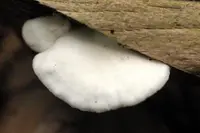
Peeling Oysterling
Crepidotus mollis
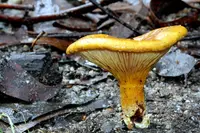
Austropaxillus infundibuliformis
Austropaxillus infundibuliformis
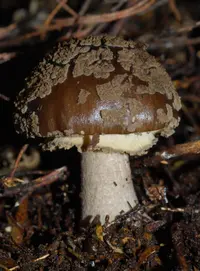
Southern Beech Amanita
Amanita nothofagi
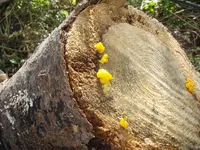
Orange Jelly Spot
Dacrymyces chrysospermus
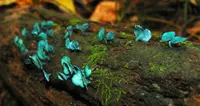
Green Wood Cup
Chlorociboria aeruginascens
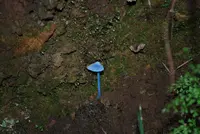
skyblue pinkgill
Entoloma virescens
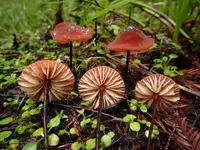
red pinwheel
Marasmius plicatulus
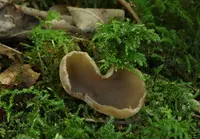
layered cup
Peziza varia