

Use breathable trays
Place colonized substrate on shallow, well-ventilated trays with many small holes or mesh bottoms so the delicate fruiting bodies can develop evenly without excess moisture pooling around the pins.

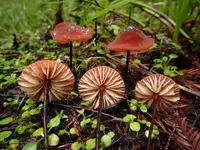
Red pinwheel, Marasmius plicatulus, is a small saprophytic mushroom that grows on fallen leaves and woody debris. It forms tiny, bright red to orange caps with a pleated, pinwheel-like surface on thin, dark stems.
This fungus is typically found in humid forests and woodlands, often appearing in scattered groups after rain. It plays an important role in breaking down leaf litter and recycling nutrients in the soil.
Because it is a delicate woodland fungus rather than a traditional houseplant, it is not straightforward to care for red pinwheel indoors. It generally prefers cool, moist, shaded habitats with plenty of decaying organic matter.

Care Difficulty
Moderate Care

Light Preference
Partial Shade

Water Requirements
Keep Soil Moist

Temperature Preference
Warm Climate

Hardiness Zone
Unknown

Soil Texture
Loamy, Peaty, Organic-rich

Soil pH
Acidic (5.5–6.5), Slightly acidic (6.5–7.0)

Soil Drainage
Moist but well-drained

Fertilization
Minimal (feed rarely)
Scan your plant to receive care tips personalized for your specific plant
Available on iOS and Android
This small woodland fungus prefers soft, filtered light similar to a shaded forest floor.
Marasmius plicatulus needs consistently moist but not waterlogged substrate to fruit well.
This species fruits best in mild, cool to warm conditions typical of shaded woodland environments.
This delicate woodland fungus benefits from moderately moist, humid air but tolerates brief drier spells if kept evenly moist at the substrate level.
Marasmius plicatulus fruits best in a loose, organic-rich substrate that mimics a leaf-litter forest floor.
This species can be grown in shallow containers mainly for observation, provided moisture and stability are managed carefully.
This saprotrophic fungus normally gains nutrients from decaying leaf litter and wood, so red pinwheel in garden or terrarium culture needs only very light feeding, if any.
Marasmius plicatulus does not need structural pruning, but limited hygiene trimming can keep culture containers cleaner and reduce disease risk.
This species is usually grown on a dedicated organic substrate rather than conventionally repotted like a houseplant.
Marasmius plicatulus is typically propagated by extending its mycelium through fresh substrate rather than through conventional plant methods.
Outdoor colonies of Marasmius plicatulus on natural leaf litter are generally cold hardy and need little deliberate winter care.

Plant Health Check
Not sure what's wrong with your plant? Check your plant's health inside the app.
This species is recognized by its tiny, radially pleated, often bright red to orange-red caps that resemble a folded paper pinwheel when dry, then expand and become more translucent when moist.
It typically fruits on rotting hardwood leaves and other fine forest litter, contributing to rapid breakdown of organic matter and nutrient recycling in warm, humid forests.
The fungus is mainly recorded from tropical and subtropical regions, especially in Asia and parts of the Pacific, where it appears during extended wet periods on the forest floor.
This small fungus is not considered a culinary species and is generally treated as inedible. It is not known to be a desirable food, so for safety, avoid consuming it or using it in cooking.
Keep your plants happy and healthy with plant identification, disease detection, and easy care guidance.

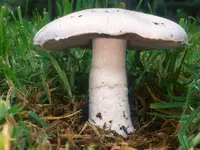
Meadow Mushroom
Agaricus campestris
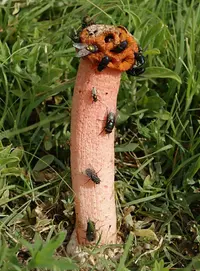
stalked lattice stinkhorn
Lysurus periphragmoides
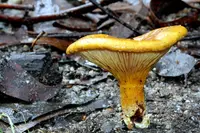
Austropaxillus infundibuliformis
Austropaxillus infundibuliformis
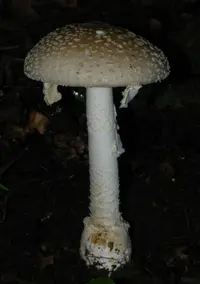
Small Funnel-Veil Amanita
Amanita multisquamosa
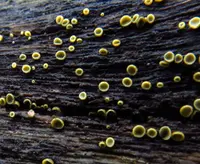
Chlorosplenium chlora
Chlorosplenium chlora
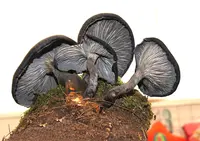
Omphalotus mexicanus
Omphalotus mexicanus
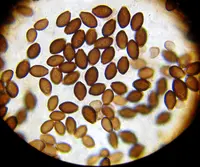
Panaeolus olivaceus
Panaeolus olivaceus
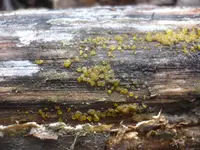
Dacrymyces lacrymalis
Dacrymyces lacrymalis