

Use clean substrate
When growing Holwaya, place it only on well-decayed conifer wood that is free of visible mold colonies or chemical treatments, as contaminated or treated timber can suppress fruiting and introduce competing fungi.

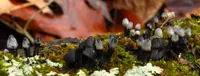
Holwaya mucida is not a typical green plant but a wood-inhabiting fungus, often noticed by outdoor growers and gardeners. It forms dark, elongated cushion-like structures on decaying conifer wood, especially in damp forests.
This species occurs mainly in temperate regions, including parts of Europe and North America, where it helps break down dead wood. It is usually seasonal and appears in cool, moist conditions.
Because it is a specialized decomposer, it is not commonly cultivated and can be challenging to maintain outside its natural habitat. Those who want to care for Holwaya mostly focus on providing consistently cool, humid, and shaded conditions with access to well-rotted wood.

Care Difficulty
Hard Care

Light Preference
Partial Shade

Water Requirements
Keep Soil Moist

Temperature Preference
Cool Climate

Hardiness Zone
Unknown

Soil Texture
Loamy, Silty, Organic-rich

Soil pH
Acidic (5.5–6.5)

Soil Drainage
Moist but well-drained

Fertilization
Minimal (feed rarely)
Scan your plant to receive care tips personalized for your specific plant
Available on iOS and Android
This wood-inhabiting fungus prefers cool, shaded forest conditions with limited direct sun.
This fungus needs consistently moist but not waterlogged wood or woody debris to develop well.
This species grows best in cool to mild, consistently moist conditions typical of shaded woodland habitats.
This fungus prefers consistently moist, humid air to fruit and persist well.
Provide a consistently moist, organic-rich substrate rather than true mineral soil for reliable development.
This species can be managed in containers when grown on moist, woody substrate rather than conventional potting soil.
This saprophytic fungus usually gains enough nutrients from decaying wood and generally does not need supplemental fertilization in cultivation.
Holwaya mucida needs no true pruning, but light tidying can support clean culture in managed beds or experimental setups.
In cultivation, focus on renewing or relocating the colonized wood rather than traditional repotting for Holwaya mucida.
Propagation of Holwaya mucida is specialized and usually handled by experienced growers or labs rather than casual gardeners.
This wood-inhabiting fungus in temperate regions is generally cold hardy and often needs minimal winter attention outdoors.

Plant Health Check
Not sure what's wrong with your plant? Check your plant's health inside the app.
This fungus produces striking black, pin-like conidial structures on dead conifer wood, asexual stages that were once described as a separate genus, Thamnomyces, before DNA studies linked them to Holwaya.
In wet conditions the mature fruiting bodies become gelatinous and somewhat translucent, then dry back to a firmer, darker form as conditions become drier, a reversible change that helps protect spores and tissues from desiccation.
It is most often found decomposing fallen twigs and branches of conifers, especially Douglas-fir (Pseudotsuga menziesii), playing a role in wood decay and nutrient cycling in temperate forests.

Molecular phylogenetic research unexpectedly placed this visually unusual, jelly-like fungus within the order Helotiales, a group mostly composed of small, cup-forming ascomycetes, highlighting how DNA data can overturn assumptions based on appearance alone.
This fungus grows slowly, forming new fruiting bodies mainly during cool, wet periods. Growth depends on decaying conifer wood availability and consistent moisture rather than fertilizer or pruning, so visible expansion from year to year is usually modest.
Keep your plants happy and healthy with plant identification, disease detection, and easy care guidance.

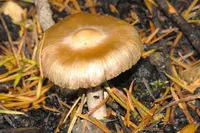
Inocybe grammata
Inocybe grammata
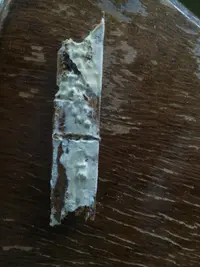
Incrustoporia brevispora
Incrustoporia brevispora
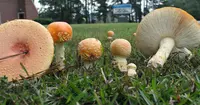
Peach-Colored Fly Agaric
Amanita persicina
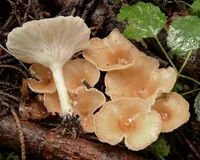
Common Funnel
Infundibulicybe gibba
star fibrecap
Inocybe asterospora
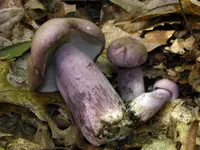
Violet Gray Bolete
Tylopilus plumbeoviolaceus
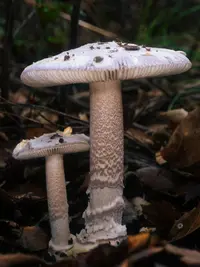
Protected Ringless Amanita
Amanita protecta
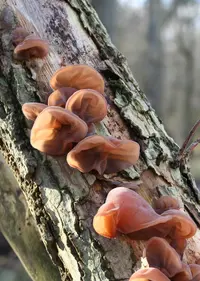
Jelly Ear
Auricularia auricula-judae