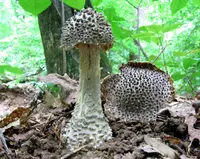
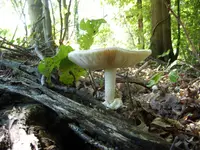
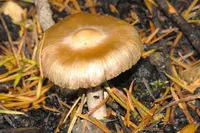
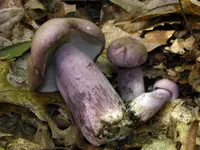
star fibrecap Care (Inocybe asterospora)

star fibrecap

About star fibrecap

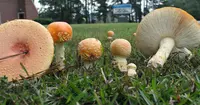
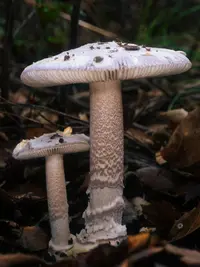
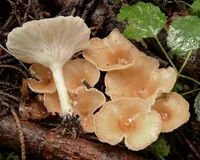
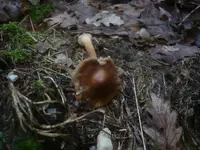
Star fibrecap (Inocybe asterospora) is a small, ground-dwelling mushroom rather than a leafy houseplant. It produces tan to brown, fibrous caps with a star-like spore pattern visible only under a microscope.

This fungus typically appears in woodland or park soils, often near deciduous trees in temperate regions of Europe and sometimes beyond. It is not suited to casual indoor cultivation and is generally left to fruit naturally outdoors.

Those who attempt to care for star fibrecap must understand that it depends on complex relationships with tree roots and specific soil fungi, which makes it difficult to establish or manage in controlled garden or container settings.

Main Plant Requirements

Care Difficulty

Hard Care

Light Preference

Partial Shade

Water Requirements

Keep Soil Moist

Temperature Preference

Cool Climate

Hardiness Zone

Unknown

Soil Texture

Loamy, Organic-rich

Soil pH

Acidic (5.5–6.5)

Soil Drainage

Moist but well-drained

Fertilization

Minimal (feed rarely)

Get Personalized Care Plan

Scan your plant to receive care tips personalized for your specific plant

Available on iOS and Android

How to Care for the star fibrecap

This fungus prefers cool, filtered woodland light rather than direct open sun.

  • Provide dappled or patchy shade under trees, with only brief morning sun where possible and no more than 2–3 hours of weak direct light per day.
  • Avoid strong midday or afternoon sun, which can overheat the soil surface, dry leaf litter, and suppress fruiting of star fibrecap.
  • In summer, choose north or east-facing woodland edges; in cooler months, slightly more open canopy still should not exceed bright, indirect light conditions.

Inocybe asterospora relies on evenly moist, well-drained soil rather than frequent surface soaking.

  • Maintain a loose, humus-rich soil that drains freely, allowing the top 2–3 cm to slightly dry between natural rains or irrigations.
  • In dry periods, apply deep, infrequent watering to moisten soil to 10–15 cm depth, then allow excess to drain to avoid waterlogged, sour-smelling ground.
  • Watch for signs of overwatering such as standing water, algae, or rotten leaf litter; very hard, cracked, dusty soil indicates underwatering and calls for a slow, thorough soak.

This woodland fungus develops best in cool to mild conditions typical of temperate forests.

  • Optimal fruiting usually occurs around 50–65°F (10–18°C), especially during cool, moist spring or autumn periods.
  • Mycelium in the soil may tolerate down to about 25–30°F (-4 to -1°C), but fruiting bodies are easily damaged by hard frost or repeated freeze–thaw cycles.
  • Sustained heat above 80°F (27°C) with dry soil suppresses fruiting; use shade and organic mulch to keep the upper soil layer cooler in summer.

This woodland fungus does not require managed air humidity in typical outdoor conditions.

This mycorrhizal fungus relies on natural, undisturbed ground rather than prepared potting media.

  • Prefers loose, well‑drained, organic‑rich forest soil with leaf litter that allows fine fungal threads to move easily.
  • Grows best where drainage is quick yet the upper few cm stay slightly moist, such as in light loam or sandy loam over mineral subsoil.
  • Thrives in slightly acidic to neutral soil around pH 5.0–7.0, avoiding strongly alkaline or heavily limed sites.
  • To encourage Inocybe asterospora, protect existing leaf litter and avoid compaction, added fertilizers, and plastic mulch layers that block gas exchange.

This species is not suitable for container growing, as it depends on complex soil and tree-root relationships that pots cannot replicate.

Inocybe asterospora is a wild mycorrhizal fungus that normally grows without supplemental fertilizer in natural soils.

Pruning is not applicable to Inocybe asterospora, as it is a fungus forming fruiting bodies rather than a woody or leafy plant.

Inocybe asterospora is seldom grown in containers; focus instead on establishing suitable outdoor soil conditions for its fungal mycelium.

  • Avoid disturbing soil where fruiting bodies appear, since the mycelium forms symbiotic associations with nearby plant roots.
  • If relocation is necessary, move the associated host plant with a generous, intact root ball and surrounding soil.
  • Transplant only during mild, moist periods in spring or fall to limit shock to roots and fungal partners.
  • After any disturbance, keep the area evenly moist, not waterlogged, to support mycelium recovery.

Propagation of Inocybe asterospora is complex and not reliable for typical home cultivation.

This fungus is naturally cold hardy in temperate climates and usually needs no dedicated winter care in the landscape.

Care Tips

Spore collection hygiene

If you collect spore prints for identification or propagation research, work over clean paper or foil and dispose of spent caps in sealed bags to avoid unintentionally spreading this toxic fungus into play areas, lawns, or animal runs.

Host tree selection

When growing star fibrecap in controlled mycorrhizal trials, pair it only with compatible broadleaf hosts such as beech or oak, and clearly label plots so future gardeners and maintenance staff understand that poisonous fruiting bodies may appear.

Dedicated trial area

Establish experimental beds for this species away from paths, vegetable plots, pet zones, and children’s play spaces, and use edging or low fencing to keep people from accidentally entering fruiting areas.

Seasonal fruiting checks

During wet, cool periods, inspect known inoculated areas twice weekly, remove and bag mushrooms promptly, and document dates and abundance so you can track how site conditions influence fruiting intensity.

Tool and container management

After handling colonized substrates or soil, rinse tools, trays, and gloves before reusing them elsewhere to reduce accidental spread and to keep caring for star fibrecap clearly separated from food-growing or ornamental beds.

Common Pests and Diseases

fungivorous springtails

These insects often occur in moist substrates rich in decaying wood or leaf litter where the fungus fruits. Symptoms include dense swarms of small, jumping white or gray insects around the base and surface mycelium.

Solution

Reduce constant saturation by allowing the substrate surface to dry slightly between waterings, and increase airflow so the top layer is moist but not soggy. If populations are very high, gently flood and drain the surface with clean, cool water to dislodge them, and remove excess decaying organic debris while keeping enough woody material for the fungus to grow.

fungus gnat larvae

These insects develop in very damp, organic substrates and feed on fine mycelial threads and young primordia. Symptoms include slow or uneven mushroom development and many small black gnats flying when the substrate is disturbed.

Solution

Allow the upper 1–2 cm of substrate to become just slightly drier between misting cycles while keeping internal moisture stable, and avoid standing water in trays or pots. Use fine mesh over ventilation openings to reduce adult entry and place yellow sticky traps near the substrate to lower adult numbers and break the life cycle while maintaining suitable humidity for grow Inocybe asterospora.

competitive saprophytic molds

This disease appears as patches of differently colored mold (often green, blue-green, gray, or thick cottony white) that overgrow the intended mycelium and can suppress fruiting. Symptoms include off-odors and clearly separated colonies that spread from contaminated points.

Solution

Physically cut out or scoop away contaminated sections with a clean tool, removing a margin of apparently healthy substrate, and discard them away from the growing area. Improve hygiene by sterilizing or pasteurizing future substrates, working with clean tools and containers, and increasing gentle airflow so surfaces are moist but not stagnant, which limits mold spread while still allowing the fungus to fruit.

bacterial blotch

This disease develops on caps and stems exposed to standing water droplets in stagnant, humid air. Symptoms include slimy, water-soaked, yellow to brown spots on the mushroom surface and a sour or unpleasant smell.

Solution

Avoid overhead watering and persistent condensation on caps by misting the air and substrate surface lightly rather than spraying fruit bodies directly, and keep humidity in a stable but not saturated range. Increase gentle air exchange to remove excess moisture, promptly harvest and discard affected mushrooms, and clean surfaces with a mild disinfectant between flushes to lower bacterial load.

Interesting Facts

Star-shaped spore ornamentation

This species is named for its spores, which have distinctive star-like projections visible under a microscope, an important diagnostic feature for mycologists when separating it from similar brown-spored inocybes.

Mycorrhizal tree partner

It forms ectomycorrhizal associations with broadleaf trees, especially beech and oak, exchanging mineral nutrients from the soil for sugars produced by the tree, and helping maintain forest nutrient cycles.

Preference for calcareous soils

Fruiting bodies are most often recorded in woodlands on calcareous or base-rich soils, so its presence can hint at underlying limestone or other calcium-rich substrates.

FAQs about star fibrecap

This fungus is considered poisonous and should never be eaten. It contains toxic compounds that can affect the nervous system, causing gastrointestinal distress, sweating, confusion, and in severe cases more serious neurological symptoms. Always avoid consumption.

Grow Healthy Plants with Botan Care

Keep your plants happy and healthy with plant identification, disease detection, and easy care guidance.

Botan plant care app — identify plants on mobile

Explore More Plants