Mimic Disturbed Soil
For better establishment in restoration or native meadow plantings, lightly rake or scuff the top 1–2 cm of soil before sowing to imitate natural disturbance that this annual grass prefers for germination.

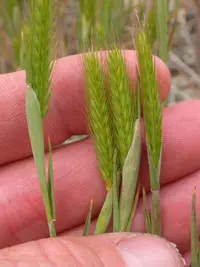
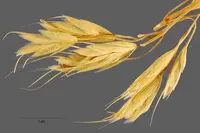
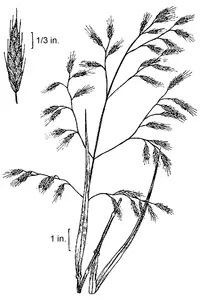
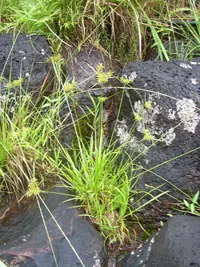
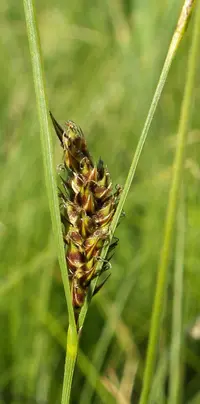
Little barley, Hordeum pusillum, is a small annual grass native to much of North America. It often appears in lawns, roadsides, fields, and disturbed soils. Plants form short, tufted clumps with upright stems topped by dense, bristly seed heads that resemble miniature barley spikes. The appearance is modest, but it can spread readily where soil is bare or compacted. This species is generally tough, tolerating poor, dry, or compacted ground better than many turf grasses, which influences how to care for little barley in managed landscapes. It prefers open, sunny sites and does best in well-drained soil, but can adapt to a range of typical garden conditions.

Care Difficulty
Easy Care

Light Preference
Full Sun

Water Requirements
Moderate Water

Temperature Preference
Cold Hardy

Hardiness Zone
3–9

Soil Texture
Sandy, Loamy, Silty

Soil pH
Slightly acidic (6.5–7.0), Neutral (7.0)

Soil Drainage
Well-drained

Fertilization
Minimal (feed rarely)
Scan your plant to receive care tips personalized for your specific plant
Available on iOS and Android
This annual grass prefers open, bright conditions typical of prairies and disturbed fields.
This species prefers briefly moist to slightly dry soils and responds best to observation-based watering.
This cool-season annual grows best in mild conditions and slows once sustained heat arrives.
Humidity is not a major care factor for Hordeum pusillum, which is adapted to dry, open habitats.
Hordeum pusillum prefers lean, mineral soils that drain quickly and do not stay wet for long periods.
This species can be grown in containers but performs best in wide, shallow pots that dry out quickly.
This native annual grass usually grows well in lean soils and needs minimal fertilization.
Hordeum pusillum needs only light pruning to keep stands tidy and to manage self-seeding.
Transplanting this small annual is usually done when establishing or adjusting plantings rather than on a repeating schedule.
Propagation of Hordeum pusillum is most practical from seed rather than division or cuttings.
This native annual is cold tolerant and generally requires no special winter care in the ground.

Plant Health Check
Not sure what's wrong with your plant? Check your plant's health inside the app.
Little barley is one of the first annual grasses to colonize disturbed or compacted soils in much of North America, often appearing quickly on construction sites, roadsides, and overgrazed fields.
This species typically germinates in cool seasons and completes its life cycle by early summer, using a fast annual strategy to set seed before heat and drought intensify.
Its small, barley-like seeds are eaten by various ground-feeding birds and small mammals, so dense patches can be a notable seasonal food source in open habitats.

Archaeobotanical studies have documented charred grains of this species at pre-contact Indigenous sites in parts of North America, indicating that it was at least occasionally gathered and used by Native peoples long before modern agriculture.
This grass germinates and establishes quite quickly, often reaching noticeable size within a few weeks in cool seasons. Growth slows in heat or drought, so consistent moisture and open soil help when growing little barley from seed.
Keep your plants happy and healthy with plant identification, disease detection, and easy care guidance.