Hortiboletus engelii Care

Hortiboletus engelii

About Hortiboletus engelii

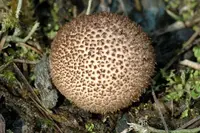
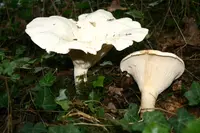
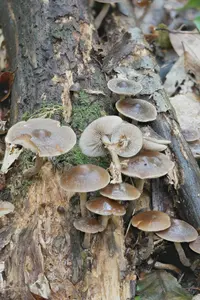
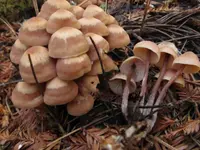
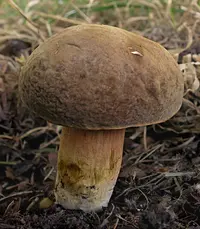
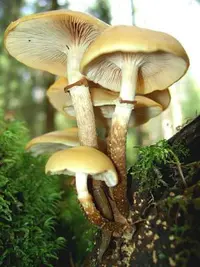
Hortiboletus engelii is a small, fleshy bolete fungus that forms mycorrhizal partnerships with trees, especially oaks, in temperate woodlands. It typically appears as compact clusters of reddish to brown caps with a yellow pore surface instead of gills. The stout stems are often finely patterned and may show subtle color changes with age or handling.

This species is naturally found in Europe and has been recorded in parklands, forest edges, and lawns with suitable host trees. It is not a typical garden or indoor species, so care for Hortiboletus engelii focuses mainly on conserving its woodland habitat, with undisturbed leaf litter, moderate moisture, and healthy trees.

Main Plant Requirements

Care Difficulty

Moderate Care

Light Preference

Partial Shade

Water Requirements

Regular Water

Temperature Preference

Cool Climate

Hardiness Zone

Unknown

Soil Texture

Loamy, Silty, Organic-rich

Soil pH

Acidic (5.5–6.5)

Soil Drainage

Moist but well-drained

Fertilization

Minimal (feed rarely)

Get Personalized Care Plan

Scan your plant to receive care tips personalized for your specific plant

Available on iOS and Android

How to Care for the Hortiboletus engelii

This ectomycorrhizal bolete prefers dappled forest light rather than open sun.

  • Ideal conditions are light to moderate shade under deciduous trees, with 1–3 hours of gentle morning sun and filtered light for the rest of the day.
  • Direct, strong afternoon sun in open sites can dry the soil surface quickly and stress the fine mycelial network supporting Hortiboletus engelii.
  • In summer, denser canopy shade protects fruiting bodies, while in early spring and autumn slightly brighter conditions still remain suitable.

Moist but not waterlogged soil around host trees supports stable mycelial activity.

  • Allow the upper 2–5 cm of forest soil or leaf litter to partially dry between natural rain events, avoiding extended saturation that promotes rot.
  • Good drainage is essential; water should infiltrate and move through the profile rather than pool on the surface for more than a few hours.
  • In dry spells, signs of insufficient moisture include shrinking or cracking caps, while persistent soggy patches and foul odor indicate overwatering or poor drainage.

This woodland fungus develops best in mild, temperate conditions.

  • Optimal fruiting typically occurs around 55–70°F (13–21°C), often in late summer to autumn when soils are cool and evenly moist.
  • Mycelium can persist down to about 32°F (0°C) in the soil, but hard freezes without insulating leaf litter may reduce surface fruiting.
  • Heat above 80°F (27°C), especially combined with dry soil and direct sun, can halt fruiting and accelerate desiccation of existing caps.

This ectomycorrhizal mushroom does not have specific humidity requirements beyond normal outdoor woodland conditions.

This ectomycorrhizal fungus relies on suitable forest soil rather than a horticultural mix.

  • Prefers loose, well-structured, moderately moist mineral soil with a surface layer of decaying leaf litter and fine roots.
  • Best fruiting occurs on freely draining, slightly acidic soil, typically around pH 5.0–6.5, under compatible trees such as oaks.
  • Avoid waterlogged, compacted, or heavily disturbed substrates, which restrict oxygen around fine tree roots and fungal mycelium.
  • Maintain a natural mulch of leaf litter instead of adding dense compost layers, to support aeration and gradual organic matter input essential for Hortiboletus engelii.

This species is not suitable for conventional container growing, because it depends on a living host tree and natural soil conditions.

This ectomycorrhizal fungus relies mainly on nutrients from its tree partners, so additional fertilizer is usually unnecessary.

As a wild ectomycorrhizal fungus associated with broadleaf trees, Hortiboletus engelii does not require pruning.

This bolete is typically managed in natural soil rather than containers, so focus on creating stable conditions instead of frequent moving.

  • Avoid disturbing established mycelium; transplant only when permanently altering the planting site of its host tree.
  • If relocation is unavoidable, move colonized soil in early spring or fall when temperatures are mild and soil is moist.
  • Lift and transfer soil blocks gently with a spade, keeping root systems and fungal threads as intact as possible.
  • Water the new site thoroughly after transplanting and maintain even moisture to reduce stress on both tree roots and fungal network.

Propagation of this wild mycorrhizal fungus is indirect and usually managed by encouraging natural spore spread and suitable host trees.

  • Leave some mature fruiting bodies to release spores rather than harvesting all mushrooms.
  • Maintain host trees in good health, since the fungus depends on their roots for carbohydrates and habitat.
  • Avoid heavy soil disturbance, deep tilling, or fungicidal treatments in areas where the fungus is present.
  • Keep soil moderately moist with a mulch layer to support long-term mycelium survival and gradual spread.

In its natural range this species is cold hardy and typically needs no specific winter care beyond stable site conditions.

Care Tips

Host tree selection

Establish this mycorrhizal fungus only near compatible broadleaf hosts such as oaks or beeches, as it relies on their roots for nutrients and will not persist in isolated beds without suitable trees.

Minimal soil disturbance

Avoid deep digging, tilling, or edging in the fruiting zone around host trees, since breaking the fine root–fungus network can sharply reduce or stop future mushroom production.

Leaf litter management

Maintain a thin, natural layer of leaf litter instead of bare soil or heavy mulch, as this stabilizes moisture and temperature while still allowing fruiting bodies to emerge.

Careful foot traffic

Mark and avoid repeated walking or placing heavy objects over productive patches because soil compaction reduces aeration and can damage the underground mycelium.

Targeted moisture support

In extended dry periods, lightly irrigate the wider root zone of the host tree rather than the mushrooms themselves, since healthy, evenly watered roots support long-term success when growing Hortiboletus engelii.

Common Pests and Diseases

Mycophagous springtails

These insects feed on the fruiting body surface and pores, causing pitting, small tunnels, and a rough, scarred cap. This pest prefers moist litter layers where H. engelii typically develops.

Solution

Lift and discard heavily damaged mushrooms and reduce excess surface moisture by improving drainage and leaf litter aeration. If populations are high in a managed habitat, carefully disturb and thin the surrounding organic layer and apply targeted, soil-safe biological controls containing predatory nematodes to reduce springtail numbers without harming the broader soil community.

Fungus gnat larvae

This pest lives in the upper soil and litter layer, burrowing into young boletes and hollowing the stems and caps. Symptoms include soft, collapsing tissue and small entry holes that quickly lead to decay.

Solution

Remove and dispose of infested fruiting bodies promptly to break the life cycle. Reduce persistently wet conditions in managed sites, use fine-mesh barriers over particularly valued areas, and, where appropriate, introduce biological controls such as Bacillus thuringiensis israelensis (Bti) granules to target larvae in the substrate.

Maggot infestation

These insect larvae, often from bolete-feeding flies, tunnel extensively through the cap and stem, turning tissue spongy and discolored. Symptoms include winding galleries, brown streaks, and premature collapse of the fruiting body.

Solution

Harvest or remove boletes at an early stage in managed collections, discarding any with visible tunneling or softness. To limit future infestations, avoid leaving overmature mushrooms in place, as these act as breeding sites, and maintain a slightly drier surface layer where possible without disturbing the tree–fungus association, which is essential for growing Hortiboletus engelii.

Moldy cap rot

This disease appears as white, gray, or green fuzzy growth on the cap and pores, often after prolonged wet periods. Symptoms include rapid softening, off-odors, and collapse of the fruiting body.

Solution

Remove and discard all moldy fruiting bodies, taking care not to spread spores by shaking or handling them roughly. Improve air movement and reduce waterlogging in the immediate area by adjusting irrigation patterns in managed landscapes and lightly loosening compacted leaf litter to help fruiting bodies dry faster after rain.

Interesting Facts

Blue-staining pores

When the yellow pore surface is bruised or cut, it often slowly stains bluish or blue-green due to oxidation of pigmented compounds, a useful field character for identification.

Oak-associated specialist

This species forms ectomycorrhizal associations with oaks in the Fagaceae family, exchanging mineral nutrients for sugars from the tree and typically appearing in warm, broadleaf woodlands.

Preference for calcareous soils

Fruiting bodies are most often recorded on calcareous or base-rich soils, so its presence can indicate underlying lime-rich geology in European woodlands.

Botan icon

Did you know?

Molecular studies of European boletes led to this fungus being moved out of the large, traditional genus Boletus into the more narrowly defined genus Hortiboletus, reflecting its distinct genetic lineage and subtle but consistent differences in cap, pore, and spore characters from related red-capped boletes.

FAQs about Hortiboletus engelii

This bolete is generally regarded as inedible and should not be collected for food. Identification of small boletes is complex, misidentification risks are high, and some related species can cause gastrointestinal upset when eaten.

Grow Healthy Plants with Botan Care

Keep your plants happy and healthy with plant identification, disease detection, and easy care guidance.

Botan plant care app — identify plants on mobile

Explore More Plants