Fishwort Care (Houttuynia cordata 'Chameleon')

Also known as: Hootenanny, Lizard Tail, Heartleaf, Bishop's Weed, Fish Mint
Fishwort

About Fishwort

Fishwort, Houttuynia cordata 'Chameleon', is a low-growing perennial groundcover known for its colorful heart-shaped leaves. Foliage often shows mixes of green, yellow, cream, and red, especially in brighter light.

It spreads by underground rhizomes, forming dense patches that can become invasive in suitable conditions. In late spring to early summer, it produces small white flower bracts above the foliage.

This plant is native to moist, partially shaded areas in East Asia, including China, Japan, and Korea. It adapts well to many garden soils but prefers consistently damp conditions.

Because it is tough, cold-hardy, and fast-spreading, it is usually easy to grow but can be difficult to control. Gardeners should understand how to care for Fishwort before planting it in open beds.

Main Plant Requirements

Care Difficulty

Easy Care

Light Preference

Partial Shade

Water Requirements

Keep Soil Moist

Temperature Preference

Cold Hardy

Hardiness Zone

4–10

Soil Texture

Loamy, Clay, Organic-rich

Soil pH

Acidic (5.5–6.5), Slightly acidic (6.5–7.0)

Soil Drainage

Waterlogged tolerant

Fertilization

Minimal (feed rarely)

Get Personalized Care Plan

Scan your plant to receive care tips personalized for your specific plant

Available on iOS and Android

How to Care for the Fishwort

Houttuynia cordata 'Chameleon' grows best in bright outdoor conditions with some protection from intense afternoon sun.

  • Provide 4–6 hours of morning sun or filtered light, especially in cooler climates, to maintain strong variegation without leaf scorch.
  • In hot regions, give partial shade with dappled light after 12 p.m. to reduce stress, crisped edges, and faded colors on Fishwort foliage.
  • In shade with less than 2–3 hours of direct light, expect greener, less colorful leaves and slower spread, though the plant usually remains healthy.

This moisture-loving perennial prefers consistently damp soil without being waterlogged.

  • Aim for evenly moist ground; the top 2–3 cm should not fully dry out, especially in warm weather or sandy soils.
  • Increase watering during hot, dry periods so the soil stays damp to a depth of 5–8 cm; reduce slightly in cool, rainy seasons to avoid soggy conditions.
  • Watch for wilting, curling, or crisping leaves as signs of underwatering, and yellowing, mushy stems or a sour soil smell as signs of overwatering; soil should drain but hold moisture.

This hardy groundcover tolerates a wide temperature range but grows fastest in mild to warm conditions.

  • Optimal active growth occurs around 65–80°F (18–27°C), with strong foliage color and steady spreading in this range.
  • The plant survives winter cold down to about 0°F (−18°C) in the ground; top growth dies back with frost, then re-sprouts from rhizomes in spring.
  • Short heat waves up to about 90°F (32°C) are tolerated if soil stays moist; prolonged extreme heat with dry soil can cause leaf scorch and growth slowdown.

This plant prefers consistently moist conditions but usually does not need special humidity management outdoors.

  • Aim for ambient humidity around 40–60% for healthy foliage, higher in very hot, dry climates.
  • Low humidity combined with dry soil causes leaf edges to brown and curl, especially in full sun.
  • In dry, exposed spots, group containers together and use a mulch layer to reduce evaporation and buffer humidity around Fishwort.

This species thrives in consistently moist, heavy to loamy soil and tolerates poorly drained sites.

  • Use a mix of garden loam with 30–50% compost to create a dense, moisture-retentive substrate that still allows some air around roots.
  • Soil can range from slightly acidic to neutral (about pH 5.5–7.0), which suits most yard soils without major adjustment.
  • For containers, combine compost, loam, and a small amount of sand; avoid large amounts of perlite that dry the root zone too quickly.
  • Do not plant in fast-draining, very sandy beds where water runs off quickly, as this restricts spreading and causes drought stress.

This vigorous spreader is suitable for container growing and often benefits from the containment.

  • Choose a wide, heavy pot to restrict horizontal spread and prevent the plant from tipping when foliage is dense.
  • Use a container at least 25–30 cm wide so underground stems have room to creep without quickly overcrowding.
  • Select thicker-walled or non-porous pots if rapid drying is a problem, since the roots perform best in consistently moist media.

This vigorous perennial usually needs only light feeding, especially in rich or naturally moist soil where Fishwort thrives without heavy inputs.

  • Use a balanced slow-release fertilizer or a thin layer of compost in early spring to support new growth.
  • In average garden soil, feed once per growing season; in poor soil, a second light application in midsummer is enough.
  • Apply at 1/2 strength of label rates to avoid overly lush, floppy growth and nutrient runoff.
  • Skip fertilizing in late fall and winter when growth stops or dies back.

Pruning helps manage the spread and appearance of Houttuynia cordata 'Chameleon' in garden beds or containers.

  • Cut back old, brown, or winter-killed stems in late winter or early spring before new shoots emerge.
  • Remove damaged, diseased, or overcrowded stems during the growing season to improve air flow and reduce fungal issues.
  • Shear or trim edges lightly to contain spread and maintain a neat outline in borders or pondsides.
  • Use clean, sharp hand pruners or shears, disinfecting blades if disease is present.

This spreading groundcover is more often managed by transplanting or containing its roots than by frequent repotting.

  • Plan division or transplanting in early spring or early fall when temperatures are mild and soil is moist.
  • Move clumps when growth becomes too dense, spreads beyond its allotted area, or performance declines in the center.
  • Lift sections with a spade, slice congested root masses into smaller pieces, and replant at the same depth in prepared soil.
  • Water thoroughly after transplanting, shade for a few days in hot weather, and keep soil evenly moist to limit transplant shock.

Houttuynia cordata 'Chameleon' is most commonly propagated by division, which also helps control its spread.

  • Divide established clumps in early spring or early fall when the soil is workable and plants are not stressed by heat.
  • Lift a portion of the patch, then cut rhizome sections with several buds and healthy roots attached.
  • Replant divisions 20–30 cm apart in moist, well-drained soil, firming gently and watering thoroughly.
  • For stem cuttings, root non-flowering shoots in water or moist potting mix under bright, indirect light and high humidity.

This hardy perennial usually needs minimal winter care, as its underground rhizomes tolerate typical cold in most temperate climates.

  • In USDA zones about 5–9, plants die back to the ground while rhizomes survive and reshoot in spring.
  • Apply a 5–8 cm layer of mulch after the first hard frost to buffer soil temperature and conserve moisture.
  • Container-grown plants in colder regions can be sunk into the ground or moved to a sheltered, frost-free but cool spot.

Care Tips

Contain Spreading Roots

Plant in a buried pot or root barrier 25–30 cm deep to prevent rhizomes from invading nearby beds and lawns while still allowing a dense, colorful patch to form.

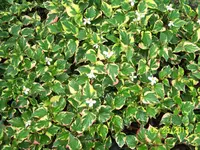
Use As Living Mulch

Under taller shrubs or open-canopy trees, allow a controlled patch to act as a living mulch that suppresses weeds and cools the soil, but edge the area at least 1–2 times per season to keep it in bounds.

Divide For Renewal

Lift and divide clumps every 2–3 years in early spring, replanting only the strongest rhizome sections to maintain vivid foliage color and prevent overcrowding.

Moisture Basin Setup

In wetter parts of the garden, create a shallow basin or low swale so runoff collects around the planting, which supports lush growth without constant supplemental watering when growing Fishwort.

Monitor Invasiveness

In regions where this species is vigorous, routinely remove any rhizomes or stems that cross property boundaries or escape into natural areas, disposing of them in the trash rather than compost to avoid unintended spread.

Common Pests and Diseases

Flea beetles

These insects chew many tiny round holes in leaves, giving foliage a lace-like or shot-hole appearance, especially on young growth.

Solution

Use lightweight row covers or fine mesh to protect new shoots, and keep nearby weeds down to reduce breeding sites. For established infestations, rinse foliage with water to dislodge adults, then apply a neem oil or pyrethrin-based spray in the evening, repeating as needed according to label directions.

Leaf spot

This disease causes small brown, tan, or black spots on leaves that may enlarge and merge, sometimes leading to yellowing and early drop of foliage in humid conditions.

Solution

Remove and discard affected leaves to reduce spore spread, and avoid overhead watering so foliage dries quickly. Improve spacing and airflow, and if spotting progresses, apply a labeled copper or chlorothalonil fungicide to new growth, following product instructions carefully as part of broader Houttuynia cordata 'Chameleon' care instructions.

Rust

This disease produces yellow to orange spots on upper leaf surfaces and powdery orange or brown pustules on the undersides, which release spores in moist, warm weather.

Solution

Promptly remove and dispose of infected leaves and any fallen debris, and reduce leaf wetness by watering at soil level. In sites with recurring rust, thin dense patches of plants for better airflow and use a sulfur or copper-based fungicide early in the season if conditions are favorable for infection.

Spider mites

These pests cause fine stippling, dull or bronzed foliage, and may leave delicate webbing on the undersides of leaves during hot, dry weather.

Solution

Spray foliage thoroughly with a strong stream of water to knock mites off, repeating every few days until activity declines, and increase humidity around the planting if possible. For persistent infestations, apply insecticidal soap or horticultural oil to leaf undersides, ensuring full coverage and avoiding application in full midday sun.

Slugs and snails

These pests chew irregular holes in leaves, often leaving ragged edges and slimy trails on or around the plant, especially in shaded, damp beds.

Solution

Hand-pick slugs and snails in the evening or after rain, and use barriers such as copper tape or rough diatomaceous earth rings around key clumps. Reduce hiding places by clearing thick mulch and debris close to stems, and, if needed, place iron-phosphate slug bait around but not on the plants, following label directions.

Interesting Facts

Variegation and sun response

This cultivar shows stronger yellow, cream, and red variegation when grown in higher light, while plants in deeper shade tend to revert to greener leaves with less color contrast.

Rhizome-driven spread

It forms dense, spreading colonies through underground rhizomes that can travel beyond the original planting area, making it both an effective groundcover and a potential garden invader if not contained.

Unusual leaf chemistry

The foliage releases a strong, distinctive odor when crushed because of volatile compounds similar to those found in the species, which has led to its common name fishwort in some regions.

Botan icon

Did you know?

In some traditional East Asian gardens, this cultivar has been used as a living indicator of light conditions, since changes in leaf variegation patterns visually signal whether a site is receiving enough sun for optimal color, which can help gardeners adjust placement when growing Fishwort.

FAQs about Fishwort

This species spreads very aggressively by rhizomes and self-seeding, especially in moist soil. Use root barriers, containers, or raised beds, and remove unwanted shoots regularly to prevent it from overtaking nearby planting areas.

Grow Healthy Plants with Botan Care

Keep your plants happy and healthy with plant identification, disease detection, and easy care guidance.

Botan plant care app — identify plants on mobile

Explore More Plants