Leaf litter management
Leave a thin, patchy layer of undecayed leaf litter around the fruiting area to maintain the fungus’s mycelium habitat, but remove thick, matted layers that hold excess water and block air flow.

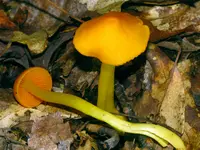
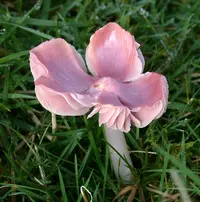
The orange gilled waxcap, Humidicutis marginata, is a small, brightly colored mushroom rather than a true houseplant. It produces slender stems topped with smooth, conical to bell-shaped caps in vivid orange or yellow tones. The gills underneath are also strongly colored, giving the species its common name.
This fungus usually appears in mossy grasslands, woodland clearings, and damp, undisturbed soils, often in nutrient-poor sites. It is considered challenging to cultivate because it depends on complex soil and microbial conditions that are hard to reproduce in containers. Most information on how to care for orange gilled waxcap focuses on conserving suitable outdoor habitats rather than growing it indoors.

Care Difficulty
Hard Care

Light Preference
Partial Shade

Water Requirements
Keep Soil Moist

Temperature Preference
Cool Climate

Hardiness Zone
Unknown

Soil Texture
Loamy, Silty, Organic-rich

Soil pH
Acidic (5.5–6.5)

Soil Drainage
Moist but well-drained

Fertilization
Minimal (feed rarely)
Scan your plant to receive care tips personalized for your specific plant
Available on iOS and Android
This woodland fungus prefers soft, filtered light rather than direct, exposed sun.
Moist, well-drained soil is essential for consistent fruiting of this woodland species.
This species prefers cool, moist conditions typical of temperate woodlands.
This woodland fungus prefers consistently moist air and benefits from higher ambient humidity outdoors.
This species fruits best in moist, aerated, organic-rich soil that stays evenly damp but not stagnant.
This fungus is generally unsuitable for long-term container growing because it depends on complex soil and habitat interactions.
This woodland fungus is adapted to low-nutrient environments and usually does not need supplemental fertilizer when grown outdoors.
Humidicutis marginata requires no true pruning, only minimal cleanup of fruiting bodies for hygiene and appearance.
In cultivation, this fungus is best managed by gentle transplanting or relocation of colonized substrate rather than conventional repotting.
Reproduction of Humidicutis marginata in managed settings is experimental and not straightforward for most home growers.
Outdoor populations generally tolerate typical temperate winters and need little targeted winter care.

Plant Health Check
Not sure what's wrong with your plant? Check your plant's health inside the app.
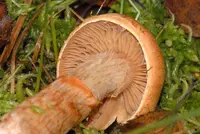
This waxcap species is notable for its striking orange to yellow-orange gills that often contrast with a paler cap, a feature that helps distinguish it from many other waxcap fungi in the field.
The cap surface has a characteristically waxy, moist feel and appearance when fresh, a hallmark of waxcap fungi linked to the structure of the cap cuticle and its water-holding properties.
In parts of Europe, this species is considered a waxcap grassland indicator, often associated with long-unimproved, low-fertilizer meadows that support high fungal biodiversity.
This mushroom is generally regarded as inedible due to its small size, insubstantial flesh, and possible confusion with similar species. It is best treated as a conservation-interest fungus to observe, photograph, and leave undisturbed rather than harvest for food.
Keep your plants happy and healthy with plant identification, disease detection, and easy care guidance.