Huperzia crassa Care

Huperzia crassa

About Huperzia crassa

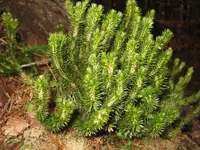
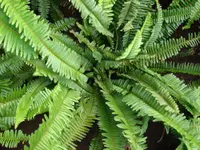
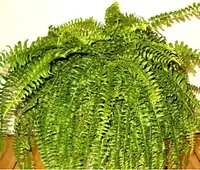
Huperzia crassa is an epiphytic clubmoss, related to ferns rather than flowering plants. It forms dense, trailing to arching stems covered in overlapping, scale-like leaves. The plant naturally occurs in humid, high-elevation forests, often growing on trees or rocks where air movement is good and moisture is constant. This origin makes it less tolerant of drying out or stagnant, hot air indoors. It suits patient growers who can provide stable humidity and gentle, filtered light. Understanding how to care for Huperzia crassa starts with treating it more like a delicate fern than a typical houseplant, with evenly moist conditions and very free-draining, airy substrate.

Main Plant Requirements

Care Difficulty

Hard Care

Light Preference

Partial Shade

Water Requirements

Keep Soil Moist

Temperature Preference

Tropical / Frost Sensitive

Hardiness Zone

11–12

Soil Texture

Peaty, Organic-rich

Soil pH

Strongly acidic (4.5–5.5), Acidic (5.5–6.5)

Soil Drainage

Moist but well-drained

Fertilization

Light (every 4–6 weeks)

Get Personalized Care Plan

Scan your plant to receive care tips personalized for your specific plant

Available on iOS and Android

How to Care for the Huperzia crassa

This species prefers bright, filtered conditions that mimic forest understory light.

  • Provide bright, indirect light for 8–10 hours per day, such as dappled shade under taller plants or a sheer-curtained east or north window.
  • Allow only gentle morning sun; avoid strong midday or afternoon sun, which can scorch soft foliage and cause yellowing or bleached patches on Huperzia crassa.
  • In winter, move plants slightly closer to the light source or supplement with a weak grow light if fronds become pale and elongate, indicating insufficient light.

Moist, aerated conditions are essential for healthy root and stem growth.

  • Aim for evenly moist substrate, letting only the top 1–2 cm feel just barely dry before watering again to prevent drought stress and frond shriveling.
  • Use a loose, free-draining mix so excess water runs through quickly, reducing the risk of stagnant conditions, root rot, and sour odors after watering.
  • Reduce watering volume slightly in cooler months, but never allow the root zone to dry out completely; crisp tips and limp fronds signal underwatering, while blackened bases suggest overwatering.

Stable, mild temperatures support steady growth and reduce stress in this epiphytic species.

  • Maintain an ideal range of 65–80°F (18–27°C) for active growth, avoiding sudden swings greater than about 10°F (6°C) in a single day.
  • Protect from cold; growth slows below 55°F (13°C), and tissue damage can occur if exposed near or below 40°F (4°C), especially with wind or damp conditions.
  • In hot periods above 85°F (29°C), increase shade and air movement, and avoid placing plants near heat sources that create localized hot, dry pockets around the foliage.

This species needs consistently high humidity to maintain healthy foliage and growing tips.

  • Aim for 70–90% humidity, as prolonged exposure below 50% often causes desiccation of fine shoots.
  • In dry air, tips brown, new growth stalls, and fronds feel crisp rather than firm and slightly flexible.
  • Increase humidity with a closed terrarium, humidifier, or placement above a water-filled pebble tray, avoiding direct mist on growing tips.

This epiphytic species prefers a loose, airy, organic medium rather than dense potting soil.

  • Use a mix such as 40% fine orchid bark, 30% sphagnum moss, 20% perlite, and 10% coco coir to mimic epiphytic conditions.
  • Ensure rapid drainage so water passes through in seconds, leaving the mix moist but never waterlogged or compacted.
  • Keep pH slightly acidic to neutral, around 5.5–7.0, which supports nutrient availability without stressing roots.
  • Avoid heavy garden soil, peat-only mixes, or any medium that compresses and restricts air spaces, and fluff the mix if it settles.

This species is suitable for container growing when the pot and setup support its epiphytic, hanging habit.

  • Use a hanging basket or slatted orchid pot to allow stems to drape freely and excess moisture to evaporate from the sides.
  • Choose a relatively shallow but wide container so roots spread in the airy mix without a deep column of wet substrate.
  • Select plastic or glazed ceramic if slower moisture loss is needed, or unglazed terracotta where extra evaporation helps prevent soggy conditions.

This epiphytic clubmoss has low nutrient needs, so use light feeding to support steady growth without burning sensitive roots.

  • Use a balanced liquid fertilizer (around 10-10-10) at 1/4 strength for Huperzia crassa during active growth.
  • Feed every 4–6 weeks in spring and summer only, skipping any schedule if foliage already looks deep green.
  • Avoid heavy compost or slow-release granules that can accumulate salts in the airy root zone.
  • In fall and winter, reduce feeding to 1 light application or stop entirely if growth slows.

This species needs minimal pruning, mainly to keep hanging stems tidy and healthy.

  • Best time for light trimming is late spring or early summer, when growth is active.
  • Use sharp, clean scissors to remove dead, yellowing, or damaged stem tips only.
  • Thin crowded or tangled sections lightly to improve air flow and maintain an even cascade shape for Huperzia crassa.
  • Avoid cutting into woody bases; focus on soft, green tips to reduce stress and disease entry points.

Container-grown plants benefit from careful, infrequent repotting to refresh the loose, well-drained medium.

  • Check for roots circling the pot, pushing out of drainage holes, or noticeably slower growth as signs to repot Huperzia crassa.
  • Plan repotting for spring, every 2–3 years, or only when the root mass clearly fills the container.
  • Move into a slightly larger pot using an airy orchid- or fern-style mix, keeping the rootball as intact as possible.
  • Water gently afterward, keep humidity high, and shade from strong sun for 1–2 weeks to limit transplant shock.

Propagation is possible but slow, and requires stable humidity and patience.

  • Most success comes from careful division of well-established clumps with multiple healthy shoots.
  • Carry out division in spring, separating sections with intact roots and several stem tips for each piece.
  • Plant divisions in a loose, moisture-retentive but well-aerated mix, then maintain 70–80% humidity and low to medium light.
  • Avoid deep planting; anchor stems lightly and keep the medium just moist to reduce rot risk in Huperzia crassa.

This tropical clubmoss is frost-sensitive and needs mild, stable conditions over winter.

  • Keep temperatures around 55–70°F; avoid exposure to frost, cold drafts, or unheated spaces.
  • In cold climates, grow Huperzia crassa indoors year-round or move containers inside before night temperatures drop below 50°F.
  • Maintain bright, indirect light and 60–80% humidity using trays or room humidifiers in heated homes.
  • Water sparingly but do not allow the medium to fully dry; growth usually slows in winter.

Care Tips

Mounting Technique

Mount the plant on a slab of bark or an open slatted basket with long-fiber sphagnum secured loosely around the roots so air can move freely and the stems do not stay in contact with saturated mix.

Gradual Acclimation

When moving the plant to a brighter or drier spot, shift it over 2–3 weeks by small position changes to prevent stress that can cause yellowing or stem tip dieback.

Moisture Checkpoints

Inspect the inner parts of the hanging clump regularly, because the core can stay wet longer than the outer fronds and may need extra air movement or a slight reduction in watering frequency.

Clean Water Practice

Use low-mineral water and flush the mount or basket thoroughly every 4–6 weeks to wash out built-up salts that can burn the fine roots and slow growing Huperzia crassa.

Handling With Care

Support stems with both hands when repotting or remounting, and avoid bending or squeezing the fleshy segments, which bruise easily and recover slowly.

Common Pests and Diseases

Scale insects

These insects feed on stems and leaf bases, causing yellowing, stunting, and sticky honeydew on the foliage of hanging or mounted plants.

Solution

Remove by hand or with a cotton swab dipped in 70% isopropyl alcohol, then rinse fronds gently with lukewarm water; repeat weekly until no new insects appear and improve air movement to reduce reinfestation risk.

Mealybugs

These insects hide in stem joints and among the overlapping leaf bases, forming white cottony clusters and weakening shoots over time.

Solution

Inspect inner shoot crevices regularly, dab visible insects with 70% isopropyl alcohol, then shower the plant thoroughly; for persistent cases, use a labeled insecticidal soap, ensuring the solution reaches between stems and leaf bases.

Rhizoctonia stem blight

This disease causes brown, sunken lesions and a rapid collapse of individual trailing stems, often starting where moisture lingers along crowded shoots or mounting material.

Solution

Cut out and discard affected stems well back into healthy tissue, reduce overhead misting, increase airflow around the plant, and allow the substrate or mount to dry slightly between waterings while keeping humidity high in the surrounding air, not on the plant surface.

Botrytis gray mold

This disease develops on crowded, poorly ventilated fronds, leading to soft, water-soaked tissues that develop gray fuzzy spores, especially in cool, humid rooms.

Solution

Remove and discard all affected fronds, space plants for better ventilation, reduce leaf wetness by misting less directly onto the plant, and maintain good air circulation with a small fan, particularly during cool, damp periods when caring for Huperzia crassa.

Interesting Facts

Old lineage lycophyte

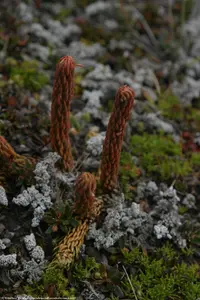
Huperzia crassa is a terrestrial clubmoss, part of a very ancient plant lineage (Lycopodiopsida) that diverged from other vascular plants hundreds of millions of years ago, long before flowering plants evolved. Its anatomy and reproduction through spores reflect this primitive vascular plant structure rather than the seed-based strategy of most modern garden plants.

Spores, not seeds

This species produces dust-like spores in specialized structures called sporangia, instead of flowers and seeds. The spores must germinate in association with specific soil fungi (mycorrhizae), which makes natural regeneration slow and highly dependent on intact forest soil.

New Zealand forest specialist

Huperzia crassa is native to New Zealand, where it grows mainly on cool, moist forest floors and rocky outcrops, often in montane and subalpine zones. Its preference for shaded, humid, low-nutrient habitats explains why Huperzia crassa plant care indoors is often challenging compared with more adaptable houseplants.

Botan icon

Did you know?

In its native range, Huperzia crassa helps stabilize thin, rocky or mossy forest substrates with its dense, creeping stems and roots, creating small, sheltered microsites where other spore‑bearing plants, mosses, and seedlings can gradually establish.

FAQs about Huperzia crassa

This species grows slowly, usually adding only a few centimeters of new stem each year. Consistent moisture, high humidity, and stable, mild temperatures help maintain steady growth, but it rarely shows rapid size changes even in ideal conditions.

Grow Healthy Plants with Botan Care

Keep your plants happy and healthy with plant identification, disease detection, and easy care guidance.

Botan plant care app — identify plants on mobile

Explore More Plants