fir clubmoss Care (Huperzia selago)

Also known as: Northern Firmoss
fir clubmoss

About fir clubmoss

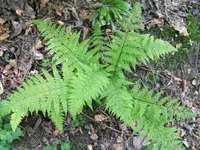
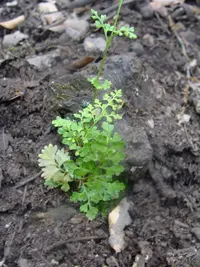
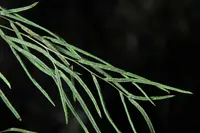
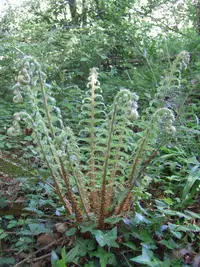
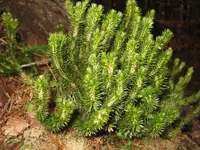
Fir clubmoss (Huperzia selago) is an evergreen, fern-like lycophyte, not a true moss or fern. It forms dense, upright tufts that resemble tiny fir branches. Leaves are small, stiff, and closely packed along the stems, giving the plant a neat, architectural look. Growth is slow and compact. In nature it occurs in cool, often mountainous or northern regions, usually in moist, rocky, or mossy habitats. It prefers stable moisture, good air circulation, and low to moderate light, which makes it challenging to keep healthy indoors. Anyone wanting to know how to care for fir clubmoss should expect a plant that is sensitive to drying out, heat, and strong sun.

Main Plant Requirements

Care Difficulty

Hard Care

Light Preference

Partial Shade

Water Requirements

Keep Soil Moist

Temperature Preference

Cool Climate

Hardiness Zone

3–7

Soil Texture

Loamy, Peaty, Organic-rich

Soil pH

Strongly acidic (4.5–5.5), Acidic (5.5–6.5)

Soil Drainage

Moist but well-drained

Fertilization

Minimal (feed rarely)

Get Personalized Care Plan

Scan your plant to receive care tips personalized for your specific plant

Available on iOS and Android

How to Care for the fir clubmoss

This species prefers soft, forest-like light that avoids harsh midday sun.

  • Provide bright, filtered light or light shade, such as under taller plants or dappled tree cover, for about 4–6 hours per day.
  • Allow gentle early-morning sun in cool climates but protect fir clubmoss from direct afternoon sun, which can cause leaf yellowing and scorch.
  • In summer, increase shade or move to deeper dappled light; in low winter light, shift slightly closer to brighter exposure without direct midday rays.

This plant prefers evenly moist, cool substrate rather than cycles of drying out and soaking.

  • Water when the surface just starts to feel slightly dry but the top 1–2 cm still feel faintly moist, avoiding complete surface dryness.
  • Use loose, well-drained, humus-rich soil so water moves through quickly but retains some moisture, reducing the risk of root rot.
  • In cool, low-light seasons, reduce volume and let the surface stay lightly moist; in warmer, breezier periods, check more often for limp or curling shoots indicating dryness.

This species prefers cool to mild conditions and is sensitive to both frost and intense heat.

  • Aim for 50–68°F (10–20°C) for steady growth, with the coolest conditions at the lower end during winter and slightly warmer in active growth.
  • Protect from frost; growth can be damaged below about 32°F (0°C), especially with drying winds or exposed sites.
  • Avoid prolonged heat above 77–80°F (25–27°C); provide shade, extra humidity, and good air movement if brief hot spells occur.

This species needs consistently high humidity to maintain healthy, firm shoots and tips.

  • Aim for 60–80% humidity; prolonged exposure below 50% often leads to browning tips and shriveling branchlets.
  • In dry indoor air, place the pot on a pebble tray with water or run a nearby humidifier rather than misting heavily.
  • Signs of low humidity in fir clubmoss include crispy, pale new growth and slow recovery after watering, even when soil is moist.

Huperzia selago prefers a loose, moist, highly aerated mix that mimics cool, mossy forest conditions.

  • Use a mix of roughly 40% fine orchid bark, 30% sphagnum moss, 20% perlite, and 10% leaf mold or composted bark for organic matter.
  • Ensure rapid drainage so water runs through within seconds, but the moss and bark retain slight, even moisture around the roots.
  • Keep pH slightly acidic, around 5.0–6.0, by avoiding lime and using pine bark or peat-based components rather than alkaline materials.
  • Avoid heavy potting soil, clay-rich mixes, and compacted substrates, which restrict air flow and cause root rot and stem base decay.

This species can be grown in containers if the pot setup supports constant moisture with high aeration.

  • Choose a tall, relatively narrow pot so the dangling or arching stems clear the rim while the root zone stays deep and evenly moist.
  • Use a breathable material such as unglazed clay only if you can compensate for faster drying by increasing watering or humidity.
  • Elevate the container slightly on pot feet or a stand so all drainage holes stay clear and excess water leaves the mix quickly after watering.

Huperzia selago is sensitive to excess nutrients, so only light, occasional feeding is appropriate.

  • Use a very dilute balanced liquid fertilizer (around 1/4 strength) or a weak organic solution designed for epiphytic ferns.
  • Feed sparingly during active growth in spring–summer, about every 6–8 weeks, and skip months if growth looks strong.
  • Avoid slow-release granules or heavy compost, which can burn the fine roots and encourage rot in wet substrates.
  • Stop feeding in autumn–winter, as fir clubmoss slows down and extra nutrients may stress the plant.

Huperzia selago requires minimal pruning, mainly for health and light shaping rather than size control.

  • Carry out light pruning in late winter or early spring, before new growth speeds up.
  • Use clean, sharp scissors to remove dead, yellowing, or damaged shoots at their base.
  • Thin crowded or tangled tips slightly to improve air flow and maintain an even, upright form.
  • Avoid cutting hard into healthy green stems, as this plant branches slowly and can look sparse after heavy pruning.

This species dislikes frequent disturbance, so repotting or transplanting should be infrequent and gentle.

  • Look for roots circling the container, water running straight through, or noticeably slowed growth as signs a larger pot is needed.
  • Plan any move for early spring, allowing the plant the full growing season to re-establish after transplanting.
  • Expect to repot only every 2–3 years, stepping up 1 pot size and keeping a loose, well-drained, humus-rich mix.
  • Handle roots carefully, disturbing them as little as possible, keep the root ball intact, and shade the plant with steady moisture for 1–2 weeks afterward.

Huperzia selago is slow and technically challenging to propagate, so it is rarely multiplied by home growers.

  • Specialist growers use spores under sterile, consistently moist, low-light conditions, often taking many months to germinate.
  • Division of well-established clumps is possible only on larger, healthy plants and must be done with minimal root disturbance.
  • Carry out any division in early spring, potting sections into a very airy mix and maintaining high humidity and gentle, indirect light.
  • Do not remove many shoots from a small plant, as reduced photosynthetic area slows recovery and increases loss risk.

This species prefers cool conditions but is not fully tolerant of prolonged hard freezes, especially in containers.

  • In-ground plants in cool, moist, sheltered sites tolerate light frosts, provided soil drains well and does not stay waterlogged.
  • Apply a light mulch around the root zone in late autumn to buffer temperature swings without smothering the crown.
  • Move container-grown plants indoors or into a cold greenhouse before temperatures stay below about 25°F.
  • Keep winter soil slightly moist, never saturated, and reduce feeding to avoid weak, frost-sensitive growth.

Care Tips

Upright support frame

Train the fronds to stay upright by inserting a small, rust-free wire hoop or plastic ring into the pot and gently guiding new shoots through it before they harden, which keeps the plant compact and prevents stems from snapping under their own weight.

Cool-down rest period

Provide a mild rest period in late fall to mid-winter by reducing growth stimulation (no repotting, no fertilizer, minimal disturbance) and keeping it on the cooler end of its safe range to encourage denser, more compact new growth in spring.

Moisture-retentive topdressing

Add a thin topdressing of chopped long-fiber sphagnum or fine orchid bark around, not over, the stem bases to stabilize humidity at the root zone and reduce the risk of the fine roots drying between waterings.

Gentle airflow management

Use a small, low-speed fan set several feet away to move air gently across the plant, which helps prevent fungal issues on dense foliage while avoiding direct drafts that could desiccate the delicate shoots.

Quarantine and inspection

When bringing in new ferns, mosses, or epiphytes, quarantine them for 2–3 weeks and inspect with a hand lens for scale or mites, since early isolation is one of the most effective tools when caring for fir clubmoss in a mixed collection.

Common Pests and Diseases

Scale insects

These insects attach to stems and leaf bases, sucking sap and causing yellowing, stunting, and gradual decline, especially in dense, humid displays. Symptoms include small, dome-shaped brown or tan bumps that do not move when touched.

Solution

Isolate the plant, then gently wipe or soft-brush stems and leaf bases with cotton pads dipped in diluted alcohol or insecticidal soap, taking care not to crush the delicate shoots. Improve air movement, avoid overfertilizing, and repeat spot treatments weekly until no new scale appears.

Spider mites

This pest thrives in warm, dry air around indoor or greenhouse-grown plants, leading to dull, stippled foliage and fine webbing deep in the leaf clusters. Symptoms include slowed growth and loss of the plant’s normal fresh green color.

Solution

Increase humidity to 60–70%, rinse foliage thoroughly under a soft, lukewarm shower, and use an insecticidal soap or horticultural oil spray directed into crevices and shoot bases. Repeat treatments every 5–7 days for several cycles and avoid letting the air become too dry again to maintain good fir clubmoss indoor care conditions.

Fungal shoot blight

This disease develops in overly crowded, poorly ventilated clumps kept constantly wet, causing blackened shoot tips and progressive dieback from the top downward. Symptoms include softened tissue, browning along stems, and loss of the plant’s fine, fir-like texture.

Solution

Remove and discard all affected shoot tips, then improve spacing, airflow, and watering so the medium is moist but not waterlogged and the foliage can dry between waterings. If spread continues, apply a broad-spectrum fungicide labeled for ornamental foliage plants and avoid overhead watering in cool conditions.

Bacterial leaf spot

This disease appears as water-soaked, translucent spots at leaf bases and small branch points, which later turn brown and may coalesce into irregular blotches. Symptoms include local yellowing around the lesions and local tissue collapse in heavily affected areas.

Solution

Promptly prune out and discard affected sections with sterilized tools, and avoid splashing water onto the foliage, especially in cool or low-light periods. Improve airflow, keep the plant in a stable, moderate temperature range, and use only clean, well-draining substrate to reduce reinfection.

Interesting Facts

Ancient vascular lineage

This clubmoss belongs to an early-diverging group of vascular plants whose basic body plan has changed little since the Paleozoic, making it a living representative of some of the earliest land plant lineages.

Circumboreal distribution

The species has a wide, mainly northern distribution across North America, Europe, and Asia, occurring in cool, often acidic habitats such as moorlands, open conifer woods, and alpine or subalpine slopes.

Specialized spore cones

Unlike many other clubmosses that have dense, distinct strobili (spore cones), this species produces spores from structures that are only slightly differentiated from normal leaves, giving its fertile shoots a less obviously cone-like appearance.

Botan icon

Did you know?

The species has a very slow natural regeneration rate because it relies on tiny, dust-like spores that must first form a long-lived underground gametophyte in symbiosis with specific mycorrhizal fungi before a recognisable shoot appears above ground, a process that can take several years.

FAQs about fir clubmoss

Brown tips or segments usually come from low humidity, drying out between waterings, or exposure to hot, moving air. Check moisture in the root zone, increase ambient humidity, and keep it away from heaters, vents, or intense sun.

Grow Healthy Plants with Botan Care

Keep your plants happy and healthy with plant identification, disease detection, and easy care guidance.

Botan plant care app — identify plants on mobile

Explore More Plants