

Epiphytic mounting
Mount the plant on bark or a slatted plaque with long-fiber sphagnum wrapped loosely around the roots to mimic its natural epiphytic habit and improve air flow around the root zone.

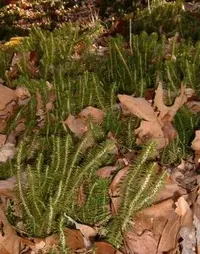
Shining clubmoss (Huperzia lucidula) is an evergreen, fern-like lycophyte that forms dense, upright clumps of glossy green shoots. It has narrow, overlapping leaves that give each stem a soft, bottlebrush appearance.
This species naturally occurs in cool, shaded forests and rocky slopes across eastern North America, often in consistently moist, humus-rich habitats. Its need for stable moisture, high humidity, and cool, shaded conditions makes it more challenging than typical houseplants.
Those who care for shining clubmoss should know it prefers low to moderate light, evenly moist substrate, and very good air circulation rather than heavy, compact soil.

Care Difficulty
Hard Care

Light Preference
Partial Shade

Water Requirements
Keep Soil Moist

Temperature Preference
Cool Climate

Hardiness Zone
3–7

Soil Texture
Loamy, Peaty, Organic-rich

Soil pH
Strongly acidic (4.5–5.5), Acidic (5.5–6.5)

Soil Drainage
Moist but well-drained

Fertilization
Minimal (feed rarely)
Scan your plant to receive care tips personalized for your specific plant
Available on iOS and Android
This woodland species prefers soft, filtered light that mimics a shaded forest understory.
Moist, evenly damp conditions suit this species, but standing water quickly damages the roots.
This species prefers cool to mild, stable temperatures without sharp swings or frost.
This species needs consistently humid air to maintain healthy, glossy foliage.
Use a loose, moisture-retentive but fast-draining mix that mimics a forest floor.
This species adapts well to container growing when moisture and stability are managed carefully.
This species is adapted to low-nutrient forest habitats, so shining clubmoss needs only light, cautious feeding in cultivation.
Huperzia lucidula needs minimal pruning, mainly to maintain a tidy form and remove unhealthy material.
This clubmoss prefers stable conditions, so repotting or transplanting should be infrequent and gentle.
Huperzia lucidula propagation is slow and technically challenging, so it is not commonly attempted by beginners.
In most temperate regions this species is not fully frost hardy, so winter care focuses on avoiding freezing conditions.

Plant Health Check
Not sure what's wrong with your plant? Check your plant's health inside the app.
This species is native to eastern North America and is one of the few clubmosses in the region that naturally forms glossy, upright, unbranched shoots rather than creeping stems.
It typically grows on cool, shaded forest floors or decaying logs in moist, acidic soils, where its dense tufts help stabilize leaf litter and provide microhabitat for small invertebrates.
Like other lycophytes, it has a two-stage life cycle with separate, often hidden gametophytes in the soil and spore-bearing structures along the upper leaves, reflecting an ancient reproductive strategy older than flowering plants.
Growth is slow to moderate. New shoots usually extend only a few centimeters per year, especially indoors. Consistent moisture, cool temperatures, and high humidity support steady growth, but this species rarely shows rapid, noticeable size increases.
Keep your plants happy and healthy with plant identification, disease detection, and easy care guidance.

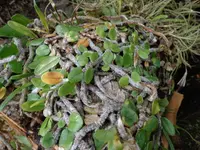
Microgramma vacciniifolia
Microgramma vacciniifolia
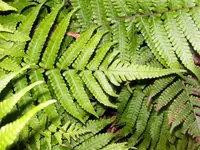
downy maiden fern
Thelypteris dentata
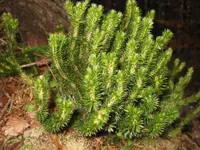
toothed clubmoss
Huperzia serrata
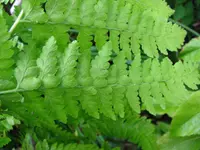
limpleaf fern
Microlepia speluncae
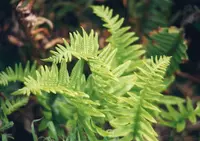
California polypody
Polypodium californicum
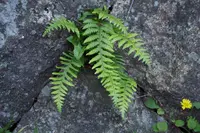
Japanese beech fern
Phegopteris decursive-pinnata
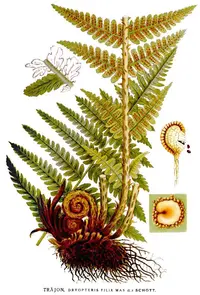
male fern
Dryopteris filix-mas
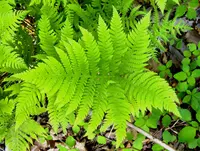
broad beechfern
Phegopteris hexagonoptera