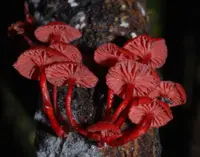
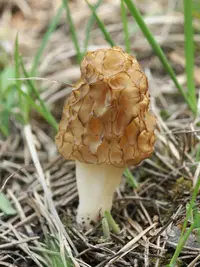
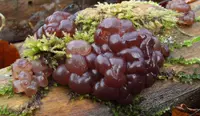
bleeding blue tooth Care (Hydnellum cyanopodium)

bleeding blue tooth

About bleeding blue tooth

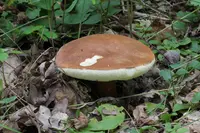
Hydnellum cyanopodium, commonly called bleeding blue tooth, is a tooth fungus rather than a typical leafy plant. It forms dense, irregular caps with spines underneath instead of gills.

Young fruiting bodies often show striking red fluid droplets on a pale surface, giving a bleeding appearance. As they age, they become darker and more woody.

This species is native to forested regions, usually in cool, moist conifer or mixed woods where it grows on the ground in association with tree roots. It is mycorrhizal, meaning it depends on a partnership with trees, so it is challenging to care for bleeding blue tooth in a garden or container.

In nature it prefers undisturbed, acidic, well-drained soils with consistent moisture and dappled woodland light.

Main Plant Requirements

Care Difficulty

Hard Care

Light Preference

Partial Shade

Water Requirements

Regular Water

Temperature Preference

Cool Climate

Hardiness Zone

Unknown

Soil Texture

Loamy, Peaty, Organic-rich

Soil pH

Strongly acidic (4.5–5.5), Acidic (5.5–6.5)

Soil Drainage

Moist but well-drained

Fertilization

Minimal (feed rarely)

Get Personalized Care Plan

Scan your plant to receive care tips personalized for your specific plant

Available on iOS and Android

How to Care for the bleeding blue tooth

This woodland fungus prefers cool, shaded conditions that mimic conifer forest floors.

  • Provide dappled or filtered light under trees; 1–3 hours of weak morning sun is acceptable, but avoid direct midday or afternoon sun.
  • Site bleeding blue tooth on the north or east side of structures or beneath conifers so leaf litter and shade protect the mycelium from drying.
  • In summer, ensure constant shade during hot periods; in early spring and fall, slightly brighter but still filtered light supports fruiting without scorching.

This species relies on consistently moist, well-drained forest soil rather than frequent surface watering.

  • Aim for evenly moist soil 5–10 cm down; surface can dry slightly, but deeper layers should feel cool and damp, not saturated or cracked.
  • Improve drainage with loose, organic material; standing water, sour smells, or slimy fungal mats indicate excess moisture, while shrinking, hard soil and pale, brittle fruiting bodies suggest drought stress.
  • During cool, wet seasons, avoid extra watering; in warm, dry spells, supplement only when the forest floor feels dry below the surface and natural rainfall is low, supporting Hydnellum cyanopodium without waterlogging.

This fungus performs best in cool, temperate conditions typical of shaded conifer woods.

  • Optimal growth occurs around 50–68°F (10–20°C), especially when combined with steady moisture and shade on the forest floor.
  • It tolerates brief drops near 32°F (0°C), but repeated hard freezes below 25°F (−4°C) can damage fruiting bodies, though underground mycelium often survives under insulating litter or snow.
  • Sustained heat above 77–82°F (25–28°C), especially with dry air, can halt fruiting and dry the substrate, so deep shade, mulch, and moisture buffering are important in hot summers.

This fungus prefers cool, consistently moist air similar to a shaded forest floor, with 60–80% humidity.

  • Bleeding blue tooth tolerates brief dips to 40–50% humidity but declines if exposed to prolonged dry winds or strong sun.
  • Low humidity stress shows as drying, cracking, and fading of the fruiting bodies, with caps becoming brittle at the edges.
  • Increase humidity outdoors by mulching thickly, misting the surrounding leaf litter on dry days, and keeping it in dense, wind-sheltered shade.

Hydnellum cyanopodium relies on very specific, forest-like soil conditions and cannot adapt to typical garden beds.

  • Provide a deep layer of loose, organic-rich, coniferous forest duff: decomposed needles, leaves, and twigs over sandy or loamy mineral soil.
  • Ensure drainage is rapid so water never pools; this fungus favors moist but aerated substrates, not waterlogged or compacted ground.
  • Aim for acidic conditions, roughly pH 4.5–6.0, using pine needles, oak leaves, and unlimed composted bark instead of alkaline materials.
  • Avoid peat-heavy, clayey, or fertilized mixes; instead mimic a nutrient-poor forest floor with coarse bark chips, leaf mold, and minimal fine particles.

This species is not realistically suitable for container growing because it relies on complex mycorrhizal associations with trees in undisturbed soil.

Hydnellum cyanopodium is a forest mushroom that relies on a mycorrhizal partnership with trees, so it does not need direct fertilization.

Hydnellum cyanopodium is not pruned in the usual horticultural sense, since it is a mycorrhizal fungus rather than an ornamental garden plant.

This fungus is best left where it naturally occurs, as moving it usually breaks its necessary partnership with tree roots.

  • Avoid attempting to grow Hydnellum cyanopodium in containers, since it depends on living host trees in undisturbed soil.
  • Transplanting is rarely successful because the fine mycelium network is extensive and easily damaged when soil is disturbed.
  • If study or relocation is essential, move a large, intact soil block around the fruiting bodies with minimal shaking.
  • After any move, maintain similar shade, soil type, moisture, and nearby tree species to reduce stress on the fungal network.

Hydnellum cyanopodium is difficult to propagate intentionally, as it spreads via spores and complex mycorrhizal relationships in suitable forest soils.

This forest fungus is naturally cold hardy in its native range and does not need special winter care from gardeners.

Care Tips

Host tree pairing

Establish this mycorrhizal fungus near compatible conifers such as pine, spruce, or fir, matching the local canopy species so the fungus can form stable root associations and fruit more reliably.

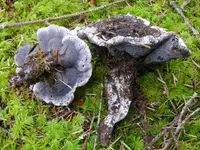
Duff layer management

Maintain a 3–8 cm layer of conifer needles, small twigs, and leaf litter over the site, replacing disturbed organic matter after walks or maintenance to protect the mycelium and keep the microclimate stable.

Minimal soil disturbance

Avoid tilling, raking deep, or planting other ornamentals where the fungus is established, and if access paths are needed, lay stepping stones or wood rounds to prevent compaction of the colonized soil.

Targeted moisture buffering

In exposed spots, use coarse wood chips or partially decomposed bark around, but not on top of, existing fruiting bodies to buffer short dry spells without saturating the soil surface.

Long-term site stability

Plan for long-term shade and host presence by avoiding removal of the partner conifer and limiting drastic pruning, since caring for bleeding blue tooth depends on preserving the same tree–fungus relationship over many years.

Common Pests and Diseases

Fungal parasitism

This disease involves overgrowth by faster-spreading forest fungi that colonize the same soil and woody debris, suppressing fruiting of Hydnellum cyanopodium. Symptoms include shrinking or disappearing fruit bodies where the colony previously appeared regularly.

Solution

Reduce disturbance in the fruiting area and avoid adding foreign woodchips, mulch, or soil that may carry aggressive fungal competitors. If cultivating in a controlled setting, refresh the substrate with well-aged conifer debris from the original habitat and keep it evenly moist but not waterlogged to favor the native mycelium.

Mite grazing

These insects are tiny soil and litter mites that feed on the soft tissue of young fruit bodies and spines, leaving pitted, rough, or shredded areas. Symptoms include uneven, scarred caps and deformed spines on otherwise healthy fruiting bodies.

Solution

Gently remove heavily damaged fruit bodies and surrounding litter to reduce mite habitat, then maintain slightly higher surface moisture through light misting to discourage mite buildup without saturating the substrate. In small controlled patches, you can also temporarily cover the area with fine mesh during peak emergence to limit mite access while still allowing air flow.

Slugs and snails

This pest group grazes on the tender cap edges and spines, creating irregular holes, missing sections, and slime trails on or around the fruit bodies. Symptoms include sudden overnight damage to previously intact fruiting structures.

Solution

Hand-pick slugs and snails in the evening or early morning and remove them from the site. For small cultivated plots, use physical barriers such as copper tape, rough grit rings, or low-profile collars around the fruiting area, and avoid using salt or broad-spectrum slug pellets that can damage soil organisms important for Hydnellum cyanopodium care.

Interesting Facts

Uncommon blue spore print

This fungus produces a distinctive blue-toned spore deposit, which is unusual among tooth fungi and helps separate it from closely related Hydnellum species that typically have brown or dull spore prints.

Dark, resinous flesh

The fruiting body has a tough, woody texture and dark, often resinous or zoned interior tissue, reflecting its role as a persistent, long-lasting mushroom on the forest floor rather than a short-lived, soft-bodied species.

Specialized forest associate

It is believed to form ectomycorrhizal partnerships with conifers, exchanging mineral nutrients for sugars from tree roots and contributing to long-term soil and forest health in cool, moist woodland habitats.

FAQs about bleeding blue tooth

Container culture is very difficult. This fungus relies on a mycorrhizal partnership with tree roots and needs a stable forest-floor microclimate. Pots rarely provide suitable hosts, moisture balance, or soil biology, so long‑term success is unlikely.

Grow Healthy Plants with Botan Care

Keep your plants happy and healthy with plant identification, disease detection, and easy care guidance.

Botan plant care app — identify plants on mobile

Explore More Plants