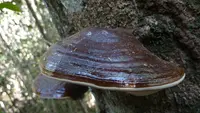
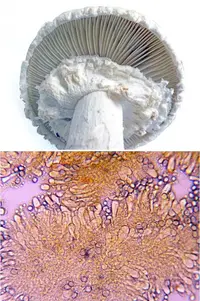
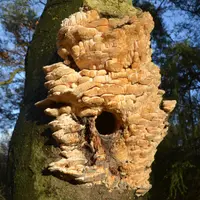
Hydnellum mirabile Care

Hydnellum mirabile

About Hydnellum mirabile

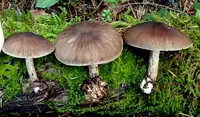
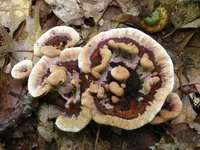
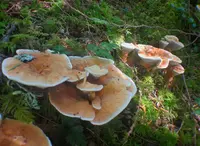
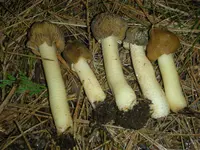
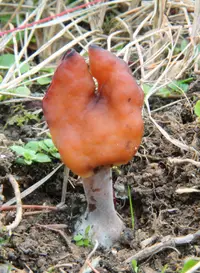
Hydnellum mirabile is a tooth fungus, not a leafy plant, forming low, irregular, crust-like fruiting bodies on soil or decaying wood. Its surface often shows patchy brown to gray tones, with spines or “teeth” on the underside that release spores.

This species is native to parts of Europe, typically appearing in coniferous or mixed forests with mossy, acidic ground. It forms mycorrhizal associations, meaning it partners with tree roots, which makes it difficult to cultivate intentionally.

Because of this dependence on forest habitat and tree partners, gardeners generally do not care for Hydnellum mirabile in a home or yard setting. It is best appreciated in situ as part of natural woodland ecosystems.

Main Plant Requirements

Care Difficulty

Hard Care

Light Preference

Partial Shade

Water Requirements

Moderate Water

Temperature Preference

Cool Climate

Hardiness Zone

Unknown

Soil Texture

Loamy, Peaty, Organic-rich

Soil pH

Strongly acidic (4.5–5.5)

Soil Drainage

Well-drained

Fertilization

Minimal (feed rarely)

Get Personalized Care Plan

Scan your plant to receive care tips personalized for your specific plant

Available on iOS and Android

How to Care for the Hydnellum mirabile

This ectomycorrhizal fungus prefers cool forest light conditions rather than open, direct sun.

  • Site Hydnellum mirabile in light to medium shade under trees, with 1–3 hours of gentle filtered morning sun and no harsh afternoon sun.
  • Choose locations with dappled light created by shrubs or conifers; strong midday sun can dry the forest floor, stressing its fine mycelium.
  • In summer, increased canopy shade is beneficial, while in early spring or late autumn slightly brighter conditions are acceptable as long as the soil does not bake.

This forest-dwelling fungus depends on consistently moist, well-drained soil rather than frequent surface wetting.

  • Aim for evenly moist mineral soil; allow only the top 1–2 cm to dry slightly between natural rain or supplemental watering when forest soils are unusually dry.
  • Hydnellum mirabile associates with tree roots, so prioritize good drainage; avoid puddling or compacted, waterlogged sites that cause fungal tissue rot.
  • During prolonged summer drought, check the soil by hand: crumbly and pale indicates dryness, while a sticky or sour smell suggests overwatering or poor drainage.

This species is adapted to cool to mild woodland climates with moderate seasonal variation.

  • Optimal fruiting typically occurs around 50–68°F (10–20°C), matching cool late-summer to autumn conditions in many coniferous or mixed forests.
  • The mycelium in soil can tolerate winter lows down to about 14–23°F (-10 to -5°C) under insulating leaf litter or snow, but exposed fruit bodies will be damaged by hard frost.
  • Sustained heat above 77–82°F (25–28°C) with dry soil reduces activity, so shade, organic mulch, and intact canopy cover help buffer extreme summer temperatures.

Humidity is not a significant controllable factor for Hydnellum mirabile, which is adapted to natural forest floor conditions rather than indoor environments.

This species is a mycorrhizal forest fungus and does not adapt well to standard garden or potting soils.

  • Requires a natural, undisturbed coniferous forest floor with thick, well-rotted needle litter and woody debris rather than a constructed soil mix.
  • Thrives in loose, airy, strongly organic layers over sandy or gravelly mineral subsoil that allows rapid drainage and no standing water.
  • Favors distinctly acidic conditions, typically pH 4.0–5.5, often associated with Scots pine or similar hosts in nutrient-poor sites.
  • Attempts at growing Hydnellum mirabile usually rely on preserving or mimicking intact forest turf blocks rather than blending components like compost or perlite.

This species is not suitable for container growing, as it depends on complex mycorrhizal relationships in undisturbed forest soil.

This mycorrhizal fungus is adapted to nutrient-poor forest soils and generally does best with no direct fertilization.

Hydnellum mirabile is not a plant that benefits from conventional pruning, but old fruiting bodies can be tidied if desired.

  • Remove only clearly decayed or moldy fruiting bodies by hand at ground level.
  • Use clean gloves or a small knife to lift spent caps without disturbing underlying mycelium.
  • Avoid cutting or digging into the soil, as this can damage the fungal network and reduce future fruiting.
  • Leave surrounding leaf litter and moss intact to maintain a stable microhabitat.

This woodland fungus is normally established in soil with its tree partners and is not suited to standard pot culture.

  • Transplanting is rarely successful because the mycelium forms fine, extensive networks around host tree roots.
  • If relocation is necessary, move soil blocks with minimal disturbance, keeping roots, litter, and topsoil together.
  • Carry out any move in cool, moist weather to limit drying of the mycelium.
  • Water lightly after transplanting and maintain shade to reduce stress on both trees and fungal partner.

Hydnellum mirabile is difficult to propagate intentionally because it relies on complex mycorrhizal relationships with trees.

This species is naturally cold hardy in temperate forests and usually requires no special winter care outdoors.

  • Allow leaf litter and needles to remain as an insulating mulch over the soil surface.
  • Avoid raking or compacting the area during winter, which can disturb the frozen fungal mycelium.
  • Container experiments are not recommended, but any trial setups should be kept in a cold, frost-exposed yet shaded place to mimic natural conditions.

Care Tips

Maintain host trees

Encourage healthy pine or spruce trees in the area, since this fungus is mycorrhizal and fruits best when its tree partners are not stressed by compaction, overpruning, or root disturbance.

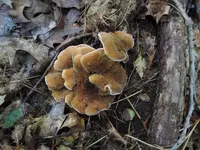
Limit soil disturbance

Avoid digging, tilling, or raking deeply where the fungus grows, because breaking the underground mycelium can stop fruiting for several seasons.

Control competing vegetation

Gently thin dense moss or groundcover around existing fruiting bodies by hand instead of using herbicides, which helps light and air reach the surface without harming the fungus.

Mimic forest litter

Top-dress the site with a light layer of pine needles or conifer wood chips once a year to simulate natural forest duff and support long-term Hydnellum mirabile care instructions.

Avoid chemical inputs

Do not apply synthetic fertilizers, fungicides, or broad-spectrum insecticides near the colony, since these can disrupt the soil fungal community and reduce future fruiting.

Common Pests and Diseases

Larval grazing damage

Symptoms include irregular, chewed patches on the cap surface, tunnels in the flesh, and crumbly or collapsing fruiting bodies. This pest is usually caused by fly or beetle larvae that feed inside the fungus tissue.

Solution

Remove and discard heavily tunneled fruiting bodies to reduce developing larvae and interrupt the life cycle. In outdoor sites, maintain good forest floor hygiene by avoiding piles of rotting wood and food scraps nearby, and accept some level of grazing as normal when growing Hydnellum mirabile in semi-natural conditions.

Mollusk feeding

This pest often leaves large, ragged bites on the cap edges and visible slime trails on and around the fruiting body. Damage is mostly cosmetic but can slow or stop further development of small fruiting bodies.

Solution

Hand-pick slugs and snails in the evening or early morning and remove debris that shelters them near the fungus. Use physical barriers such as copper tape around small cultivation beds or rough mineral mulches to make access more difficult without contaminating the mycorrhizal habitat.

Competing saprotrophic fungi

Symptoms include overgrowth of the substrate and nearby soil surface by fast-growing molds, ink caps, or other soft mushrooms that crowd or suppress tooth fungus fruiting. This issue reduces or prevents the formation of Hydnellum fruiting bodies, even if the mycelium and tree partner persist underground.

Solution

Limit organic debris and high-nutrient compost on the site and keep the habitat closer to a natural, low-nutrient forest floor with conifer litter. Remove obviously competing, dense fungal growths when feasible and avoid disturbing the soil around the host trees so the long-lived mycorrhizal association can stay dominant.

Drying and desiccation

Symptoms include hard, brittle, and pale caps that stop expanding and may crack at the margins. This condition arises when air and soil stay too dry for extended periods around the mycorrhizal zone.

Solution

Maintain an even moisture level in the upper soil by using a loose layer of conifer needles or leaf litter and watering the area gently during prolonged drought, without flooding. Avoid strong, direct sun on the fruiting area and keep foot traffic away so the soil structure that holds moisture remains intact.

Interesting Facts

Unusual spine-bearing cap

The fruiting body of this fungus has a velvety to finely tomentose cap underside lined with dense, tooth-like spines rather than gills or pores, a hallmark of the Hydnellum genus that helps release spores in a controlled way close to the forest floor.

Specialist pine associate

Hydnellum mirabile forms ectomycorrhizal partnerships with conifers, especially pines, exchanging mineral nutrients and water from poor, acidic soils for carbohydrates from its host trees, and is typically found in old, undisturbed coniferous forests in northern and central Europe.

Conservation concern in Europe

This species is considered rare or threatened in several European countries, and its presence is often used as an indicator of relatively intact, nutrient-poor forest habitats that have not been heavily fertilized or disturbed.

Botan icon

Did you know?

Fruiting bodies of Hydnellum mirabile can develop striking, zoned color patterns that include pale to dark brown and violet hues, with age-related and weather-driven changes so pronounced that the same colony can look markedly different from season to season, which complicates field identification and often requires microscopic confirmation.

FAQs about Hydnellum mirabile

This fungus spreads slowly through mycelium in the soil and by spores, but it is not considered aggressive. It usually forms scattered fruiting bodies near suitable host trees rather than creating dense, smothering colonies.

Grow Healthy Plants with Botan Care

Keep your plants happy and healthy with plant identification, disease detection, and easy care guidance.

Botan plant care app — identify plants on mobile

Explore More Plants