Wood substrate rotation
Rotate or partially replace the hardwood chip or log substrate every 2–3 years to maintain a steady supply of fresh lignin-rich material that supports consistent fruiting of Hydnum umbilicatum.

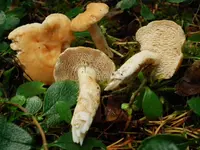
The depressed hedgehog, Hydnum umbilicatum, is a small, tooth-bearing mushroom rather than a leafy plant. It forms low, often slightly depressed caps with soft spines underneath instead of gills. The fruiting bodies usually appear in mixed or coniferous forests, often in North America, where they grow on the ground in soil rich in organic matter. The species forms mycorrhizal partnerships with trees, meaning it exchanges nutrients with roots and depends on healthy woodland conditions. In cultivation it is considered challenging, as it requires specific tree partners and natural-like forest substrates. For most home growers, learning how to care for depressed hedgehog focuses on respectful wild foraging rather than indoor production.

Care Difficulty
Hard Care

Light Preference
Shade

Water Requirements
Keep Soil Moist

Temperature Preference
Cool Climate

Hardiness Zone
Unknown

Soil Texture
Loamy, Organic-rich, Peaty

Soil pH
Strongly acidic (4.5–5.5), Acidic (5.5–6.5)

Soil Drainage
Moist but well-drained

Fertilization
Minimal (feed rarely)
Scan your plant to receive care tips personalized for your specific plant
Available on iOS and Android
Hydnum umbilicatum, often called depressed hedgehog, fruits best in cool, dappled forest light rather than direct sun.
Hydnum umbilicatum fruiting relies on consistently moist, cool soil rather than frequent surface wetting.
This forest fungus prefers cool to mild temperatures and declines in prolonged heat or hard freezes.
This fungus needs steadily moist, cool air to fruit well.
Hydnum umbilicatum prefers loose, organic-rich, well-drained substrate that mimics forest soil.
This species is generally unsuited to standard container growing, as it relies on complex soil and tree-root associations.
Hydnum umbilicatum, sometimes called depressed hedgehog, is a forest mushroom that normally needs no fertilization when growing in suitable woodland soil.
Hydnum umbilicatum is not pruned in the horticultural sense, but careful fruitbody harvesting maintains hygiene and mushroom quality.
This mycorrhizal woodland fungus is not suited to typical container culture, so focus on minimal-disturbance transplanting in managed forest or garden settings.
Hydnum umbilicatum propagation relies on spores and mycelium in symbiosis with host tree roots, not standard plant techniques.
This woodland fungus is naturally cold hardy in its native range and usually needs no special winter care once established outdoors.

Plant Health Check
Not sure what's wrong with your plant? Check your plant's health inside the app.
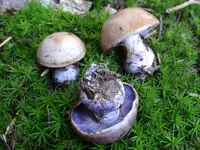
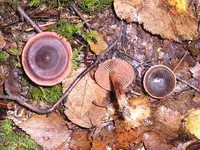
Mature fruitbodies often develop a clear central depression on the cap, giving a navel-like appearance that helps separate it from similar hedgehog fungi with flatter caps.
This species is primarily documented from North American coniferous forests, especially under pines and spruces, where it fruits on the forest floor in late summer to autumn.
It forms ectomycorrhizal associations with conifer roots, exchanging mineral nutrients and water for plant-produced sugars, and plays a role in nutrient cycling and tree health.

Unlike some related hedgehog fungi that grow in dense clusters, this species typically produces smaller, more widely spaced fruitbodies, which can make it easy to overlook among needle litter despite its ecological importance.
This species is considered a choice edible mushroom when correctly identified and harvested from clean environments. Always confirm identification using multiple features and reputable guides, and avoid collecting specimens from polluted or heavily trafficked areas.
Keep your plants happy and healthy with plant identification, disease detection, and easy care guidance.