Monitor host grasses
Maintain a short, lightly grazed or mown sward of fine grasses and avoid reseeding with vigorous ryegrass mixes, as dense, fast-growing turf will outcompete the mycelium and suppress fruiting.

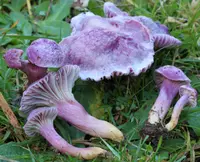
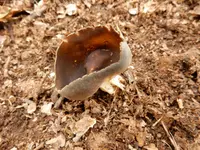
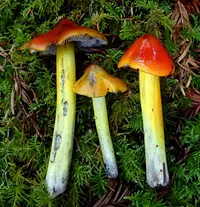
Hygrocybe cheelii is a small waxcap fungus, not a typical foliage houseplant. It produces bright, waxy caps on slender stems, often in vivid yellow to orange shades. These fruiting bodies usually appear in short-lived clusters.
This species is native to Australia and is typically found in undisturbed grasslands, open woodlands, and mossy, well-drained soils. It depends on specific soil conditions and an intact ground layer, which makes it challenging to maintain outside its natural habitat.
Because it relies on complex relationships with soil microbes, attempts to grow or care for Hygrocybe cheelii in gardens or containers are rarely successful.

Care Difficulty
Hard Care

Light Preference
Partial Shade

Water Requirements
Keep Soil Moist

Temperature Preference
Cool Climate

Hardiness Zone
Unknown

Soil Texture
Loamy, Peaty, Organic-rich

Soil pH
Strongly acidic (4.5–5.5), Acidic (5.5–6.5)

Soil Drainage
Moist but well-drained

Fertilization
Minimal (feed rarely)
Scan your plant to receive care tips personalized for your specific plant
Available on iOS and Android
This waxcap fungus prefers gentle, indirect light rather than strong, direct sun.
Moist but freely draining soil is key for this grassland fungus.
Cool to mild conditions support the best fruiting of this waxcap species.
This fungus is not suitable for typical home cultivation, so humidity control is generally unnecessary.
Hygrocybe cheelii is a waxcap fungus that relies on specific grassland ecosystems, not standard garden or potting substrates.
This species is not realistically suited to container growing because it depends on complex grassland soil conditions and ecological relationships.
This wild waxcap fungus is adapted to low-nutrient soils and usually performs best without added fertilizer.
Pruning is not part of standard management for this wild mushroom, as its fruiting bodies are short-lived and the mycelium remains in the soil.
Management focuses on keeping the native soil conditions stable rather than repotting or transplanting this waxcap.
Practical propagation is challenging because this fungus relies on complex soil and microbial relationships.
This species is generally cold hardy in its natural range and does not need active winter protection in the ground.

Plant Health Check
Not sure what's wrong with your plant? Check your plant's health inside the app.
This waxcap mushroom is native to eastern Australia and is most often recorded in open grassy areas and eucalypt woodlands rather than dense forests, reflecting a strong association with well‑lit, mossy or grassy substrates.
The fruiting bodies are typically vivid orange to red with a waxy, somewhat translucent cap and gills, a hallmark of waxcap fungi that is linked to their high water content and distinctive pigment chemistry.
In parts of its range this species is considered regionally uncommon and sensitive to land‑use change, so fungal surveys sometimes use its presence as an indicator of relatively undisturbed grassland or woodland habitat quality.
This waxcap mushroom is not considered an edible species. It is small, not substantial as food, and its safety has not been established. It is best treated as inedible and left for observation and conservation.
Keep your plants happy and healthy with plant identification, disease detection, and easy care guidance.