Western Witch's Hat Care (Hygrocybe singeri)

Western Witch's Hat

About Western Witch's Hat

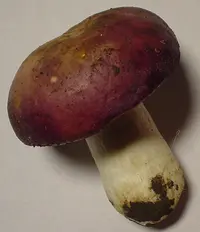
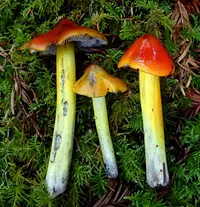
Western witch's hat, Hygrocybe singeri, is a small waxcap mushroom rather than a leafy houseplant. It produces slender stems topped with conical to bell-shaped caps, often brightly colored and slightly waxy. These fungi usually appear in undisturbed grasslands, open woodlands, or mossy, nutrient-poor soils, often in cool, moist climates.

In cultivation it is considered very challenging, since waxcaps rely on complex relationships with soil microbes and specific, low-fertility conditions. Garden or indoor setups rarely match its natural habitat, so attempts to care for Western Witch's Hat at home are generally experimental and not reliably successful.

Main Plant Requirements

Care Difficulty

Hard Care

Light Preference

Partial Shade

Water Requirements

Keep Soil Moist

Temperature Preference

Cool Climate

Hardiness Zone

Unknown

Soil Texture

Loamy, Organic-rich, Peaty

Soil pH

Strongly acidic (4.5–5.5), Acidic (5.5–6.5)

Soil Drainage

Moist but well-drained

Fertilization

Minimal (feed rarely)

Get Personalized Care Plan

Scan your plant to receive care tips personalized for your specific plant

Available on iOS and Android

How to Care for the Western Witch's Hat

This waxcap mushroom favors cool, moist habitats with soft, filtered light rather than strong sun.

  • Provide bright dappled or filtered light under grasses, low vegetation, or open woodland, avoiding more than 1–2 hours of direct midday sun.
  • Allow early morning or late afternoon sun only; 2–4 hours is usually safe, but extended harsh sun can dry the substrate and reduce fruiting.
  • In summer, offer more shade and moisture retention; in cooler months, slightly more open exposure helps stimulate Western Witch's Hat fruiting bodies.

This fungus needs consistently moist but not waterlogged soil to develop healthy fruiting bodies.

  • Aim for soil that stays evenly damp 5–8 cm down; if the top 2–3 cm feel dry and crumbly, moisture is too low for reliable fruiting.
  • Ensure excellent drainage so water does not pool for more than a few hours; prolonged saturation encourages competing fungi and rot of organic material supporting Hygrocybe singeri.
  • During dry, warm periods, maintain moisture through gentle irrigation or mulch, watching for shriveling caps as a sign of low moisture and slimy, collapsing caps as a sign of excess.

This species performs best in cool, moist conditions and declines in prolonged heat or hard frost.

  • Optimal fruiting usually occurs around 50–65°F (10–18°C), common in cool autumn conditions with stable moisture levels.
  • The mycelium in soil can tolerate down to about 32°F (0°C), but repeated hard freezes with no insulating leaf litter reduce fruiting success.
  • Sustained temperatures above 75°F (24°C), especially over 85°F (29°C), often dry the habitat and suppress fruiting, so shaded, cooler microsites are important in hot seasons.

This fungus prefers consistently moist, humid air to fruit well outdoors.

  • Aim for 70–90% humidity in sheltered cultivation areas, similar to a damp woodland edge.
  • It tolerates only brief dips into drier air; extended humidity below 50% often halts fruiting of Western Witch's Hat.
  • Shriveling caps and cracking surfaces indicate humidity stress; use misting, nearby water trays, or shade cloth to maintain moisture around the colony.

This species fruits best in moist, well-aerated, organic-rich soil layers rather than dense, compacted ground.

  • Provide a loose, humus-rich mix using fine compost, leaf mold, and a little sand to mimic a light woodland or grassland surface.
  • Ensure drainage is moderate, not fast; soil should stay evenly moist but never hold standing water on the surface.
  • Aim for slightly acidic to neutral conditions (pH 5.5–7.0), avoiding limed or strongly alkaline sites that reduce fungal activity.
  • Maintain a crumbly structure by avoiding heavy foot traffic and by lightly incorporating fine bark or coarse sand for added aeration.

This species is generally unsuitable for typical container growing, as it relies on complex soil and habitat relationships that pots rarely provide.

This woodland fungus usually grows best without supplemental fertilizer, as it relies on natural soil processes and microbial partners.

Hygrocybe singeri does not require pruning, since individual fruiting bodies are short-lived and naturally decompose.

In cultivation, focus on careful transplanting of the surrounding soil rather than handling Hygrocybe singeri directly.

  • Move only during cool, moist weather to reduce stress on the underground mycelium network.
  • Lift a generous plug of native soil, keeping structure intact and avoiding root or mycelial disturbance.
  • Replant at the same depth in a low-nutrient, well-drained, organic-rich substrate.
  • Water lightly to settle soil, then maintain natural leaf litter to support fungal partners.

Intentional propagation of Hygrocybe singeri is difficult and rarely successful in home settings, as it depends on complex soil relationships.

Western Witch's Hat is generally cold hardy in its native range and needs no special winter care in the ground.

Care Tips

Maintain host grasses

Preserve or establish a low, unimproved grass sward with sparse, fine grasses and minimal mowing, since this waxcap relies on undisturbed, low-nutrient turf rather than rich, fertilized lawns.

Avoid soil disturbance

Limit digging, rototilling, and heavy foot traffic in known fruiting areas, as intact soil structure and undisturbed fungal mycelium are critical for consistent fruiting bodies.

Skip fertilizers

Do not apply lawn fertilizers, manures, or compost in the fruiting zone, because elevated nitrogen and phosphorus levels strongly reduce waxcap diversity and can stop fruiting altogether.

Seasonal mowing strategy

If mowing is needed, cut the grass only after fruiting has finished and remove clippings, which keeps nutrients low and prevents damage to emerging caps.

Local microclimate mapping

Observe exactly where and when fruiting occurs over several seasons and mark these patches, then prioritize protecting those microsites from shade changes, compaction, or drainage alterations when caring for Western Witch's Hat.

Common Pests and Diseases

Slug grazing

This pest feeds on soft fungal tissue, removing chunks from caps and stems and leaving slime trails on and around fruiting bodies. Symptoms include irregular bite marks, collapsed caps, and rapid loss of small mushrooms overnight.

Solution

Hand-pick slugs at dusk and dawn, remove nearby debris that shelters them, and use coarse barriers such as crushed eggshells or sharp grit around fruiting zones. In wetter sites, set shallow beer traps or iron-phosphate slug baits outside the main fruiting area to reduce pressure without contaminating the immediate habitat.

Fungivorous fly larvae

These insects lay eggs in or near fruiting bodies, and the hatching larvae tunnel through caps and stems. Symptoms include pinholes, internal galleries, rapid softening, and early collapse of mushrooms, often with small white maggots visible in damaged tissue.

Solution

Remove and discard heavily infested fruiting bodies promptly to interrupt the life cycle. Maintain slightly better airflow and avoid heavy mulch or dense litter directly over fruiting zones so caps develop more quickly and are less attractive for prolonged egg laying.

Mold overgrowth

This disease appears when competitive mold fungi colonize the fruiting area, forming white, gray, or green fuzzy growth on or around the mushrooms. Symptoms include rapid softening, discoloration, and collapse of caps as the mold outcompetes the waxcap mycelium on the surface debris.

Solution

Carefully remove mold-covered litter and affected fruiting bodies, and thin dense organic debris so the surface dries a bit faster after rain. Avoid adding rich compost or manure; instead, keep a lean, low-nutrient, short grass or mossy habitat that favors waxcaps and reduces aggressive saprophytic molds.

Bacterial soft rot

This disease causes localized water-soaked spots that quickly spread, turning the mushroom tissue slimy and foul-smelling. Symptoms include rapid collapse of caps after heavy rain or physical injury, often with a translucent, greasy appearance of affected areas.

Solution

Remove and dispose of rotting mushrooms promptly to limit spread and reduce attraction of flies and other vectors. To support healthier fruiting, avoid trampling, minimize mechanical damage, and maintain good site drainage so mushrooms do not sit in standing water after storms.

Interesting Facts

Bright scarlet waxcap

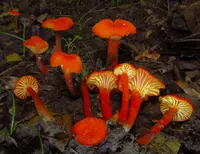
This species produces small, slimy caps in vivid scarlet to orange-red tones, a characteristic waxy surface feature that helps distinguish it from duller Hygrocybe relatives in the field.

Grassland specialist

It is typically recorded in low-nutrient, unimproved grasslands and mossy lawns, where it fruitbodies in late summer to autumn, indicating relatively undisturbed, low-fertilizer habitats.

Distinctive microscopic features

Its spores are smooth and ellipsoid and the gill tissue shows characteristic waxcap structures under the microscope, which mycologists use to separate it from closely related red waxcap species.

FAQs about Western Witch's Hat

This small waxcap fungus develops seasonally from underground mycelium and appears quite quickly once conditions are right, but individual fruiting bodies remain small. It does not show the long-term height or spread increases typical of garden plants.

Grow Healthy Plants with Botan Care

Keep your plants happy and healthy with plant identification, disease detection, and easy care guidance.

Botan plant care app — identify plants on mobile

Explore More Plants