

Retain Moist Microhabitat
When collecting specimens for observation at home, keep a plug of the original moss- and litter-rich substrate around the base to preserve the specific micro-fungi and moisture conditions this waxcap depends on.

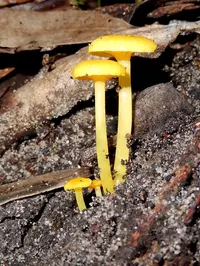
Hygrocybe chromolimonea is a small, waxcap fungus, not a typical foliage houseplant. It produces smooth, slim, brightly yellow to orange fruiting bodies that stand out against dark forest litter. Caps are usually conical to bell-shaped, with a slender, fragile stem.
This species is native to moist forest habitats in New Zealand, where it grows on mossy or leaf-littered ground rather than in pots or garden beds. It prefers cool, consistently damp, well-aerated substrates and clean, undisturbed conditions, which makes intentional cultivation challenging. Because of these specialized needs, how to care for Hygrocybe chromolimonea in a home or garden setting is not well established and remains experimental for most growers.

Care Difficulty
Hard Care

Light Preference
Partial Shade

Water Requirements
Keep Soil Moist

Temperature Preference
Cool Climate

Hardiness Zone
Unknown

Soil Texture
Loamy, Peaty, Organic-rich

Soil pH
Strongly acidic (4.5–5.5), Acidic (5.5–6.5)

Soil Drainage
Moist but well-drained

Fertilization
Minimal (feed rarely)
Scan your plant to receive care tips personalized for your specific plant
Available on iOS and Android
This waxcap fungus prefers cool, moist, seasonally lit grassy or mossy habitats rather than strong direct sun.
Moisture availability in the soil and surrounding grass layer is critical for reliable fruiting of this waxcap fungus.
This species favors mild, temperate conditions and fruits best when soil and air temperatures stay cool to moderate.
This fungus is not suited to typical indoor cultivation, so specific humidity management is usually unnecessary.
In cultivation attempts, this mycorrhizal waxcap requires conditions that mimic undisturbed, low-nutrient grassland or forest soils.
This species is not realistically suitable for container growing, as it depends on complex soil ecosystems and symbioses that standard pots cannot provide.
This mycorrhizal waxcap fungus is adapted to low-nutrient soils and should not be fertilized in gardens or lawns.
As a small waxcap fungus, Hygrocybe chromolimonea does not require pruning beyond basic site hygiene.
This species is a wild, soil-dwelling fungus that should not be repotted but can be encouraged by careful habitat management.
Intentional propagation of this wild waxcap is difficult and rarely successful outside specialist conservation work, so home methods are not recommended.
This fungus is naturally adapted to outdoor seasonal conditions and needs no specific winter care in suitable climates.

Plant Health Check
Not sure what's wrong with your plant? Check your plant's health inside the app.
This waxcap is native to New Zealand and is especially known from moist, undisturbed native forests and scrub, where it fruits on the ground among mosses and leaf litter during wetter months.
The caps often show a striking color gradient, with deeper orange or reddish tones near the disc that fade to bright yellow toward the margin, which helps distinguish it from other yellow waxcap species.
Like many waxcaps, this species tends to occur in relatively low-nutrient, minimally disturbed sites, so its presence can signal remnant, relatively intact fungal communities in a landscape.

The fruitbodies of this species often have a notably slimy or viscid cap surface when wet, an adaptation that helps reduce desiccation of the hymenium (spore-bearing tissue) during fluctuating humidity in its forest habitats.
This waxcap is not considered an edible species. Identification of small yellow mushrooms is difficult, and confusion with toxic look-alikes is possible. For safety, it should be treated as non-edible and left unconsumed.
Keep your plants happy and healthy with plant identification, disease detection, and easy care guidance.

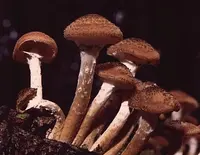
honey mushroom
Armillaria ostoyae
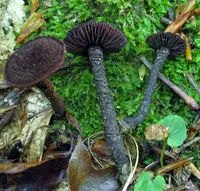
Inocybe tahquamenonensis
Inocybe tahquamenonensis
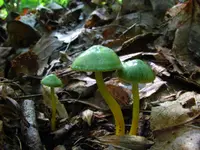
Parrot Mushroom
Gliophorus psittacinus
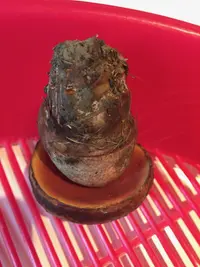
Neoboletus praestigiator
Neoboletus praestigiator
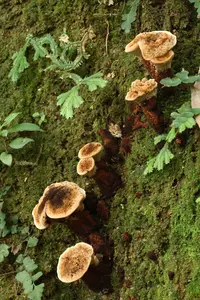
Coltricia montagnei
Coltricia montagnei
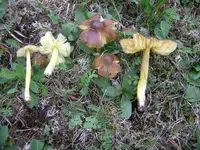
Date Waxcap
Hygrocybe spadicea
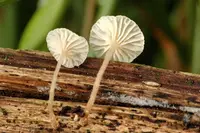
Twig Parachute
Collybiopsis ramealis
Vejvarut Paphiopedilum
Xerocomellus dryophilus