Leave Host Grass
Maintain a low, lightly grazed or mown grass sward rather than bare soil, since the fungus relies on undisturbed grassland structure and associated soil fungi to fruit well.

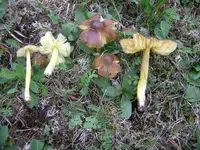
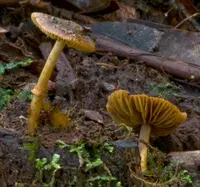
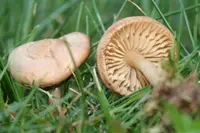
The date waxcap, Hygrocybe spadicea, is a grassland mushroom rather than a typical houseplant. It produces smooth, chestnut-brown caps with pale, waxy gills and a slender stem. The fruiting bodies appear close to the ground and often blend into short turf.
This species naturally occurs in unimproved, nutrient-poor grasslands and meadows, especially in parts of Europe and some temperate regions. It is regarded as a habitat specialist, so it can be difficult to maintain outside very specific conditions. For those interested in how to care for Date Waxcap in managed landscapes, it generally prefers short grass, low nutrients, and consistently moist but not waterlogged soil.

Care Difficulty
Hard Care

Light Preference
Partial Shade

Water Requirements
Keep Soil Moist

Temperature Preference
Cool Climate

Hardiness Zone
5–9

Soil Texture
Loamy, Silty, Organic-rich

Soil pH
Strongly acidic (4.5–5.5), Acidic (5.5–6.5)

Soil Drainage
Moist but well-drained

Fertilization
Minimal (feed rarely)
Scan your plant to receive care tips personalized for your specific plant
Available on iOS and Android
This grassland fungus prefers cool, gentle light rather than strong, direct sun.
This species needs consistently moist but not waterlogged soil to fruit well in grassland settings.
This waxcap fungus performs best in cool to mild conditions typical of temperate grasslands.
Humidity is not a major controllable factor for this wild, soil-fruiting fungus, so indoor-style humidity management is not relevant for Date Waxcap cultivation.
This grassland fungus relies on undisturbed, lean, well-aerated turf rather than a conventional potting substrate.
This species is not suitable for container growing because it depends on complex grassland soil conditions that cannot be replicated in pots.
Hygrocybe spadicea is a wild, mycorrhizal mushroom that typically does best without added fertilizer in natural or semi-natural soils.
Pruning is not a standard practice for Hygrocybe spadicea, as only the short-lived fruiting bodies are visible above ground.
Transplanting Date Waxcap is rarely successful because the fungus depends on complex soil and root relationships.
Propagation of Hygrocybe spadicea is considered difficult and is seldom attempted outside conservation or research settings.
No special winter care is needed, as this wild fungus persists underground and is adapted to normal outdoor temperature fluctuations in its range.

Plant Health Check
Not sure what's wrong with your plant? Check your plant's health inside the app.
This species is strongly associated with long-unimproved, low-nutrient grasslands and is used in Europe as an indicator of high-quality, traditional meadows and pastures that have not been intensively fertilized or ploughed.
Mature fruiting bodies often show a characteristic bicolored cap, with a darker chestnut-brown center and paler, sometimes yellowish margin, which helps distinguish it from other waxcaps in the field.
In several European countries this fungus is red-listed because its grassland habitat has declined sharply through agricultural intensification, drainage, and development.

Unlike many familiar woodland mushrooms, this waxcap forms its fruiting bodies directly among grass in old, low-fertility pastures and lawns, reflecting a specialized ecological relationship with long-established, undisturbed grassland soils.
This species is generally regarded as edible but is not widely collected for food due to its rarity and conservation interest. Identification must be absolutely certain, since some similar brown waxcaps and other gilled mushrooms can be harmful.
Keep your plants happy and healthy with plant identification, disease detection, and easy care guidance.