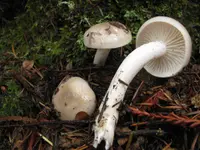
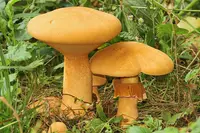
scaly fibrecap Care (Inocybe hystrix)

scaly fibrecap

About scaly fibrecap

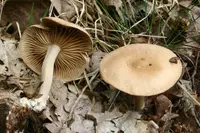
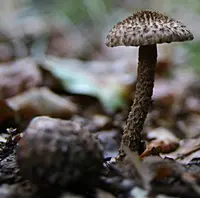
Scaly fibrecap, Inocybe hystrix, is a small woodland mushroom rather than a leafy houseplant. It produces brown caps covered in coarse, spiky scales on a slender stem. The species typically appears in temperate forests, often among leaf litter or near paths, forming mycorrhizal partnerships with trees, which means it relies on roots rather than standard pot culture. This specialized lifestyle makes it unsuitable for typical indoor growing or ornamental use. Because it is not a conventional plant for containers or gardens, how to care for scaly fibrecap is mostly a question of conserving its natural woodland habitat rather than active cultivation.

Main Plant Requirements

Care Difficulty

Hard Care

Light Preference

Partial Shade

Water Requirements

Moderate Water

Temperature Preference

Cool Climate

Hardiness Zone

Unknown

Soil Texture

Loamy, Sandy, Organic-rich

Soil pH

Acidic (5.5–6.5)

Soil Drainage

Well-drained

Fertilization

Minimal (feed rarely)

Get Personalized Care Plan

Scan your plant to receive care tips personalized for your specific plant

Available on iOS and Android

How to Care for the scaly fibrecap

This ectomycorrhizal fungus prefers woodland light similar to that of a lightly shaded forest floor.

  • Provide dappled or filtered light under deciduous trees, with only 1–3 hours of gentle morning sun and no direct harsh midday or afternoon sun.
  • Ensure at least 6–8 hours of bright, indirect daylight; deep shade can reduce fruiting and vigor in scaly fibrecap populations.
  • In summer, protect from exposed, sun-baked edges that dry out quickly, and in winter avoid heavily shaded sites where low light and soggy soil combine.

This woodland fungus depends on consistently moist but not waterlogged soil conditions.

  • Aim for soil that feels evenly moist 2–5 cm below the surface, never saturated; good drainage through leaf litter or loose humus is essential.
  • Increase moisture availability in dry periods by allowing natural leaf mulch to accumulate, rather than frequent surface wetting that evaporates quickly.
  • Reduce supplemental watering in cool, wet seasons to avoid standing water, which promotes rot and decline in Inocybe hystrix and its tree partners.

This species is adapted to temperate woodland climates with cool to mild conditions.

  • Optimal fruiting usually occurs around 50–68°F (10–20°C), often in spring and autumn when soils are cool and moist.
  • The mycelium in soil tolerates brief drops near 23–28°F (-5 to -2°C), but repeated freeze–thaw of saturated ground can damage fine fungal strands.
  • Sustained heat above 77–86°F (25–30°C), especially with dry soil, suppresses fruiting, so partial shade and organic mulch help buffer temperature swings.

Humidity management is not a primary concern for Inocybe hystrix, which fruits in typical outdoor woodland air.

This woodland fungus requires specific outdoor substrate conditions rather than standard potting soil.

  • Use loose, humus-rich loam with abundant leaf litter, small wood fragments, and well-decayed organic matter to mimic natural forest floor structure.
  • Ensure very rapid drainage by incorporating coarse sand and fine gravel so water moves through within minutes and does not puddle around the mycelium.
  • Maintain slightly acidic conditions around pH 5.0–6.0, avoiding limed or strongly alkaline ground that can suppress fungal activity.
  • Avoid compacted, heavily tilled, or synthetic fertilizer–loaded soils, which disrupt the fine root and fungal associations this species depends on.

This species is not suitable for container growing because it depends on complex, outdoor soil and root associations that pots cannot replicate long term.

Inocybe hystrix is a wild ectomycorrhizal fungus that normally obtains nutrients via host tree roots and does not need direct fertilization.

Pruning is not a standard practice for Inocybe hystrix, as it is a mushroom rather than a woody or leafy plant.

Cultivation of Inocybe hystrix in containers is uncommon, so repotting or transplanting is rarely appropriate outside specialist research settings.

  • If grown experimentally, transplant only when mycelium has fully colonized a sterile substrate and shows stalled outward growth.
  • Schedule any move during peak host tree root activity in spring to maintain mycorrhizal contact.
  • Shift the entire colonized substrate gently without breaking the mycelial mat, minimizing disturbance and desiccation.
  • Recreate similar soil type, pH, moisture, and host tree association at the new site to reduce stress.

Propagation of Inocybe hystrix is technically complex and not recommended for typical home growers.

This ectomycorrhizal fungus is naturally cold hardy in its native temperate range and needs no special winter care in the ground.

Care Tips

Spore print monitoring

Take periodic spore prints on white and dark paper to confirm healthy, dense spore production, which indicates that the fungal colony in the substrate is still vigorous and not exhausted.

Substrate rotation

Use multiple small outdoor beds or patches and rest each one for at least 1–2 seasons before reuse so soil biology can recover and support stable mycelium networks over time.

Minimal disturbance

Mark fruiting areas and avoid raking, digging, or compacting soil within 30–50 cm of known fruiting spots to protect the fine mycelial threads that form future mushrooms.

Moisture tracking aids

Insert a plain wooden stick or untreated bamboo skewer into the soil near the fruiting zone and use its dampness and color change when pulled out to judge if the microhabitat is staying evenly moist without overwatering.

Microhabitat mimicry

Spread a thin, consistent layer of mixed hardwood leaf litter and small twigs over the fruiting area to mimic natural forest duff, stabilize moisture, and create a more suitable surface environment for growing scaly fibrecap.

Common Pests and Diseases

fungal parasitism

This disease affects the fruiting bodies of the mushroom, leading to deformed caps, abnormal coloration, or premature collapse. Symptoms include patchy growth on the cap surface or stems that fail to expand normally.

Solution

Remove and discard any malformed or obviously parasitized fruiting bodies to reduce spore spread, and avoid disturbing the area when it is wet. Leaving the mycelium undisturbed in the soil and avoiding chemical treatments supports recovery of the native community that supports Inocybe hystrix care instructions in natural conditions.

mycophagous insects

These insects feed directly on the caps and stems, creating holes, tunnels, or missing sections of tissue. Symptoms include rapid deterioration of otherwise healthy fruiting bodies and small entry holes on the stem or under the cap.

Solution

Gently collect and remove heavily damaged fruiting bodies so larvae do not complete their life cycle in place. Where observation rather than harvest is the goal, limiting soil disturbance and organic debris piles nearby can slightly reduce insect pressure without disrupting the broader forest ecosystem.

slug and snail grazing

This pest targets moist fruiting bodies, leaving large ragged bites or entirely hollowed caps. Symptoms include slime trails around the mushrooms and rapid overnight loss of tissue.

Solution

Hand-remove slugs and snails during cool evening or early morning periods and relocate them away from the fruiting area. If protection of visible mushrooms is important, use simple barriers such as rough mineral rings (crushed eggshells or gravel) around small patches rather than chemical baits, which can harm non-target organisms.

bacterial blotch

This disease causes localized water-soaked spots on caps and stems that may turn darker and feel slimy. Symptoms include soft, collapsing tissue and an unpleasant odor in advanced cases.

Solution

Remove and dispose of affected fruiting bodies promptly, and avoid overhead watering or splashing in any nearby managed beds or lawns that share runoff with the mushroom area. Maintaining good air movement at ground level, by not stacking dense debris directly around the base of host trees, helps fruiting bodies dry faster after rain and reduces bacterial spread.

Interesting Facts

Strong musky odor

Mature fruiting bodies often develop a distinctly unpleasant, musky to spermatic smell, which helps field mycologists separate this species from more neutral‑scented brown mushrooms.

Spiny cap texture

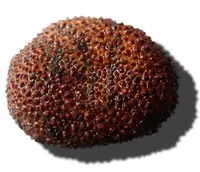
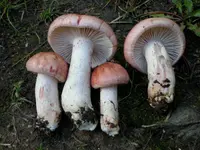
The cap surface is covered with coarse, erect brown fibrils and small scales that give a bristly or hedgehog‑like appearance, which is the reason for the species epithet hystrix, meaning porcupine‑like.

Mycorrhizal forest partner

This fungus forms ectomycorrhizal associations with broadleaf and conifer trees in temperate forests of Europe and parts of North America, helping host trees absorb water and mineral nutrients in exchange for sugars.

FAQs about scaly fibrecap

This species is considered poisonous and should never be eaten. It contains muscarinic toxins that can cause sweating, nausea, vomiting, abdominal cramps, breathing difficulty, and in severe cases dangerous drops in heart rate. Keep children and pets away.

Grow Healthy Plants with Botan Care

Keep your plants happy and healthy with plant identification, disease detection, and easy care guidance.

Botan plant care app — identify plants on mobile

Explore More Plants