Host Tree Selection
Establish this mycorrhizal fungus with compatible conifers such as spruce, fir, or pine, and avoid highly disturbed or fertilized turf areas where the required root partnerships are unlikely to form.

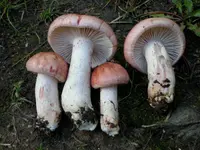
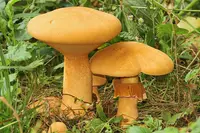
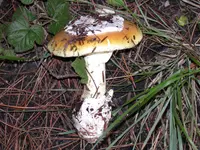
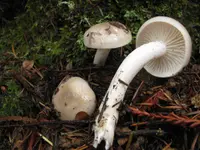
Blotched woodwax, Hygrophorus erubescens, is a wild mushroom rather than a typical garden plant. It produces pale caps that flush pink or reddish, with thick, waxy gills and a stout stem.
This species is usually found in coniferous forests of cooler regions in North America and Europe, often associated with spruce. It forms mycorrhizal partnerships, meaning it relies on tree roots, so it is not suited to normal pot culture.
Because of this close tree association, it is considered difficult to cultivate and is best appreciated in its natural habitat. Understanding how to care for blotched woodwax mainly involves conserving suitable forest conditions rather than growing it indoors or in containers.

Care Difficulty
Hard Care

Light Preference
Partial Shade

Water Requirements
Keep Soil Moist

Temperature Preference
Cool Climate

Hardiness Zone
Unknown

Soil Texture
Loamy, Silty, Organic-rich

Soil pH
Acidic (5.5–6.5)

Soil Drainage
Moist but well-drained

Fertilization
Minimal (feed rarely)
Scan your plant to receive care tips personalized for your specific plant
Available on iOS and Android
Hygrophorus erubescens prefers cool, shaded forest conditions with only brief, gentle sun exposure.
Hygrophorus erubescens relies on consistently moist but not waterlogged forest soil around its mycorrhizal tree hosts.
This species develops best in cool to mild conditions typical of temperate forests in autumn.
This woodland fungus prefers consistently moist, cool air but does not require very high humidity to fruit outdoors.
Hygrophorus erubescens relies on suitable forest soil conditions rather than a conventional potting mix.
This species is not well suited to typical container cultivation because it depends on complex mycorrhizal relationships with living conifer roots.
This mycorrhizal fungus does not require routine fertilization when growing in natural soil with host trees.
Hygrophorus erubescens does not need structured pruning, but minor hygiene work can help in managed settings.
As a woodland, mycorrhizal fungus, this species is rarely grown in containers and is not suited to frequent transplanting.
Propagation of Hygrophorus erubescens is specialized and usually carried out by experienced mycologists rather than home growers.
In suitable temperate climates, blotched woodwax is naturally cold hardy and usually needs no special winter care outdoors.

Plant Health Check
Not sure what's wrong with your plant? Check your plant's health inside the app.
The gills of this mushroom start out pale and gradually develop pink to reddish blotches as the fruiting body ages or is handled, a bruising reaction that helps distinguish it from similar white Hygrophorus species.
This species often fruits in late autumn near lingering snow patches in montane and subalpine conifer forests, especially under spruce and fir, taking advantage of the prolonged soil moisture from melting snow.
It forms ectomycorrhizal partnerships with Picea species, where its fungal threads wrap around fine roots and exchange mineral nutrients and water for sugars produced by the tree through photosynthesis.

In northern and montane regions of Europe, blotched woodwax is considered a good indicator of relatively undisturbed, mature spruce forest, so its presence is sometimes used by field mycologists to help assess forest continuity and conservation value.
This mushroom is considered edible but is not widely collected. Identification must be absolutely certain, as confusion with other pinkish Hygrophorus species or toxic look-alikes is possible. Only experienced foragers should consume it, and always well cooked.
Keep your plants happy and healthy with plant identification, disease detection, and easy care guidance.