Replicate forest litter
Prepare the fruiting area with a 3–5 cm layer of well-decayed broadleaf litter mixed with a little low-nutrient loam, as this mimics the light, humus-rich soils where the fungus naturally fruits.

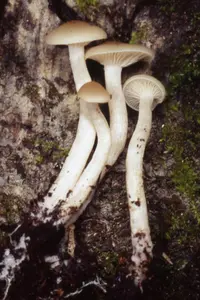
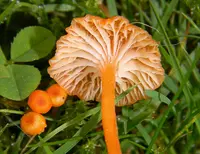
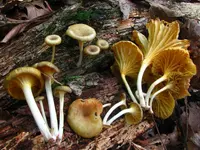
Hygrocybe russocoriacea is a small waxcap mushroom, not a typical houseplant. It produces glossy orange to red caps with slender, often pale stems, usually in short-lived clusters. The fruiting bodies have a characteristic sweet, resin-like scent.
This species naturally occurs in old, unimproved grasslands, mossy lawns, and short turf, mainly in Europe but reported in other temperate regions. It is considered an indicator of low-nutrient, undisturbed soils, which makes it challenging to cultivate intentionally. Gardeners who wish to learn how to care for Hygrocybe russocoriacea should focus on maintaining low-fertilizer, undisturbed grass areas with consistent moisture and good drainage.

Care Difficulty
Hard Care

Light Preference
Partial Shade

Water Requirements
Keep Soil Moist

Temperature Preference
Cool Climate

Hardiness Zone
Unknown

Soil Texture
Loamy, Peaty, Organic-rich

Soil pH
Strongly acidic (4.5–5.5)

Soil Drainage
Moist but well-drained

Fertilization
Minimal (feed rarely)
Scan your plant to receive care tips personalized for your specific plant
Available on iOS and Android
This waxcap fungus benefits from cool, consistently moist sites with gentle light rather than strong, direct sun exposure.
Water management focuses on maintaining evenly moist, well‑aerated soil rather than directly watering the fruiting bodies.
This species prefers cool to mild conditions and reacts poorly to both hard frost and prolonged heat.
Humidity is not a major controllable factor for Hygrocybe russocoriacea in typical cultivation settings, so practical adjustment is rarely useful.
Soil conditions largely determine whether Hygrocybe russocoriacea fruitbodies appear or not.
This species is not suitable for container growing because its waxcap ecology depends on undisturbed, semi-natural grassland soil communities.
This woodland waxcap fungus occurs in nutrient-poor, unfertilized grassland and does not benefit from added fertilizer.
This wild fungus is not managed like a garden plant, so pruning is neither needed nor useful for Hygrocybe russocoriacea.
This waxcap is a soil-dwelling fungus adapted to undisturbed grassland, so it is not suited to routine repotting or transplanting.
Propagation of this wild waxcap is technically complex and not practical for most growers, so it is rarely attempted at home.
This grassland fungus is naturally cold hardy in temperate climates and does not require special winter care in the ground.

Plant Health Check
Not sure what's wrong with your plant? Check your plant's health inside the app.
When crushed or dried, this waxcap releases a strong scent reminiscent of Russian leather or cedarwood, caused by volatile aromatic compounds in its tissues.
The cap surface is distinctly waxy and often shiny, with colors ranging from orange‑red to reddish brown, a texture typical of waxcaps but especially noticeable in this species.
In Europe it is considered an indicator of long‑unimproved, low‑nutrient grasslands, so its presence often signals a relatively undisturbed, species‑rich meadow ecosystem.

This species has been evaluated for conservation concern in several European countries because the semi‑natural grassland habitats it depends on have declined sharply due to agricultural intensification and land‑use change.
This waxcap mushroom is not considered a choice edible. It is small, insubstantial, and poorly documented for culinary use. Field guides often recommend treating it as inedible and leaving fruitbodies for conservation and observation rather than consumption.
Keep your plants happy and healthy with plant identification, disease detection, and easy care guidance.