Use clean substrate
Collect hardwood leaf litter or well-rotted wood debris from a clean, pesticide-free area and avoid heavily compacted, muddy sites so the fungus can form fruiting bodies without chemical stress or waterlogging.

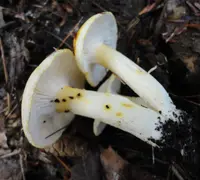
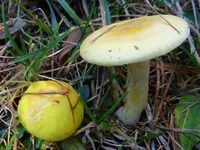
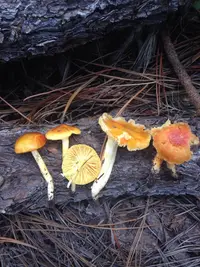
Gold Dust Waxy Cap, Hygrophorus chrysodon, is a waxy cap mushroom known for its white to pale yellow cap dusted with fine golden granules. The cap and stem often appear slightly slimy when fresh, a typical trait of many Hygrophorus species.
This fungus usually grows on the ground in forests, often near conifers, in cool to temperate regions of the Northern Hemisphere. It forms mycorrhizal partnerships with trees, meaning it lives in close association with their roots.
Because it relies on these tree partners, it is not a practical candidate for typical home cultivation. For those studying how to care for Gold Dust Waxy Cap in specialized setups, stable moisture, clean substrates, and cool conditions are usually emphasized.

Care Difficulty
Moderate Care

Light Preference
Partial Shade

Water Requirements
Regular Water

Temperature Preference
Cool Climate

Hardiness Zone
Unknown

Soil Texture
Loamy, Silty, Organic-rich

Soil pH
Acidic (5.5–6.5), Slightly acidic (6.5–7.0)

Soil Drainage
Moist but well-drained

Fertilization
Minimal (feed rarely)
Scan your plant to receive care tips personalized for your specific plant
Available on iOS and Android
This woodland mushroom prefers cool, shaded forest conditions rather than direct sun exposure.
This fungus depends on consistently moist, not waterlogged, forest soil to fruit well.
This species fruits best in cool to mild conditions typical of autumn woodland climates.
Hygrophorus chrysodon, the Gold Dust Waxy Cap, prefers consistently moist, cool air but tolerates brief drier spells outdoors.
Hygrophorus chrysodon fruits best in loose, moist, organic-rich soil over undisturbed ground.
This species is generally not suitable for reliable container cultivation because it forms mycorrhizal relationships with trees in open soil.
Hygrophorus chrysodon is a woodland fungus that does not benefit from conventional plant fertilization and relies on its natural partnership with tree roots.
Pruning is not applicable to Hygrophorus chrysodon, as it is a wild mycorrhizal fungus rather than a garden plant.
This species is a mycorrhizal woodland fungus, so it is not suited to normal repotting or transplanting in containers or garden beds.
Propagation of Hygrophorus chrysodon is specialized and rarely attempted by home growers, since it depends on complex soil fungi–tree root interactions.
This woodland fungus is naturally cold hardy in its range and does not require deliberate winter care in gardens or forests.

Plant Health Check
Not sure what's wrong with your plant? Check your plant's health inside the app.
The cap is covered with fine golden to yellowish granules and flakes, especially near the margin, which are remnants of a granular veil and give rise to the common name gold dust waxcap or golden waxy cap.
This species typically fruits in late autumn to early winter in temperate regions, often appearing after many other mushrooms have finished, sometimes even during mild frosts.
The fungus forms ectomycorrhizal associations with conifers and sometimes broadleaf trees, exchanging mineral nutrients like phosphorus for sugars from the host roots and contributing to forest nutrient cycling.

The golden granules on the cap and upper stem are so distinctive that they are used as a key diagnostic character in European and North American field guides to separate this species from other white Hygrophorus mushrooms that can look similar to inexperienced foragers.
This mushroom is generally considered inedible or of very poor culinary value. It is not known to be dangerously toxic, but identification errors with look-alike species can be serious, so foragers should avoid eating it.
Keep your plants happy and healthy with plant identification, disease detection, and easy care guidance.