larch woodwax Care (Hygrophorus lucorum)

larch woodwax

About larch woodwax

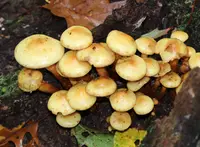
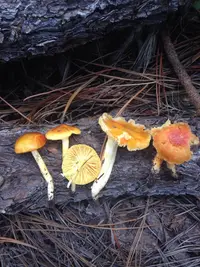
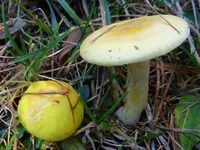
Larch woodwax, Hygrophorus lucorum, is a woodland mushroom rather than a leafy houseplant. It forms smooth, yellow to yellow-green caps with pale gills and a slender stem, often appearing in groups.

This species is typically found on the ground under larch trees in cool, conifer-rich forests across parts of Europe and similar temperate regions. It favors moist, well-drained, organic-rich forest soils and seasonal cool temperatures.

Because it forms a close ecological relationship with larch roots, it is not practical to grow indoors or in typical garden beds. Most guides on how to care for larch woodwax focus on protecting its natural forest habitat rather than active cultivation.

Main Plant Requirements

Care Difficulty

Moderate Care

Light Preference

Partial Shade

Water Requirements

Regular Water

Temperature Preference

Cool Climate

Hardiness Zone

3–7

Soil Texture

Loamy, Sandy, Organic-rich

Soil pH

Acidic (5.5–6.5), Slightly acidic (6.5–7.0)

Soil Drainage

Moist but well-drained

Fertilization

Minimal (feed rarely)

Get Personalized Care Plan

Scan your plant to receive care tips personalized for your specific plant

Available on iOS and Android

How to Care for the larch woodwax

This forest mushroom associates with larch and needs cool, shaded woodland light rather than direct sun.

  • Provide dappled or filtered light under larch or other conifers, similar to light on a forest floor, avoiding direct midday sun that dries the soil surface too quickly.
  • Aim for 1–3 hours of weak morning or late-afternoon sun at most, with the rest of the day in shade or bright shade, to support fruiting of larch woodwax.
  • In late summer and autumn, when Hygrophorus lucorum typically fruits, ensure surrounding vegetation does not fully block skylight, since deep, constant darkness limits mushroom production.

This fungus depends on consistently moist, not waterlogged, soil around its larch host roots.

  • Maintain soil that feels evenly damp 5–10 cm deep, allowing only the surface 1–2 cm to dry slightly between natural rains or supplemental watering in dry spells.
  • Use well-drained, humus-rich, slightly acidic soil; pooling water, sour smells, or slimy litter indicate overwatering conditions that limit fungal health.
  • Sparse or no fruiting after long dry periods suggests underwatering; increase moisture by slow, deep soaking rather than frequent light sprinkling around the host trees.

This species prefers cool to mild conditions typical of larch woodlands in autumn.

  • Optimal fruiting occurs around 45–60°F (7–16°C), with mycelium growth possible from roughly 40–65°F (4–18°C) in moist soil.
  • Short exposures down to about 25°F (-4°C) are usually tolerated in soil, but repeated hard freezes below 20°F (-7°C) can reduce fruiting in the following season.
  • Temperatures above 70°F (21°C), especially combined with dry conditions and full sun, quickly dry the upper soil layer and suppress mushrooms, so maintain shade and moisture during warm spells.

This fungus does not rely on indoor humidity control and is best left to natural outdoor conditions.

This woodland fungus depends on natural forest soil conditions rather than a prepared potting substrate.

  • Hygrophorus lucorum associates with larch roots in moist, well-structured, organic-rich forest soil rather than cultivated garden beds.
  • A deep litter layer of decomposing needles and leaves provides the loose, aerated texture and slow nutrient release the mycelium needs.
  • Avoid compacted, heavily tilled, fertilized, or limed areas, which disrupt the root-fungus relationship and alter natural pH and moisture patterns.
  • Maintaining undisturbed, mulched larch stands is more effective than trying to adjust soil mixes or add perlite, sand, or bark.

This species is not suitable for container growing, as it depends on a mycorrhizal partnership with larch trees in undisturbed soil.

This wild, mycorrhizal fungus does not need fertilization and usually fruits best in unfertilized, natural forest soils.

Pruning is not applicable to Hygrophorus lucorum, since it is a wild mushroom forming fruiting bodies rather than a cultivated plant with stems or branches.

Transplanting is generally not appropriate because this fungus depends on a stable mycorrhizal partnership with larch roots.

  • Avoid disturbing existing colonies; moving soil or fruiting bodies rarely establishes growth elsewhere.
  • If research or conservation work requires relocation, move intact blocks of soil near host larch roots, keeping moisture stable.
  • Time any necessary disturbance for late summer–early fall, when soils are neither waterlogged nor frozen, to reduce stress.
  • Focus on maintaining healthy larch hosts and undisturbed leaf litter instead of attempting container culture.

Intentional propagation of Hygrophorus lucorum is complex and rarely successful outside research settings, so home methods are not recommended.

This mycorrhizal fungus is naturally cold hardy in its native range and needs no special winter care in the landscape, even when caring for larch woodwax.

Care Tips

Host tree focus

Establish the fungus only in soils under healthy larch trees, since this species depends on a stable mycorrhizal partnership with larch roots and will not fruit reliably elsewhere.

Minimal soil disturbance

Avoid digging, heavy raking, or frequent foot traffic in the fruiting area so the underground mycelium network remains intact and can continue producing mushrooms each season.

Leaf litter management

Leave a thin, patchy layer of natural larch needles and leaf litter in place, removing only thick, matted accumulations so the soil stays cool and moist but the young fruiting bodies can still emerge.

Targeted moisture retention

Use a light mulch of loose, undecayed conifer needles to slow evaporation after rain or irrigation, but keep the layer airy to prevent waterlogging around the fruiting zone.

Seasonal monitoring routine

During the local fruiting season, check known patches after rainy periods and record dates, weather, and fruiting intensity in a simple log to fine-tune long-term strategies for growing larch woodwax in that site.

Common Pests and Diseases

Fungus gnat larvae

This pest feeds on decaying organic matter and fine fungal tissue around the mycelium and fruiting zone. Symptoms include thinning or distorted young fruiting bodies and visible tiny black flies when disturbed.

Solution

Reduce excess surface moisture around the substrate, use fine sand or a top layer of coarse material to create a physical barrier, and allow the surface to dry slightly between heavy misting. Sticky traps help capture adult gnats and lowering nearby light sources at night reduces attraction to the growing area.

Mite infestation

These insects, often soil or mushroom mites, feed on developing caps and gills and can cause pitting, scarring, or malformed fruiting bodies. Symptoms include rough, discolored spots on caps and visible tiny moving specks on the substrate or mushroom surface.

Solution

Limit introduction of unsterilized forest litter into cultivation areas, keep substrate and tools clean, and remove heavily damaged fruiting bodies promptly. For controlled setups, lower humidity briefly, increase airflow, and use fine mesh barriers to reduce mite entry from surrounding soil or stored organic materials.

Green mold (Trichoderma)

This disease appears as rapidly spreading white mycelium that soon turns bright to dark green on the substrate near larch wood or needles. Symptoms include stalled or aborted fruiting and overrun Hygrophorus mycelium at colonization sites.

Solution

Physically remove and discard contaminated substrate portions, then reduce humidity and improve fresh air exchange to slow Trichoderma spread. Clean tools, trays, and nearby surfaces with a diluted bleach solution, and avoid overwatering or leaving compacted, poorly aerated substrate, which favors this competitor mold.

Bacterial blotch

This disease causes greasy, water-soaked spots on caps that may turn yellowish or brown and can make tissues soft or slimy. Symptoms include localized patches on upper cap surfaces where water droplets persist for long periods.

Solution

Prevent standing water on caps by using fine mist rather than heavy spraying and by increasing horizontal airflow so surfaces dry between misting cycles. Remove and discard affected mushrooms, lower overall humidity slightly, and clean condensation-prone surfaces to reduce bacterial load in the growing area.

Interesting Facts

Larch specialist

This waxcap mushroom forms ectomycorrhizal associations almost exclusively with larch (Larix) trees, exchanging mineral nutrients for sugars from its host roots in cool coniferous forests.

Cold-season fruiting

The fruiting bodies typically appear in late autumn and early winter, often after many other forest fungi have disappeared, making it a characteristic species of cold, late-season fungal communities.

Distinctive yellow slime

Its caps and stems are covered in a characteristic slimy, bright yellow to yellow-green coating that helps distinguish it from many other pale Hygrophorus species in the field.

Botan icon

Did you know?

Molecular phylogenetic studies have shown that this species belongs to a distinct clade within Hygrophorus associated with conifers, helping mycologists better understand evolutionary relationships among waxcap mushrooms in boreal and montane forests.

FAQs about larch woodwax

This mushroom is considered edible but of modest culinary value. It must be accurately identified, cleaned well, and thoroughly cooked. As with any wild fungus, people with sensitivities should try only a small portion first and avoid raw consumption.

Grow Healthy Plants with Botan Care

Keep your plants happy and healthy with plant identification, disease detection, and easy care guidance.

Botan plant care app — identify plants on mobile

Explore More Plants