Host tree selection
Establish this mycorrhizal fungus near compatible conifers such as pine or spruce, since successful fruiting often depends on forming root partnerships with suitable host trees in low-competition soil zones at the drip line.

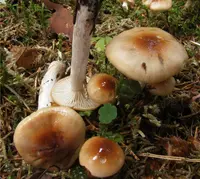
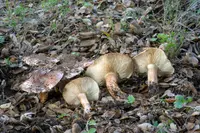
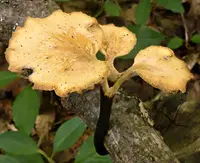
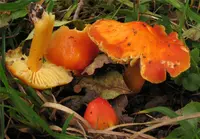
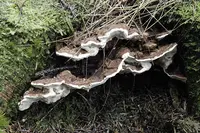
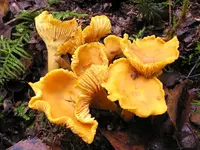
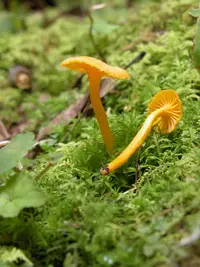
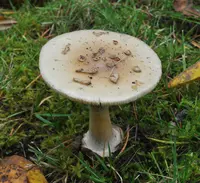
Hygrophorus discoideus is not a leafy houseplant but a woodland mushroom species, usually appearing in clusters on the forest floor. It typically has a smooth, disk-like cap with pale to brownish tones and waxy gills, giving it a slightly glossy look when fresh.
This fungus is native to temperate forests, often associated with coniferous or mixed woodland where it forms mycorrhizal partnerships with tree roots. Because it depends on these symbiotic relationships and specific soil and moisture conditions, it is not straightforward to cultivate, and most enthusiasts do not attempt to care for Hygrophorus discoideus in home settings.

Care Difficulty
Moderate Care

Light Preference
Partial Shade

Water Requirements
Moderate Water

Temperature Preference
Cool Climate

Hardiness Zone
Unknown

Soil Texture
Loamy, Silty, Organic-rich

Soil pH
Acidic (5.5–6.5)

Soil Drainage
Moist but well-drained

Fertilization
Minimal (feed rarely)
Scan your plant to receive care tips personalized for your specific plant
Available on iOS and Android
This forest fungus prefers cool, subdued light rather than direct, open sun.
Moist but not waterlogged ground supports healthy development of this woodland fungus.
This species is adapted to cool to mild conditions typical of temperate woodlands.
Humidity is not a critical factor for Hygrophorus discoideus, which is adapted to natural outdoor fluctuations.
This fungus relies on naturally structured forest soil rather than a conventional potting mix.
This species is not suitable for sustained container growing, as it depends on complex soil–tree relationships in the ground.
This mycorrhizal fungus does not require routine feeding when established in suitable soil and host-tree conditions.
Hygrophorus discoideus is a wild mushroom that does not need or benefit from pruning in garden or woodland settings.
This fungus lives in symbiosis with tree roots, so it is not suited to normal repotting or transplanting like a potted plant.
Propagation of Hygrophorus discoideus is specialized and usually left to natural spore dispersal and expert mycologists rather than home growers.
In natural settings this fungus is fully adapted to local winters and does not require targeted winter care.

Plant Health Check
Not sure what's wrong with your plant? Check your plant's health inside the app.
Mature fruiting bodies develop a noticeably darker brown, almost disc-like central zone on the cap, which contrasts with the paler outer margin and helps distinguish this species from other pale Hygrophorus mushrooms in mixed forests.
This fungus typically forms ectomycorrhizal associations with conifer trees, especially spruce and pine, exchanging mineral nutrients and water for sugars from the host roots in cool, montane or boreal forest habitats.
In much of its range it appears in the later part of the mushroom season, often in autumn when temperatures drop and moisture increases, contributing to nutrient cycling as other fungal species begin to decline.
This species is generally regarded as inedible or of very poor culinary value. Identification of wild fungi is difficult and mistakes can be dangerous, so it should not be collected for food or tasted.
Keep your plants happy and healthy with plant identification, disease detection, and easy care guidance.