Herald of Winter Care (Hygrophorus hypothejus)

Herald of Winter

About Herald of Winter

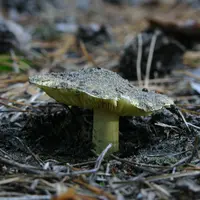
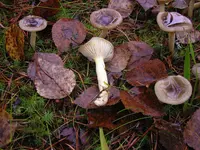
Herald of Winter, Hygrophorus hypothejus, is a late-season waxcap fungus, not a leafy houseplant. It forms slimy, yellow-brown caps with paler, waxy gills and a slender stem. Fruiting bodies often appear in cold weather, sometimes through early snow, which inspires its common name.

This species typically occurs in coniferous forests, especially pine woods, on mossy, acidic soil. It associates with tree roots in a mycorrhizal relationship, meaning it exchanges nutrients with the host tree.

Because of this close forest partnership, it is difficult to cultivate at home, and attempts to care for Herald of Winter indoors are rarely successful. It is best appreciated in its natural habitat rather than as a traditional garden or potted specimen.

Main Plant Requirements

Care Difficulty

Hard Care

Light Preference

Partial Shade

Water Requirements

Regular Water

Temperature Preference

Cold Hardy

Hardiness Zone

3–7

Soil Texture

Sandy, Loamy, Organic-rich

Soil pH

Acidic (5.5–6.5), Slightly acidic (6.5–7.0)

Soil Drainage

Moist but well-drained

Fertilization

Minimal (feed rarely)

Get Personalized Care Plan

Scan your plant to receive care tips personalized for your specific plant

Available on iOS and Android

How to Care for the Herald of Winter

This late-season woodland fungus prefers cool, dappled light rather than direct, intense sun.

  • Provide 3–5 hours of weak, low-angle sun, ideally filtered morning light through trees or light forest canopy.
  • Allow partial to deep shade the rest of the day; Herald of Winter fruits best along bright, open edges of conifer stands, not in full exposed sun.
  • Avoid strong midday and afternoon sun in open ground, which can dry the forest floor surface and reduce fruiting, especially in dry autumns.

This mycorrhizal fungus depends on consistently moist, well-drained forest soil rather than direct watering.

  • Aim for soil that is evenly moist 5–8 cm deep, never waterlogged; free-draining, sandy or humus-rich soil around conifer roots supports Hygrophorus hypothejus.
  • Watch moisture in late summer–autumn; drying leaf litter, cracked soil, and sparse moss growth indicate the site is too dry for reliable fruiting.
  • Avoid standing water and compacted, puddling soil, which limit oxygen around tree roots and can suppress mycelium development or cause rot in associated roots.

This species fruits in cool to cold conditions and tolerates near-freezing temperatures well.

  • Support main fruiting when air temperatures stay around 40–55°F (4–13°C), typical of late autumn or early winter in conifer woods.
  • Expect limited activity above about 60°F (16°C); prolonged warmth and dry weather tend to slow or pause fruiting until cooler, moist conditions return.
  • Tolerates brief drops to about 28°F (-2°C) with light frost on caps, but extended hard freezes below 25°F (-4°C) usually end the fruiting period.

Humidity is not a major factor for Hygrophorus hypothejus, which fruits naturally in cool, moist forest air.

  • Aim for ambient outdoor humidity around 50–80% during its fruiting period to mimic natural woodland conditions.
  • The fungus tolerates brief drier spells but prolonged air below 40% can slow or stop fruiting of Herald of Winter.
  • Signs of humidity stress include caps drying, cracking, or failing to expand fully on otherwise mature fruiting bodies.
  • Increase humidity locally with damp leaf litter, misted forest duff, or a perforated cover that allows airflow while reducing evaporation.

This mycorrhizal fungus grows in association with trees, not in conventional potting soil.

  • In nature Hygrophorus hypothejus fruits in sandy to sandy-loam forest soil, rich in conifer litter and fine roots, with loose, crumbly structure.
  • Soils are usually moderately acidic, around pH 4.5–6.0, with abundant decomposing needles rather than dense clay or highly alkaline material.
  • For experimental culture, combine washed coarse sand, fine pine bark, and partially decomposed conifer litter to mimic aerated, free-draining forest soil.
  • Avoid compacted, waterlogged, or fertiliser-heavy substrates, which reduce oxygen, disrupt tree root partnerships, and suppress mushroom formation.

This species is generally unsuitable for container growing because it depends on a living tree root system and stable woodland soil conditions.

This mycorrhizal mushroom naturally obtains nutrients through its association with conifer roots and usually needs no additional fertilizer in garden or woodland settings.

As a wild mycorrhizal fungus, Hygrophorus hypothejus is not pruned in the usual horticultural sense and requires no shaping or cutting back.

This species is best left undisturbed, as it depends on a stable mycorrhizal partnership with conifer roots rather than container culture.

  • Transplant only if absolutely necessary, such as when moving a young host tree with associated soil and fine roots.
  • Plan any move in cool, moist weather in early autumn to limit stress on both tree roots and fungal mycelium.
  • Keep the original soil around the tree’s root ball intact to preserve the fine fungal network.
  • Water gently after transplanting and maintain even soil moisture so the mycorrhizal partnership can re-establish.

Propagation of this fungus is specialized and not practical for most home growers, since it relies on complex mycorrhizal interactions with conifer roots.

Herald of Winter is naturally cold hardy in its native range and generally does not need special winter care when left in the ground in conifer forests.

Care Tips

Site soil testing

Before establishing a patch, test the planned pine woodland site for low available nitrogen and good drainage, since overly rich or compacted soils reduce fruiting of Hygrophorus hypothejus.

Maintain pine partners

Retain or plant compatible pine species and avoid heavy root disturbance around them, because this fungus depends on stable mycorrhizal partnerships with living pines to produce mushrooms.

Leaf litter management

Allow a thin, continuous layer of pine needles and leaf litter to accumulate but rake away thick, matted debris each autumn so fruiting bodies can emerge without obstruction.

Minimal soil disturbance

Keep traffic, digging, and tilling off the fruiting zone and use stepping stones or defined paths to protect the fine mycelial network that runs just below the soil surface.

Careful harvesting

When growing Herald of Winter, cut mushrooms at the base with a clean knife and leave small or damaged specimens in place to preserve mycelium strength and support spore dispersal.

Common Pests and Diseases

Mycophagous springtails

These insects feed on fungal tissues, including caps and gills, and can scar or pit the surface of fruiting bodies. Symptoms include small pits, irregular surface damage, and clusters of tiny jumping insects in moist litter around the mushrooms.

Solution

Reduce excess surface moisture by improving drainage and avoiding waterlogged conditions in mushroom beds, and gently remove heavily infested fruiting bodies. In enclosed or cultivation settings, use sticky traps around the growing area and maintain good air movement to keep the microclimate slightly drier at the surface while still cool and humid below.

Sciarid fungus gnats

These insects lay eggs in moist organic substrates, and the larvae can tunnel through developing fruiting bodies, leading to soft, deformed, or collapsed caps and stems. This pest is especially problematic in protected or semi-enclosed cultivation areas with consistently high humidity.

Solution

Allow the upper layer of the substrate or forest-litter mimic to dry very slightly between heavy misting sessions and remove any overmature, decaying mushrooms promptly. In controlled setups, use fine mesh over vents, yellow sticky traps for adults, and adjust ventilation so humidity stays adequate for growing Herald of Winter without creating constantly saturated surfaces.

Mucor mold contamination

This disease appears as fast-growing, fuzzy gray to white mold that can overrun the substrate or casing layer and outcompete or smother developing Hygrophorus hypothejus fruiting bodies. Symptoms include rapid spread of cottony growth and poor or aborted mushroom development in affected patches.

Solution

Physically remove and discard contaminated substrate or casing patches as soon as they are noticed, including any affected fruiting bodies. Improve air exchange, avoid overwatering, and in small-scale cultivation disinfect tools and containers between batches to limit mold spore carryover.

Trichoderma green mold

This disease starts as white mycelium that turns bright or dull green as spores form, often colonizing nutrient-rich substrates and suppressing mushroom formation. Symptoms include green patches on the substrate surface, reduced pin formation, and localized dieback of mushroom primordia.

Solution

Cut out and discard infected substrate zones promptly and avoid disturbing them further to limit spore spread. For Hygrophorus hypothejus care in semi-cultivation, prepare substrate with clean materials, manage moisture to avoid persistent saturation, and maintain good ventilation so surfaces dry slightly between misting sessions.

Interesting Facts

Late-autumn fruiting

This species reliably fruits very late in the season, often appearing after the first frosts and sometimes emerging through light snow in coniferous forests across Europe and parts of North America.

Strong pine association

It forms ectomycorrhizal partnerships with pines, especially Scots pine (Pinus sylvestris), exchanging mineral nutrients and water from the soil for sugars produced by the tree.

Distinctive slimy cap

The cap surface becomes strongly viscid to slimy in moist weather due to a gelatinous outer layer, a characteristic feature that helps distinguish it from many other late-season mushrooms.

Botan icon

Did you know?

Molecular and morphological studies have shown that this species belongs to a small, specialized group within Hygrophorus adapted to cold, late-season conditions, so its consistent appearance at the onset of winter in pine forests gave rise to traditional common names like "Herald of Winter" in several European languages.

FAQs about Herald of Winter

This mushroom is considered an edible wild species when correctly identified and cooked. It is mild in flavor and usually fried or added to mixed mushroom dishes. Always confirm identification with an expert before consumption.

Grow Healthy Plants with Botan Care

Keep your plants happy and healthy with plant identification, disease detection, and easy care guidance.

Botan plant care app — identify plants on mobile

Explore More Plants