Leaf litter management
Retain a thin, clean layer of native leaf litter over the fungal zone to help maintain moisture and protect the mycelium, but remove heavy, matted layers that stay soggy and could promote rot.

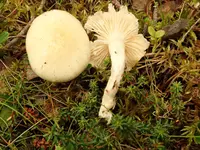
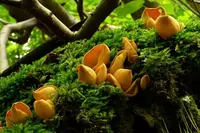
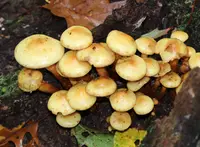
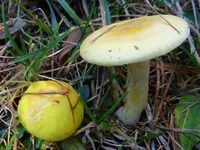
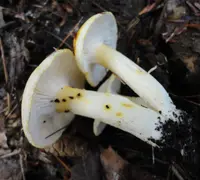
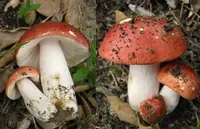
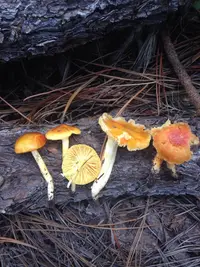
Hygrophorus ligatus is a waxcap-type mushroom, not a leafy houseplant. It produces smooth, slimy caps with pale gills and a slender, often sticky stem. The fruiting bodies appear on the forest floor rather than on wood or living plants.
This species is usually found in cool, moist coniferous forests, often in mossy areas with undisturbed soil. It has a mycorrhizal lifestyle, forming partnerships with tree roots, which makes it challenging to cultivate artificially.
For those interested in how to care for Hygrophorus ligatus in a managed setting, conditions must mimic its natural habitat with consistently cool, moist, well-drained, organic soil and stable shade.

Care Difficulty
Moderate Care

Light Preference
Partial Shade

Water Requirements
Moderate Water

Temperature Preference
Cool Climate

Hardiness Zone
Unknown

Soil Texture
Loamy, Silty, Organic-rich

Soil pH
Acidic (5.5–6.5)

Soil Drainage
Moist but well-drained

Fertilization
Minimal (feed rarely)
Scan your plant to receive care tips personalized for your specific plant
Available on iOS and Android
This woodland mushroom prefers low, filtered light similar to a shaded forest floor.
Moist but not waterlogged conditions are essential for reliable fruiting.
Cool to mild conditions support both mycelium growth and fruiting.
This ectomycorrhizal mushroom needs consistently moist air but not saturated conditions to fruit well.
This woodland fungus relies on mineral, well-aerated forest soil rather than a conventional potting mix.
This species is not practically suited to container growing because it depends on stable woodland soil and mycorrhizal roots of host trees.
This native woodland fungus usually grows without added nutrients and does not need routine fertilization in gardens or containers.
Pruning is not applicable, as Hygrophorus ligatus is a wild mycorrhizal fungus rather than a cultivated garden plant.
Transplanting this mycorrhizal fungus is rarely successful, since it depends on specific tree roots and soil fungi communities.
Deliberate propagation of Hygrophorus ligatus is difficult and rarely done outside research settings.
Special winter care is not needed, as this woodland fungus is cold hardy and adapted to natural seasonal cycles.

Plant Health Check
Not sure what's wrong with your plant? Check your plant's health inside the app.
This species is a mycorrhizal fungus that forms nutrient-trading partnerships with conifers, especially spruce, helping trees absorb water and minerals in exchange for carbohydrates.
Fruiting bodies typically appear in late autumn, often persisting after many other mushrooms have finished, which makes it one of the later Hygrophorus species to be seen in cool, coniferous forests.
Mature specimens develop a smooth, often noticeably slimy brown cap when moist, a characteristic that helps field mycologists separate it from similar dry-capped Hygrophorus species.
This mushroom is generally regarded as inedible or of no culinary value. Identification of waxcap fungi is difficult, and misidentification risks are high. For safety, it is best treated as non-edible and left unharvested.
Keep your plants happy and healthy with plant identification, disease detection, and easy care guidance.