Retain Forest Duff
When establishing a patch, keep existing leaf litter, twigs, and decaying wood in place, as this stable organic layer supports the mycorrhizal partnership needed for growing Hygrophorus occidentalis.

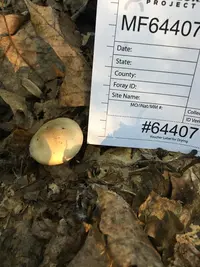
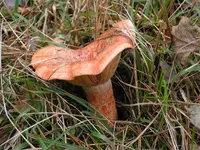
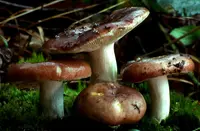
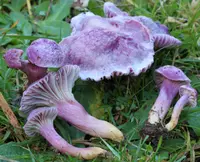
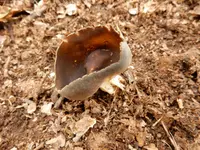
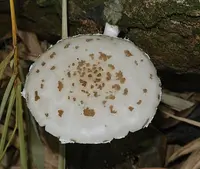
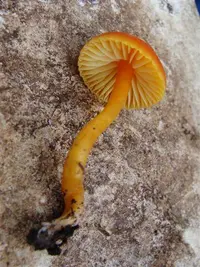
Hygrophorus occidentalis is a wild mushroom species rather than a typical houseplant. It produces smooth, often moist caps with pale to tan colors and thick, widely spaced gills. The fruiting bodies usually appear in forested areas, often in association with conifer trees, where they grow on the ground in leaf litter or moss. This species depends on a mycorrhizal partnership, a mutually beneficial connection between fungus and tree roots, which makes it unsuitable for regular pot culture. Because it relies on this natural root partnership, it is considered difficult to cultivate, and guidance on how to care for Hygrophorus occidentalis focuses mainly on conserving its woodland habitat rather than growing it indoors or in gardens.

Care Difficulty
Moderate Care

Light Preference
Partial Shade

Water Requirements
Moderate Water

Temperature Preference
Cool Climate

Hardiness Zone
Unknown

Soil Texture
Loamy, Silty, Organic-rich

Soil pH
Acidic (5.5–6.5)

Soil Drainage
Moist but well-drained

Fertilization
Minimal (feed rarely)
Scan your plant to receive care tips personalized for your specific plant
Available on iOS and Android
This ectomycorrhizal woodland fungus prefers cool, softly lit forest conditions rather than direct open sun.
This forest mushroom depends on consistently moist, not waterlogged, soil around its tree partners.
This species favors cool to mild conditions typical of moist conifer or mixed forests.
This species is native to outdoor forest habitats, so humidity control is generally not a meaningful care factor in cultivation.
Hygrophorus occidentalis grows best in moist, airy, organic-rich ground that mimics forest litter.
This species is not well suited to container growing, as it typically depends on natural soil and woodland conditions.
This forest-dwelling fungus relies on natural soil nutrients and usually needs no additional fertilizer in cultivation.
As a wild mycorrhizal fungus, Hygrophorus occidentalis is not managed through pruning.
In cultivation, focus on carefully transplanting any associated host plant rather than the fungus itself.
Propagation of this mycorrhizal fungus is specialized and not typically attempted by home growers.
This species is naturally cold hardy in its native forest habitats and needs no special winter care in the ground.

Plant Health Check
Not sure what's wrong with your plant? Check your plant's health inside the app.
The cap often shows a distinct contrast between a more intensely colored center and paler yellowish to whitish margins, which helps separate it from similar Hygrophorus species with uniformly colored caps.
Like many Hygrophorus species, the cap and sometimes the stipe are covered in a notably slimy layer when moist, which is thought to help reduce desiccation and may aid in spore dispersal by adhering moisture and debris.
This species is typically found in association with conifers in western North America, where it forms ectomycorrhizal relationships with tree roots, exchanging mineral nutrients and water for sugars produced by the host.
This is a wild mushroom species, not a garden plant. Edibility is unclear and poorly documented, and identification errors with similar toxic fungi are common, so it should not be eaten or recommended as food.
Keep your plants happy and healthy with plant identification, disease detection, and easy care guidance.