Substrate inoculation
Introduce colonized spawn or mycelium-rich debris into fresh, cool, moist conifer duff near host trees rather than disturbing existing fruiting sites, which helps establish new, stable patches over several seasons.

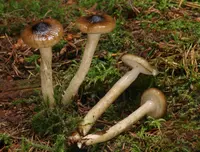
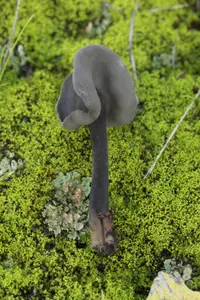
The olive wax cap, Hygrophorus olivaceoalbus, is a woodland mushroom rather than a leafy houseplant. It forms slim, sticky caps in olive to brown tones with pale gills and a slender, often banded stem. Fruiting bodies appear in cool seasons, usually in moist conifer forests.
This species grows in the ground, forming a symbiotic relationship with tree roots, so it cannot be kept like a normal potted plant. It is considered challenging to cultivate because it depends on specific forest conditions. Most people do not try to care for Olive Wax Cap at home and instead observe it in its natural habitat.

Care Difficulty
Hard Care

Light Preference
Partial Shade

Water Requirements
Keep Soil Moist

Temperature Preference
Cool Climate

Hardiness Zone
Unknown

Soil Texture
Loamy, Sandy, Organic-rich

Soil pH
Acidic (5.5–6.5), Slightly acidic (6.5–7.0)

Soil Drainage
Moist but well-drained

Fertilization
Minimal (feed rarely)
Scan your plant to receive care tips personalized for your specific plant
Available on iOS and Android
This ectomycorrhizal fungus prefers cool, subdued forest light rather than direct open sun.
This forest mushroom depends on consistently moist, not waterlogged, soil around its tree partners.
This species favors cool to cold conditions typical of higher elevations and northern conifer forests.
This mycorrhizal mushroom does not need managed air humidity under normal outdoor conditions.
This mycorrhizal fungus cannot be grown in standard potting soil and relies on a living conifer forest substrate.
This species is not suitable for true container growing, as it depends on complex mycorrhizal relationships with conifer roots.
This ectomycorrhizal fungus relies on its tree partners, so Olive Wax Cap needs no direct fertilization.
Hygrophorus olivaceoalbus is a wild mushroom species and does not require intentional pruning.
This forest-dwelling fungus is not suited to normal container culture, so home repotting or transplanting is rarely appropriate.
This species is an ectomycorrhizal mushroom, so routine home propagation is difficult and rarely attempted.
This fungus is naturally cold hardy in its native forest habitats and needs no special winter care from gardeners.

Plant Health Check
Not sure what's wrong with your plant? Check your plant's health inside the app.
Mature fruiting bodies develop a dark olive to brown, often slightly viscid cap with paler streaks, giving the mushroom a characteristic bicolored and somewhat streaky appearance that helps distinguish it from other waxcaps in the field.
This species forms ectomycorrhizal associations, mainly with spruce and sometimes other conifers, exchanging mineral nutrients from the soil for carbohydrates from the tree and contributing to forest nutrient cycling.
It typically fruits in late autumn, often into early winter, in cool, moist coniferous forests, and is more frequently encountered in higher altitude or boreal habitats with long, cold seasons.

In several European countries, Hygrophorus olivaceoalbus is regarded as an indicator of relatively undisturbed, mature coniferous forest, so its presence can be used by field mycologists and conservationists as a sign of habitat quality and ecological continuity.
This mushroom is considered edible but of low culinary value due to its slimy cap and mild taste. Always confirm identification with an expert, since confusing it with toxic look-alikes can cause serious poisoning.
Keep your plants happy and healthy with plant identification, disease detection, and easy care guidance.