

Substrate anchoring
Press the moss gently but firmly onto rough, stable surfaces like decaying logs, rock pockets, or coarse bark so the rhizoids can attach securely and form a dense, long-lived mat.

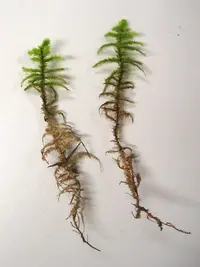
Rough goose neck moss, Hylocomiadelphus triquetrus, is a large, feathery moss that forms loose, arching carpets with stems that bend like a goose neck. Its shoots are often bright to yellow-green, giving a soft, layered texture that stands out among forest-floor mosses.
This species naturally occurs in cool, moist forests across parts of Europe, Asia, and North America, usually on soil, rotting wood, or at the base of trees. It is generally easy to maintain in cultivation if kept evenly moist, shaded, and on a loose, slightly acidic substrate, which helps when learning how to care for rough goose neck moss.

Care Difficulty
Moderate Care

Light Preference
Partial Shade

Water Requirements
Keep Soil Moist

Temperature Preference
Cold Hardy

Hardiness Zone
3–8

Soil Texture
Loamy, Peaty, Organic-rich

Soil pH
Strongly acidic (4.5–5.5), Acidic (5.5–6.5)

Soil Drainage
Moist but well-drained

Fertilization
Minimal (feed rarely)
Scan your plant to receive care tips personalized for your specific plant
Available on iOS and Android
This woodland moss prefers cool, shaded sites with soft, indirect light for most of the day.
This moss thrives in consistently moist, never waterlogged substrates with high ambient humidity.
This species is a cool- to mild-climate moss with good cold tolerance but limited heat tolerance.
This moss prefers consistently moist, cool, high-humidity conditions to stay dense and green.
This moss thrives on loose, organic-rich, well-drained yet constantly moist substrates rather than dense mineral soils.
This species can adapt to container culture when the setup maintains stable moisture and support.
This moss gains most nutrients from its substrate and usually needs no additional fertilizer in typical garden or terrarium setups.
Hylocomiadelphus triquetrus needs only light grooming to keep moss patches tidy and healthy.
This species is usually transplanted rather than repotted, since it is most often grown on soil, rocks, or wood.
Hylocomiadelphus triquetrus is commonly propagated vegetatively, using small pieces of existing mats.
This moss is naturally cold hardy and usually requires minimal winter care in outdoor settings across much of its range.

Plant Health Check
Not sure what's wrong with your plant? Check your plant's health inside the app.
This moss forms distinctly 3-angled, or triquetrous, stems, where leaves are arranged on three sides, giving shoots a triangular cross-section that is easy to recognize in the field.
It often creates thick, springy carpets in coniferous and mixed forests across the Northern Hemisphere, helping retain soil moisture, stabilize leaf litter, and provide microhabitats for small invertebrates.
The species is well adapted to cool, shaded woodland conditions and can remain green under snow cover, resuming photosynthesis quickly when light and temperatures rise again in spring.

Hylocomiadelphus triquetrus is frequently used as a character species in European forest bioindication studies, where its presence and vitality help scientists assess long-term changes in woodland microclimate, air quality, and stand structure.
This species performs best outdoors in cool, humid, shaded locations, such as woodland gardens or shaded rock features. Indoors it is short‑lived unless humidity, air movement, and moisture are carefully controlled, making rough goose neck moss indoor care more challenging.
Keep your plants happy and healthy with plant identification, disease detection, and easy care guidance.

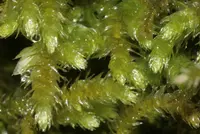
Common Striated Feather-moss
Eurhynchium striatum

tortula moss
Tortula muralis
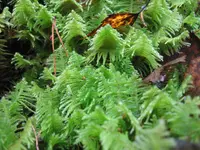
knights plume moss
Ptilium crista-castrensis
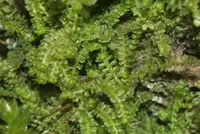
Trunk Pawwort
Neoorthocaulis attenuatus
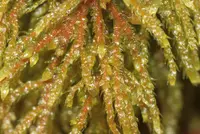
hylocomiastrum moss
Hylocomiastrum umbratum
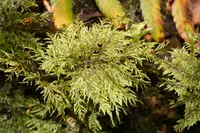
Stair Step Moss
Hylocomium splendens
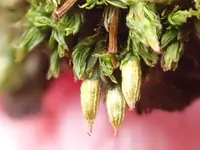
orthotrichum moss
Orthotrichum tenellum
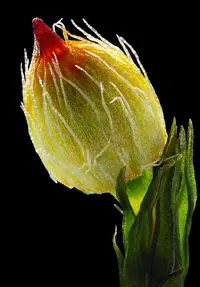
orthotrichum moss
Orthotrichum stramineum