

Substrate anchoring
Press this liverwort gently into an uneven, porous substrate such as rough bark, lava rock, or coarse cork to help the creeping shoots anchor more securely and spread in a stable mat.

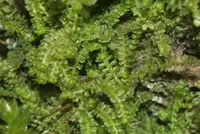
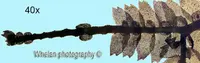
Trunk pawwort, Neoorthocaulis attenuatus, is a small, upright liverwort that forms dense, tufted mats rather than leafy stems like typical houseplants. Its flattened, scale-like shoots create a mossy, carpeted look, often with a slightly glossy surface.
This species is native to cool, moist regions of the Northern Hemisphere, where it grows on acidic soil, peat, and rotting wood in forests and boggy areas. It is sensitive to drying out and pollution, which makes it more challenging to cultivate indoors.
Those who care for Trunk Pawwort need to provide constant moisture, gentle airflow, and low to moderate light, similar to conditions used for many terrarium mosses and liverworts.

Care Difficulty
Moderate Care

Light Preference
Partial Shade

Water Requirements
Keep Soil Moist

Temperature Preference
Cool Climate

Hardiness Zone
Unknown

Soil Texture
Peaty, Organic-rich

Soil pH
Strongly acidic (4.5–5.5)

Soil Drainage
Moist but well-drained

Fertilization
Minimal (feed rarely)
Scan your plant to receive care tips personalized for your specific plant
Available on iOS and Android
This small liverwort prefers cool, soft light that mimics a moist woodland floor.
This species needs consistently moist conditions without stagnant water.
This moss-like liverwort prefers cool to mild temperatures typical of shaded forest floors.
This liverwort prefers constant high humidity and dries out quickly in typical indoor air.
Provide a consistently moist, fine-textured, organic, and slightly acidic rooting substrate.
This species can be grown in shallow containers if moisture and humidity are tightly controlled.
This liverwort is adapted to nutrient-poor habitats and usually needs no fertilizer when grown as Trunk Pawwort under naturalistic conditions.
Neoorthocaulis attenuatus needs minimal pruning, mainly to keep cultivated patches tidy and healthy.
This species is rarely potted; care focuses on gentle transplanting of mats rather than routine repotting.
Propagation of this liverwort is typically done vegetatively by dividing existing mats rather than from spores at home.
In climates similar to its native cool habitats, this liverwort is generally cold hardy and needs little winter care outdoors.

Plant Health Check
Not sure what's wrong with your plant? Check your plant's health inside the app.
This liverwort is strongly associated with cold, nutrient-poor heath and open boreal habitats, often growing among dwarf shrubs and lichens rather than in typical moss carpets.
Its shoots narrow gradually toward the tips, creating the characteristic attenuated appearance that helps distinguish it from related Neoorthocaulis and Lophozia species during field identification.
Populations are usually found on acidic, often podzolized soils or peat, so its presence can be used by bryologists as a field indicator of low pH and low base saturation in the substrate.

This species shows a distinctly northern, oceanic distribution pattern in Europe and parts of North America, and its scattered, often relict populations are used in bryological studies to reconstruct past climatic and postglacial vegetation history.
This liverwort performs best outdoors or in very cool, humid terrarium-style settings. It prefers shaded, consistently moist, well-aerated environments that are hard to maintain in typical heated homes, so long-term indoor display is usually challenging.
Keep your plants happy and healthy with plant identification, disease detection, and easy care guidance.

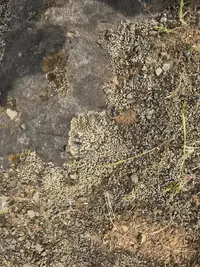
Elongate Rock Moss
Niphotrichum elongatum
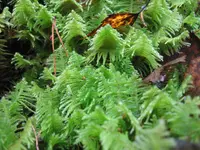
knights plume moss
Ptilium crista-castrensis
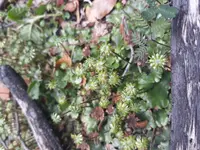
Bonfire Liverwort
Marchantia berteroana
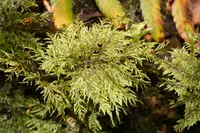
Stair Step Moss
Hylocomium splendens
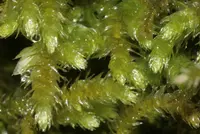
Common Striated Feather-moss
Eurhynchium striatum
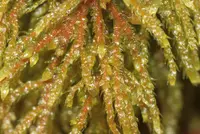
hylocomiastrum moss
Hylocomiastrum umbratum
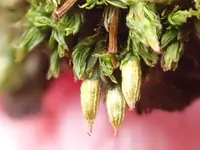
orthotrichum moss
Orthotrichum tenellum
Bazzania Liverwort
Bazzania denudata