

Substrate anchoring
Press small pieces of the moss gently but firmly onto rough, stable surfaces such as bark, old bricks, or porous rock so the rhizoids can grip and establish instead of drying and blowing away.

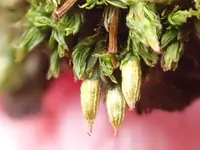
Orthotrichum tenellum is a small acrocarpous moss that forms tight, cushion-like tufts on bark, rocks, and old walls. It is commonly found in temperate regions of Europe and parts of North America, especially in humid, shaded habitats.
The plants have short, upright stems with narrow leaves that often curl when dry and open again when moist. Its small size and slow, steady growth make it relatively easy to maintain in stable conditions, though it is sensitive to prolonged drying and heavy disturbance.
Understanding how to care for orthotrichum moss mainly involves providing consistent moisture, gentle airflow, and soft, indirect light without strong heat or desiccating wind.

Care Difficulty
Moderate Care

Light Preference
Partial Shade

Water Requirements
Keep Soil Moist

Temperature Preference
Cold Hardy

Hardiness Zone
5–9

Soil Texture
Loamy, Rocky, Organic-rich

Soil pH
Acidic (5.5–6.5), Slightly acidic (6.5–7.0)

Soil Drainage
Moist but well-drained

Fertilization
Minimal (feed rarely)
Scan your plant to receive care tips personalized for your specific plant
Available on iOS and Android
This moss thrives in cool, soft light that mimics shaded rocks or tree bark habitats.
This moss prefers consistently damp conditions without long dry periods or standing water.
This species is adapted to cool, temperate climates with noticeable seasonal changes.
This moss prefers consistently cool, moist air and reacts quickly to drying conditions.
This species anchors to rough, firm substrates, so the goal is a thin, stable, moist surface rather than deep, loose potting soil.
This moss can be grown in shallow containers when moisture and drainage are carefully controlled.
This moss is adapted to low-nutrient habitats and usually performs best with minimal or no fertilization.
Orthotrichum tenellum needs almost no pruning, since old shoots naturally break down and are replaced by new growth.
Transplanting Orthotrichum tenellum mainly involves moving small mats rather than handling individual roots.
Propagation of Orthotrichum tenellum is usually done by dividing and relocating small living patches rather than by spores at home.
This moss is naturally cold hardy and normally needs no special winter care outdoors in temperate climates.

Plant Health Check
Not sure what's wrong with your plant? Check your plant's health inside the app.
This species is adapted to grow primarily on the smooth bark of broadleaved trees, especially ash and oak, where it anchors tightly with tiny rhizoids rather than forming loose cushions on soil or rocks.
Populations of this moss decline in areas with heavy air pollution and are more frequent in regions with relatively low sulfur and nitrogen deposition, so its presence can indicate moderately clean air conditions.
It forms very small, cylindrical spore capsules that can persist for months on the plant, releasing spores gradually through a ring of fine teeth that respond to changes in humidity.
This moss is slow-growing, often taking several months to noticeably thicken and years to form dense cushions. Growth rate depends on constant moisture, clean air, moderate light, and stable temperatures without extreme drying or disturbance.
Keep your plants happy and healthy with plant identification, disease detection, and easy care guidance.

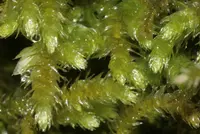
Common Striated Feather-moss
Eurhynchium striatum
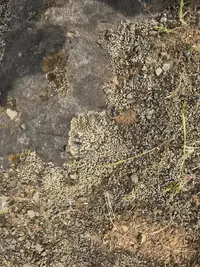
Elongate Rock Moss
Niphotrichum elongatum
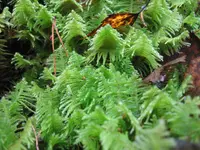
knights plume moss
Ptilium crista-castrensis
Bazzania Liverwort
Bazzania denudata
yellow crisp-moss
Tortella flavovirens
Bonfire Liverwort
Marchantia berteroana
Stair Step Moss
Hylocomium splendens
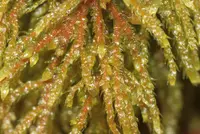
hylocomiastrum moss
Hylocomiastrum umbratum