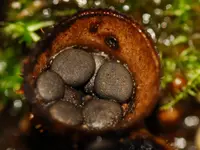
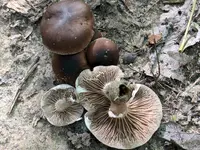
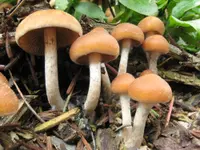
Hymenopellis furfuracea Care

Hymenopellis furfuracea

About Hymenopellis furfuracea

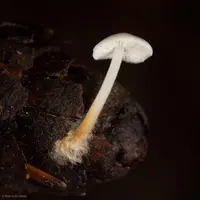
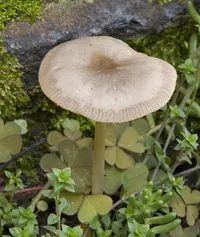
Hymenopellis furfuracea is a small, saprotrophic mushroom that breaks down dead wood and leaf litter in forests. It typically forms slender stems with modest, pale to brown caps.

This species is usually found on decaying wood in temperate regions, often appearing after rain in shaded woodland habitats. It plays an ecological role in nutrient recycling rather than serving as an ornamental plant.

Most people do not actively grow or care for Hymenopellis furfuracea at home, but understanding its need for constant moisture, shade, and decaying organic matter helps explain where it appears in nature.

Main Plant Requirements

Care Difficulty

Moderate Care

Light Preference

Partial Shade

Water Requirements

Keep Soil Moist

Temperature Preference

Warm Climate

Hardiness Zone

Unknown

Soil Texture

Loamy, Organic-rich

Soil pH

Slightly acidic (6.5–7.0)

Soil Drainage

Moist but well-drained

Fertilization

Minimal (feed rarely)

Get Personalized Care Plan

Scan your plant to receive care tips personalized for your specific plant

Available on iOS and Android

How to Care for the Hymenopellis furfuracea

This species prefers cool, shaded woodland conditions rather than direct open sun.

  • Aim for bright shade or dappled light under trees, with no more than 1–2 hours of weak early-morning sun and no direct midday or afternoon sun.
  • In cultivation, place Hymenopellis furfuracea where surrounding vegetation or structures filter light, mimicking a forest floor with constantly shaded, moist ground.
  • Too much sun causes caps to dry, crack, or bleach, while too little light can reduce fruiting, so adjust exposure seasonally as canopy cover changes.

Moist, well-aerated substrate is essential for stable fruiting and mycelial health.

  • Maintain consistently damp but not soggy conditions; surface litter or top 1–2 cm of substrate should feel moist to the touch, never fully dry or flooded.
  • Use loose, well-draining organic material (leaf litter, rotting wood, coarse mulch) so excess water moves away quickly, reducing the risk of standing water and rot.
  • Reduce irrigation in cool, wet seasons and increase gentle, frequent watering during warm, dry spells; wilting, shriveling caps suggest dryness, while slimy, collapsing tissue suggests overwatering.

This fungus grows best in cool to mild conditions typical of shaded woodland floors.

  • Optimal fruiting usually occurs around 55–70°F (13–21°C), with steady moisture and shelter from direct sun and drying winds.
  • Colonized substrate may tolerate down to about 40°F (4°C), but hard frost below 32°F (0°C) can damage or halt visible fruiting bodies.
  • Sustained heat above 77–82°F (25–28°C) tends to slow growth and dry the substrate, so provide extra shade and moisture buffering during hotter months.

This fungus prefers consistently moist, humid air around its fruiting area.

  • Aim for 70–90% humidity near developing fruiting bodies for reliable formation.
  • In drier air, caps may crack, edges dry out, and growth stall before full expansion.
  • Increase humidity by misting the surrounding substrate, using a humidifier, or tenting the tray with perforated plastic to trap moisture without stopping airflow.

Hymenopellis furfuracea develops best on a loose, organic-rich substrate rather than dense mineral soil.

  • Use a fine, airy mix of well-composted wood-based material, leaf mold, and a small portion of coarse sand or perlite for structure.
  • Keep the substrate evenly moist but never waterlogged; excess standing water quickly reduces oxygen and favors competing microbes.
  • Maintain a slightly acidic to neutral environment around pH 6.0–7.0 for stable mycelial growth and nutrient availability.
  • Avoid compacted, clay-heavy, or highly fertilized mixes, which restrict gas exchange and can chemically burn or inhibit the mycelium.

This species can be managed in shallow containers or trays for controlled fruiting.

  • Choose wide, shallow trays that allow a broad colonized surface while keeping substrate depth around 5–10 cm for even moisture distribution.
  • Use rigid plastic or metal containers that maintain stable humidity yet do not dry out as quickly as unglazed clay.
  • Elevate containers on racks so excess water drains freely and air can move underneath, reducing stagnant zones that invite mold.

This wild saprotrophic fungus usually requires no additional feeding when grown in suitable, organically rich substrate.

Pruning is not relevant for this mushroom-forming fungus, since its fruiting bodies are short-lived and naturally decompose after spore release.

In cultivation, focus on renewing the substrate rather than moving Hymenopellis furfuracea between containers.

  • Replace spent substrate when fruiting declines or mycelium appears exhausted, rather than waiting for rootbound symptoms seen in vascular plants.
  • Refresh the growing container in cool to mild seasons, avoiding very hot or very cold periods that stress the mycelium.
  • Gently transfer colonized substrate into fresh, compatible medium, keeping moisture even and disturbing the mycelial network as little as possible.
  • Work quickly in clean conditions to reduce contamination and allow the mycelium to recover in a shaded, stable environment.

Propagation is mainly by mycelial expansion, which makes home-level work with this fungus specialized and uncommon.

Outdoor-grown mycelium in the ground is generally cold tolerant in temperate regions and needs little targeted winter care.

  • Maintain a light mulch over colonized soil to stabilize moisture and moderate temperature swings near the mycelium.
  • Keep container culture in a cold but frost-free, shaded place if local winters drop well below freezing.
  • Avoid waterlogged conditions in winter, since saturated, cold substrate increases the risk of rot and loss of the colony.

Care Tips

Use clean substrate

Prepare fruiting blocks or trays with properly pasteurized or sterilized hardwood sawdust or supplemented wood-based substrate to reduce competing fungi and bacteria that can quickly overwhelm Hymenopellis furfuracea.

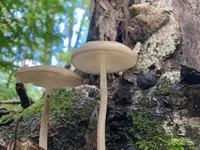
Control fresh air

Provide gentle, regular fresh-air exchange during the fruiting stage by briefly opening vents or using a low-speed fan, which helps prevent long, weak stems and deformed caps from excess carbon dioxide buildup.

Manage surface moisture

Mist the chamber walls or use a humidifier instead of spraying caps directly, keeping the substrate surface just moist and avoiding standing water that encourages bacterial blotch on developing mushrooms.

Timed harvest technique

Harvest clusters when caps are fully expanded but before edges curl upward, cutting at the base with a clean knife to limit damage to the substrate and encourage additional flushes.

Rest and rehydrate blocks

After each flush, allow the block a short rest with slightly reduced moisture, then rehydrate by soaking or heavy watering as appropriate for your setup to support multiple productive cycles when growing Hymenopellis furfuracea.

Common Pests and Diseases

Fungus gnat larvae

This pest targets the moist substrate used for fruiting, where larvae feed on mycelium and fine primordia. Symptoms include slow or aborting fruit body development and visible small black gnats flying around the grow area.

Solution

Reduce surface moisture between mistings, use fine mesh or sticky traps to lower adult gnat numbers, and apply a Bacillus thuringiensis israelensis (BTI) product to the substrate or water to control larvae while keeping conditions suitable for growing Hymenopellis furfuracea.

Green Trichoderma mold

This disease appears as fast‑spreading white mycelium that turns bright to dull green on the substrate or at the base of fruit bodies. Symptoms include stalled or deformed mushrooms and a strong earthy or slightly sour smell.

Solution

Isolate and remove contaminated blocks or trays, carefully cutting out and discarding affected areas if contamination is small, then increase fresh air exchange and lower surface wetness; clean all tools and surfaces with 70% isopropyl alcohol and avoid reusing contaminated substrate.

Bacterial blotch

This disease causes greasy, yellow to brown water‑soaked spots on caps, often where standing water sits. Symptoms include soft, slimy areas and an unpleasant odor as tissue breaks down.

Solution

Improve air circulation and avoid overhead misting that leaves standing droplets on caps, instead mist the surrounding air or walls; promptly harvest affected fruit bodies, reduce humidity slightly, and sanitize the grow space and tools between harvests to lower bacterial load.

Mite infestation

These insects occur in poorly sanitized grow rooms or from contaminated straw or wood, feeding on mycelium and occasionally on young fruit bodies. Symptoms include patchy, slow colonization and tiny moving white or tan specks on the substrate or under caps.

Solution

Discard heavily infested blocks, heat‑treat or freeze unopened substrate before use when possible, keep the grow area clean and dry between cycles, and use sticky traps plus perimeter sealing to limit mite entry; in persistent cases, introduce predatory mites that target pest mites without harming the fungus.

Cobweb mold

This disease shows as very fine, grayish web‑like growth that rapidly covers casing or substrate and can climb onto fruit bodies. Symptoms include soft, water‑soaked tissue and quick collapse of young mushrooms if humidity and still air persist.

Solution

At first signs, increase fresh air exchange and slightly reduce humidity, then spot‑treat affected areas with a light spray of 3% hydrogen peroxide diluted 1:1 with clean water; remove badly affected blocks or trays and thoroughly clean the fruiting area before the next cycle.

Interesting Facts

Distinctive scaly cap

Its cap surface is densely covered with fine, furfuraceous (bran-like) scales that give a rough, powdery appearance, especially in younger fruiting bodies, which helps distinguish it from smoother-capped relatives in the Physalacriaceae family.

Strong wood-decay specialist

This species grows as a saprotroph on dead hardwood, particularly on buried or heavily decomposed wood, contributing actively to lignin and cellulose breakdown in forest soils.

Wide temperate distribution

It has a broad distribution across temperate regions of Europe, Asia, and North America, where it typically fruits in humid forests during the warmer months on well-rotted woody debris.

Botan icon

Did you know?

Molecular studies using DNA sequencing have shown that this species, formerly placed in the genus Oudemansiella, is genetically distinct enough to warrant placement in Hymenopellis, illustrating how modern phylogenetics can overturn long-standing morphology-based classifications.

FAQs about Hymenopellis furfuracea

Identification of small brown mushrooms is often difficult, and this species is not widely documented as an edible fungus. Without expert confirmation, it should be treated as inedible and left unconsumed to avoid poisoning risk.

Grow Healthy Plants with Botan Care

Keep your plants happy and healthy with plant identification, disease detection, and easy care guidance.

Botan plant care app — identify plants on mobile

Explore More Plants