Hymenopellis gigaspora Care

Hymenopellis gigaspora

About Hymenopellis gigaspora

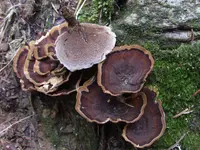
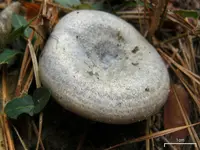
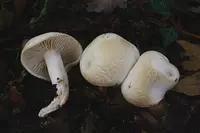
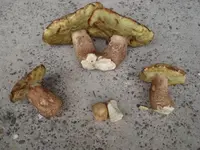
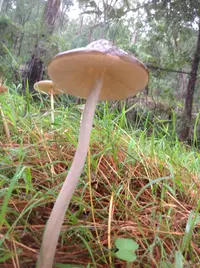
Hymenopellis gigaspora is a saprophytic fungus, not a leafy houseplant. It typically forms slender, pale stems with small caps emerging from decaying wood or rich organic debris. This species helps break down dead plant material in forests and woodland edges.

It is mainly found in temperate regions, often appearing after rain in moist, shaded habitats. For those interested in how to care for Hymenopellis gigaspora, conditions that mimic a cool, humid forest floor with stable moisture and well-aerated, organic substrate are most suitable.

Main Plant Requirements

Care Difficulty

Moderate Care

Light Preference

Partial Shade

Water Requirements

Keep Soil Moist

Temperature Preference

Warm Climate

Hardiness Zone

Unknown

Soil Texture

Loamy, Peaty, Organic-rich

Soil pH

Acidic (5.5–6.5)

Soil Drainage

Moist but well-drained

Fertilization

Minimal (feed rarely)

Get Personalized Care Plan

Scan your plant to receive care tips personalized for your specific plant

Available on iOS and Android

How to Care for the Hymenopellis gigaspora

This woodland fungus prefers gentle, indirect light similar to a shaded forest floor.

  • Provide dappled or filtered light with 1–3 hours of weak morning sun and no direct midday or afternoon sun to prevent drying and tissue damage.
  • Site Hymenopellis gigaspora in partial to full shade under trees, shrubs, or shade cloth where it receives bright ambient light but is shielded from harsh rays.
  • In summer, increase shade or move to a more sheltered spot; in low-light seasons, ensure overhead cover is thin enough that the area is still safely bright during the day.

Moist, well-aerated substrate is essential for reliable fruiting and mycelium health.

  • Maintain evenly moist conditions around the substrate, allowing only the surface 1–2 cm to start feeling slightly dry before re-wetting, rather than following a fixed calendar schedule.
  • Use a loose, well-draining organic mix or decaying wood so excess water can run off; standing water encourages rot, sour odors, and collapse of fruiting bodies.
  • Increase moisture during active growth or fruiting by misting or gentle soaking, and reduce input when temperatures drop or growth pauses to avoid persistent sogginess.

Stable, mild temperatures support consistent mycelium activity and fruiting.

  • Aim for 60–75°F (16–24°C) for best development, as this range supports active metabolism without stressing the organism.
  • Protect the fungus from frost; growth slows below about 45°F (7°C) and fruiting bodies may be damaged or fail entirely with repeated freezing.
  • In hotter periods above 80°F (27°C), increase shading and humidity and avoid hot, exposed sites, since excessive heat speeds drying and shortens mushroom lifespan.

This species prefers moderately moist air but usually adapts to typical indoor humidity.

  • Aim for 50–70% humidity to support steady growth and prevent caps and stems from drying out.
  • Tolerates short periods of drier air, but persistent levels below 40% can cause shriveling and slower development.
  • Increase humidity with a nearby open tray of water and pebbles or a room humidifier, avoiding direct misting onto fruiting bodies.

Hymenopellis gigaspora performs best in a loose, organic-rich, and evenly moist fruiting substrate rather than standard potting soil.

  • Use a mix dominated by well-pasteurized hardwood sawdust or chips blended with 10–20% wheat bran or similar supplement for nutrition.
  • Ensure fine, crumbly structure that holds moisture yet drains freely; the substrate should feel moist but never waterlogged or compacted.
  • Aim for a slightly acidic to neutral pH around 6.0–7.0, adjusting with a small amount of agricultural lime if the base material is very acidic.
  • Avoid dense garden soil, heavy clay, or unpasteurized outdoor compost that can encourage competing fungi, bacteria, and poor aeration.

This fungus can be grown in containers if moisture, aeration, and stability are carefully managed.

  • Choose a deep, rigid container to accommodate vertical substrate depth and maintain stable temperatures around the developing mycelium and fruiting bodies.
  • Drill several side ventilation holes above the substrate line to improve gas exchange while still allowing the interior to retain moisture.
  • Place the container inside a larger tub or tray to catch runoff and to stabilize the usually tall, slender fruiting clusters against tipping.

This fungus is usually self-sufficient in natural or woodchip-rich sites, so Hymenopellis gigaspora care focuses more on substrate than on added fertilizer.

  • If grown in beds, enrich the substrate once a year with well-rotted compost or leaf mold mixed into the top 2–5 cm.
  • Avoid high-salt synthetic fertilizers that can damage mycelium; use mild, organic materials instead.
  • During active fruiting, maintain moist, nutrient-rich wood or mulch layers rather than applying liquid feeds.
  • Do not apply fertilizer in winter or dormancy periods; excess nutrients then encourage rot rather than growth.

Pruning is not a standard practice for this saprophytic fungus, and Hymenopellis gigaspora is usually left undisturbed.

Transplanting focuses on moving colonized substrate rather than individual fruiting bodies when growing Hymenopellis gigaspora.

  • Transplant only when the substrate block is fully colonized and growth slows, typically after 1–2 flushes of mushrooms.
  • Best timing is during mild weather in spring or early fall to reduce stress on the mycelium network.
  • Move intact colonized logs, woodchips, or substrate blocks into a fresh, shaded, moist site without breaking them apart.
  • Water gently after moving and keep the new site evenly moist for several weeks so the mycelium can extend into surrounding material.

Propagation relies on spreading mycelium rather than typical plant methods, so Hymenopellis gigaspora indoor care is uncommon.

  • Use colonized wood, stem butts, or grain spawn to inoculate fresh hardwood chips or logs in spring or fall.
  • Keep the new substrate shaded, evenly moist, and in contact with the inoculum to support mycelium growth.
  • Avoid disturbing the colonized area; limit digging or raking that could break up the fungal network.

This species is generally cold hardy in its native range and needs little targeted winter care.

  • In colder climates, maintain a 3–5 cm mulch layer of leaves or woodchips to insulate the mycelium.
  • Avoid compacting or disturbing the substrate when frozen to prevent structural damage to fungal threads.
  • Container-based culture is rare; if attempted, keep containers in an unheated but frost-free shed or garage.

Care Tips

Sterile substrate rotation

Prepare several trays or containers of fully sterilized substrate and rotate them between use so each batch can cool, rehydrate, and rest, which lowers contamination risk and stabilizes yields when growing Hymenopellis gigaspora.

Gentle harvest technique

Twist and lift mature fruiting bodies gently at the base rather than cutting, then lightly tamp the substrate back into place to reduce mechanical damage to the mycelium and encourage more even subsequent flushes.

Targeted airflow control

Use a small fan set on low, not blowing directly on the blocks but across the room, to maintain slow, consistent air exchange that prevents CO₂ buildup without drying caps or cracking stems.

Surface contamination checks

Inspect the substrate surface daily for unusual colors, strong odors, or slimy patches and promptly remove any suspect area with a sterile spoon, lightly filling the gap with fresh sterile substrate to prevent spread.

Flush scheduling log

Keep a simple log of inoculation dates, first pinning, and each flush yield so you can predict production cycles, adjust hydration timing, and decide when a block or bed is past its productive peak.

Common Pests and Diseases

Fungus gnats

This pest is attracted to the constantly moist, organic-rich substrate used for fruiting and larval feeding. Symptoms include small black flies hovering near trays and tiny larvae tunneling through the top layer of the substrate or casing.

Solution

Reduce excess surface moisture by allowing the top layer of substrate or casing to become slightly less wet between mistings, use fine mesh screens on vents, and remove any rotting organic debris. For active infestations, apply biological control agents such as Bacillus thuringiensis israelensis (BTI) or beneficial nematodes to the substrate, and use yellow sticky traps to capture adults and break the life cycle.

Mites

This pest commonly appears in mushroom cultivation rooms, feeding on mycelium, spores, or decaying material. Symptoms include slow or uneven colonization and, in heavy cases, tiny moving white or tan specks on substrate surfaces or around fruiting bodies.

Solution

Inspect substrate blocks and fruiting trays regularly and remove heavily infested units from the grow area. Improve hygiene by cleaning shelves and floors, filtering incoming air, controlling humidity condensation, and, if needed, introduce predatory mites or use heat treatment of fresh substrates before inoculation to reduce initial mite populations when growing Hymenopellis gigaspora.

Green mold (Trichoderma)

This disease is a common competitor fungus that colonizes nutrient-rich mushroom substrate. Symptoms include white fluff that rapidly turns bright or dull green, often starting near contaminated grains, uncolonized patches, or over-saturated areas.

Solution

Promptly remove and discard contaminated blocks or trays to prevent spore spread, and avoid opening them inside the fruiting room. Improve substrate sterilization or pasteurization, reduce excess moisture, increase fresh air exchange, and decontaminate surfaces and tools with an appropriate disinfectant between batches to limit future outbreaks.

Bacterial blotch

This disease develops in very wet, poorly ventilated conditions and affects mushroom caps. Symptoms include yellow to brown, greasy-looking spots or streaks on caps and sometimes a slimy texture.

Solution

Lower surface moisture by reducing heavy overhead misting, increase air movement and ventilation, and avoid water droplets sitting on caps for long periods. Remove and discard affected fruiting bodies, clean the grow room surfaces, and keep relative humidity within the recommended range for Hymenopellis gigaspora care instructions without allowing constant dripping or condensation on caps.

Cobweb mold

This disease appears as a fast-spreading, very fine gray-white fungal growth that can cover casing or fruiting surfaces. Symptoms include a web-like layer that quickly engulfs mushrooms, sometimes followed by soft rot and off odors if untreated.

Solution

At first signs, spot-treat affected areas by increasing fresh air exchange and carefully removing contaminated casing or fruiting bodies. For localized patches, many growers lightly mist the area with a 3% hydrogen peroxide solution, then improve hygiene, avoid over-saturated, stagnant air conditions, and manage density so trays or blocks are not touching and air can circulate freely.

Interesting Facts

Large-spored basidiospores

This species is distinguished by unusually large basidiospores compared with many related Hymenopellis species, a feature that is clearly visible under a microscope and helps mycologists confirm its identity.

Moist woodland specialist

It typically fruits on very decayed wood or rich woody debris in moist forests, indicating a strong preference for well-rotted lignocellulosic material rather than fresher dead wood.

Role in wood decay

As a saprotrophic fungus, it contributes to the breakdown of complex plant polymers such as lignin and cellulose, helping recycle nutrients back into forest soils.

FAQs about Hymenopellis gigaspora

This fungus is not a commonly cultivated or well-studied edible species. Identification of small brown mushrooms is difficult, and misidentification can be dangerous. It is safest to treat it as non-edible and avoid consumption.

Grow Healthy Plants with Botan Care

Keep your plants happy and healthy with plant identification, disease detection, and easy care guidance.

Botan plant care app — identify plants on mobile

Explore More Plants