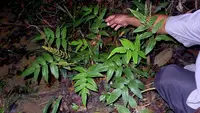
shiny filmy-fern Care (Hymenophyllum flabellatum)

Also known as: fan-like filmy fern
shiny filmy-fern

About shiny filmy-fern

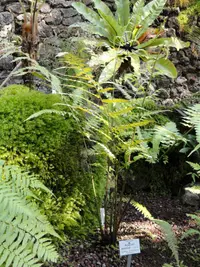
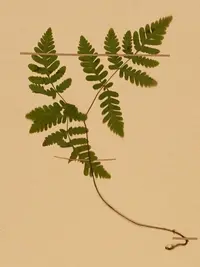
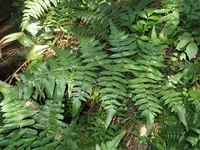
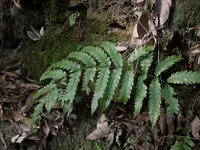
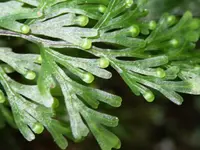
Shiny filmy-fern, Hymenophyllum flabellatum, is a delicate epiphytic fern with very thin, translucent fronds that often look almost like damp green lace. It usually grows on tree trunks, fallen logs, or moist rock in cool, shaded forests.

This species is native to wet, temperate regions of Australasia, where it thrives in constant humidity and shelter from direct sun and wind. Because its fronds are only one cell thick, it dries out quickly, which makes it challenging for many indoor growers.

Those who care for shiny filmy-fern need to provide stable moisture, high humidity, and gentle, filtered light. It suits terrariums or very humid indoor corners much better than typical dry household rooms.

Main Plant Requirements

Care Difficulty

Hard Care

Light Preference

Shade

Water Requirements

Keep Soil Moist

Temperature Preference

Cool Climate

Hardiness Zone

9–11

Soil Texture

Loamy, Peaty, Organic-rich

Soil pH

Strongly acidic (4.5–5.5), Acidic (5.5–6.5)

Soil Drainage

Moist but well-drained

Fertilization

Minimal (feed rarely)

Get Personalized Care Plan

Scan your plant to receive care tips personalized for your specific plant

Available on iOS and Android

How to Care for the shiny filmy-fern

This fern thrives in cool, shaded, very humid environments with consistently low light levels.

  • Provide 0–2 hours of weak, early morning sun only, with the rest of the day in deep shade or dense filtered light under trees or overhangs.
  • Site shiny filmy-fern on moist, shaded rock faces, tree bases, or south-facing walls in the Southern Hemisphere where direct midday and afternoon sun are blocked.
  • Watch fronds for bleaching, crisp brown edges, or transparent patches as signs of excessive light; very slow growth and sparse fronds indicate too little indirect light.

This fern requires constant surface moisture and high humidity rather than periodic drying.

  • Keep the root zone and surrounding substrate consistently moist; the surface should feel cool and never dry more than the top 1–2 cm in soil or moss.
  • Use fine, gentle watering or misting on rock faces, logs, or mossy substrates so Hymenophyllum flabellatum films stay damp without strong runoff that dislodges roots.
  • Reduce direct watering slightly in cool seasons but maintain high ambient humidity; wilting or curling fronds signal dryness, while blackened, mushy rhizomes indicate prolonged waterlogging and poor drainage.

This species prefers cool, frost-free conditions with high humidity and minimal temperature fluctuation.

  • Aim for 50–68°F (10–20°C) for steady growth, matching cool, sheltered forest or gully conditions with constant moisture and shade.
  • Protect the plant from frost; short dips to 35–40°F (2–4°C) may be survived if foliage stays moist and shaded, but repeated freezing damages the delicate fronds.
  • In warmer periods above 75°F (24°C), increase shade and humidity and avoid hot, drying winds; prolonged exposure above 82–86°F (28–30°C) stresses the plant and can cause frond dieback.

This fern needs extremely high humidity to keep its thin fronds hydrated and intact.

  • Aim for 80–100% humidity, as shiny filmy-fern naturally grows in constantly damp, misty habitats.
  • It tolerates only brief drops to 60–70% before frond edges crisp, curl, or become transparent and patchy.
  • Increase humidity with closed terrariums, covered glass cases, or placement over a water reservoir with strong air circulation.

This species prefers a constantly moist, airy, humus-rich substrate that mimics mossy rock or log surfaces.

  • Use a very loose mix such as 50% fine orchid bark, 25% sphagnum moss, and 25% perlite or pumice for structure and aeration.
  • Keep drainage rapid so water moves through within seconds, but ensure the mix stays evenly damp, never waterlogged or compacted.
  • Target a slightly acidic pH around 5.0–6.0, using peat or fine pine bark to acidify and avoid alkaline additives like limestone.
  • Avoid dense potting composts, heavy garden soil, or mixes with fine sand that reduce airflow around the delicate roots and rhizomes of Hymenophyllum flabellatum.

This fern can be grown in containers if the setup maintains constant moisture and very high humidity around the fronds.

  • Choose a shallow, wide pot or basket so the creeping rhizomes can spread horizontally rather than forcing deep root growth.
  • Use a plastic or glazed ceramic container to slow evaporation, then adjust watering to prevent the constantly moist mix from becoming stagnant.
  • Elevate the container on feet or a mesh stand so drainage holes remain clear and the base does not sit in collected runoff water.

This fern is sensitive to salts and needs only very light feeding in containers; plants on trees or rocks usually grow well without added nutrients.

  • Use a weak balanced liquid fertilizer (around 10-10-10), diluted to 1/4–1/8 strength, suitable for epiphytes.
  • Apply every 4–6 weeks during spring–summer only, onto moist substrate, never dry roots.
  • Skip feeding in autumn–winter, or give at most 1 very light application if growth remains active.
  • For caring for shiny filmy-fern long term, avoid slow-release pellets and heavy compost, which can burn delicate roots.

Pruning Hymenophyllum flabellatum focuses on hygiene rather than shaping.

  • Best time is late winter or early spring, before stronger growth begins.
  • Use fine, sharp scissors or snips to remove only dead, yellowed, or decayed fronds at the base.
  • Trim crowded, tangled fronds lightly to improve air flow without exposing rhizomes.
  • Avoid cutting healthy green fronds heavily, as this reduces photosynthesis and weakens the plant.

This fern dislikes disturbance, so repot or transplant only when clearly necessary.

  • Check for roots circling the container, creeping over pot edges, or persistent slow growth despite good care.
  • Plan any move for spring, and limit frequency to about every 3–4 years, or even less.
  • Shift into a slightly larger pot or mount, using a very airy medium such as fine bark, sphagnum, and perlite.
  • Handle rhizomes gently, keep roots shaded and moist throughout the process, and maintain high humidity after moving.

Propagation of Hymenophyllum flabellatum is specialized and usually left to experienced growers or laboratories.

  • Spore propagation is the main method, started in late spring or early summer.
  • Sow ripe spores on sterile, moist medium under very high humidity and low light, ideally in a closed container.
  • Maintain stable warmth (around 65–75°F) and avoid air movement that could dry the thin fronds.
  • Division is risky and should only involve small rhizome sections with several healthy fronds, kept constantly moist.

This fern is not frost hardy and needs careful winter management in most temperate regions.

  • Avoid exposure to freezing temperatures; keep indoor containers at 55–70°F in winter.
  • Move outdoor potted plants indoors to a humid, shaded area before night temperatures fall below 45°F.
  • Maintain high humidity with trays or humidifiers, and keep the substrate just lightly moist, never waterlogged.

Care Tips

Use living substrate

Mount the plant on living moss or well-hydrated sphagnum over bark so its extremely fine roots can anchor securely and stay evenly moist without becoming waterlogged.

Create boundary airflow

Place the plant where there is gentle, constant air movement (for example near, but not directly in front of, a small fan or open terrarium vent) to reduce fungal problems while still keeping humidity high around the fronds.

Shield from water splash

Water from the side or below the mount and avoid direct splashing on the fronds, which are only one cell thick and can be damaged or develop spots from repeated mechanical stress.

Layered shade management

Grow the plant under a taller, broader-leafed companion in the same container or terrarium to create a shaded, humid micro-layer that mimics its natural position under dense forest cover.

Frequent micro-checks

Inspect fronds and rhizomes briefly 1–2 times per week with a hand lens if possible, so any early drying, scale insects, or fungal patches are caught and corrected quickly when caring for shiny filmy-fern.

Common Pests and Diseases

Scale insects

This pest feeds along thin fronds and stems, causing yellowing, frond drop, and general decline in this moisture-loving fern. Symptoms include tiny brown or tan bumps that feel hard and do not rub off easily.

Solution

Isolate the plant, then gently wipe fronds and wiry stems with a cotton swab dipped in 70% isopropyl alcohol, taking care not to tear the very thin tissue. Improve air movement without lowering humidity, and repeat manual removal weekly until no new scale appears; for heavy infestations, a low-dose insecticidal soap labeled for ferns can be used as a careful spot treatment.

Fern aphids

These insects cluster on soft new fronds and rachises, sucking sap and causing distorted, stunted, or sticky growth. This pest tends to appear when the fern is slightly stressed by low humidity or poor air circulation.

Solution

Rinse the plant gently with lukewarm water to dislodge aphids, supporting the fronds to avoid damage. Follow with a light application of insecticidal soap or neem-based spray to the stems and undersides of fronds, and repeat every 5–7 days until no aphids remain, while keeping humidity high and avoiding direct sun.

Rhizoctonia leaf blight

This disease thrives in constantly wet, stagnant air and can cause brown, irregular patches that spread quickly across the translucent fronds. Symptoms include water-soaked lesions along frond margins that later dry and tear, leaving ragged edges.

Solution

Remove and discard affected fronds promptly, sterilizing scissors between cuts, and reduce overhead watering to keep fronds from staying wet for long periods. Increase gentle air movement around the plant without drafts, space plants to avoid leaf contact, and if spread continues, use a fern-safe fungicide containing a labeled active ingredient for Rhizoctonia, following product directions closely.

Botrytis gray mold

This disease develops in cool, very humid, still conditions, especially on older or damaged fronds. Symptoms include soft brown spots that develop a gray, fuzzy mold, particularly where fronds overlap or touch the pot rim or substrate.

Solution

Carefully prune and discard all affected tissue and any fallen debris from around the rhizomes, then improve ventilation while maintaining the high humidity needed for Hymenophyllum flabellatum care. Avoid misting directly onto the fronds, water at the base, and if necessary apply a mild, fern-safe fungicide targeted at Botrytis, ensuring the plant dries quickly after treatments.

Interesting Facts

Paper-thin frond structure

This fern’s fronds are only one cell layer thick, making them truly filmy and unable to retain water for long, so the plant relies almost entirely on ambient moisture rather than internal water storage.

Shade-loving rock specialist

In the wild it often grows on perpetually damp, shaded rock faces and cliff walls in New Zealand and southeastern Australia, anchoring with fine roots in mossy crevices rather than typical soil.

Moisture-dependent distribution

Its natural range closely follows cool, wet forest zones and misty gorges, and populations quickly disappear where forest cover is removed or humidity drops for extended periods.

Botan icon

Did you know?

In parts of New Zealand, this species and other filmy ferns are considered indicator plants for intact, high-humidity rainforest, so their presence is used by botanists to assess the ecological health and moisture stability of native forest remnants.

FAQs about shiny filmy-fern

Brown, crisp fronds usually indicate air that is too dry, exposure to moving air, or missed waterings. This species has extremely thin foliage that desiccates quickly, so increase humidity, keep substrate evenly moist, and protect it from drafts.

Grow Healthy Plants with Botan Care

Keep your plants happy and healthy with plant identification, disease detection, and easy care guidance.

Botan plant care app — identify plants on mobile

Explore More Plants