

Cool root zone
Mulch the root zone with 5–7 cm of fine bark or leaf mold to keep the soil cool and evenly moist, but pull mulch 3–5 cm back from the crown to prevent rot.

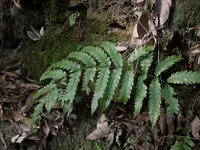
Woodwardia japonica, often called Japanese chain fern, is a moisture-loving, semi-evergreen fern grown mainly for its graceful arching fronds. It forms a clumping habit with long, finely divided leaves that create a soft, layered texture in shaded plantings.
This species is native to East Asia, where it grows in damp forests, stream banks, and other consistently humid sites. Its preference for cool, shaded, and sheltered conditions makes it best suited to mild climates or protected garden spots.
Once given steady moisture, rich organic soil, and protection from hot sun, it is relatively straightforward to care for Woodwardia japonica, especially for gardeners familiar with shade-loving ferns.

Care Difficulty
Moderate Care

Light Preference
Partial Shade

Water Requirements
Keep Soil Moist

Temperature Preference
Cool Climate

Hardiness Zone
6–9

Soil Texture
Loamy, Peaty, Organic-rich

Soil pH
Acidic (5.5–6.5)

Soil Drainage
Moist but well-drained

Fertilization
Minimal (feed rarely)
Scan your plant to receive care tips personalized for your specific plant
Available on iOS and Android
This fern prefers soft, woodland-style light that protects its delicate fronds from harsh sun.
Consistently moist, never stagnant soil supports healthy fern fronds and rhizomes.
This species prefers mild, cool-temperate conditions and dislikes extremes of heat or frost.
This fern needs consistently high humidity to maintain lush fronds.
Woodwardia japonica prefers moist, airy, organic-rich soil that never becomes waterlogged.
This species can grow well in containers when moisture and stability are carefully managed.
This fern grows best in humus-rich soil and benefits from light feeding during the growing season.
Pruning needs are minimal and mainly focus on hygiene and maintaining a tidy clump.
This fern is usually grown in the ground, with transplanting done only when crowding or poor performance appears.
Division is the most reliable method for increasing this fern in gardens.
This fern offers moderate cold tolerance but benefits from simple winter protection in colder regions.

Plant Health Check
Not sure what's wrong with your plant? Check your plant's health inside the app.
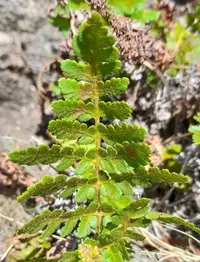
This species forms long, arching fronds with leaflets arranged in a distinctive chain-like pattern along the midrib, which is a key feature used by botanists to distinguish it from related chain ferns.
In the wild it typically grows on stream banks, humid ravines, and shaded slopes in East Asia, showing a strong preference for constantly moist, well-drained soils rich in organic matter.
In frost-free or very mild regions it often remains evergreen, retaining its fronds year-round, while in colder sites the foliage can be semi-evergreen or die back and resprout from the rhizome.
Brown leaf tips or edges usually result from low humidity, underwatering, or excess fertilizer salts. Entire fronds browning from the base can indicate age or root stress. Remove damaged fronds and correct the underlying moisture or salt issue.
Keep your plants happy and healthy with plant identification, disease detection, and easy care guidance.

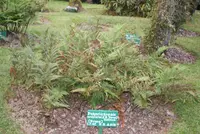
East Indian hollyfern
Arachniodes aristata
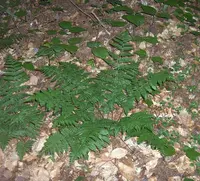
intermediate woodfern
Dryopteris intermedia
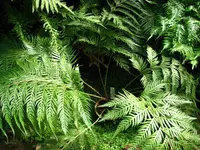
Woodwardia orientalis
Woodwardia orientalis
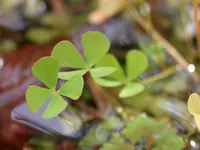
European waterclover
Marsilea quadrifolia
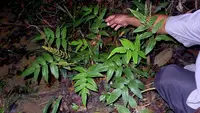
Anemia phyllitidis
Anemia phyllitidis
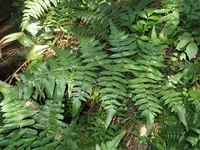
vegetable fern
Diplazium esculentum
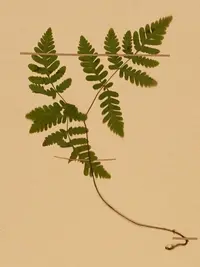
Pacific oakfern
Gymnocarpium disjunctum
Anemia tomentosa
Anemia tomentosa