

Mounting strategy
Grow this fern on a vertical slab of hardwood, cork, or synthetic epiphyte panel wrapped in long-fiber sphagnum so the roots anchor securely and the fronds hang in natural, moisture-retentive layers.

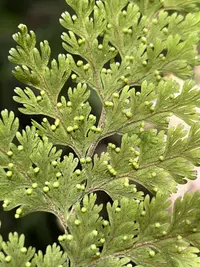
Hymenophyllum scabrum is a delicate filmy fern with very thin, almost translucent fronds that form soft, lacy mats. It usually grows on rocks, tree trunks, or damp banks in cool, shaded forests.
This species is native to parts of New Zealand and nearby regions, where it thrives in constantly moist, humid habitats. Its fronds dry out quickly if air or substrate moisture drops, which makes it more challenging than typical house ferns.
Those who want to care for Hymenophyllum scabrum should aim to mimic a shady, sheltered forest floor with gentle light, high humidity, and an airy but moisture-retentive substrate.

Care Difficulty
Hard Care

Light Preference
Shade

Water Requirements
Keep Soil Moist

Temperature Preference
Cool Climate

Hardiness Zone
9–11

Soil Texture
Peaty, Organic-rich, Loamy

Soil pH
Strongly acidic (4.5–5.5), Acidic (5.5–6.5)

Soil Drainage
Moist but well-drained

Fertilization
Minimal (feed rarely)
Scan your plant to receive care tips personalized for your specific plant
Available on iOS and Android
This fern prefers low to moderate light that mimics its shaded forest habitat.
This species needs consistently moist conditions without waterlogging the root zone.
This fern thrives in cool to mild, stable temperatures with high ambient humidity.
This filmy fern needs very high, consistently moist air to survive in cultivation.
This species prefers a very loose, mossy, constantly moist but airy substrate rather than dense mineral soil.
This fern can be grown in small containers or terrarium inserts if moisture and air are carefully balanced.
This fern is adapted to low‑nutrient forest habitats, so Hymenophyllum scabrum needs only very light feeding in cultivation.
Pruning is minimal and focuses on keeping fronds healthy and clean.
Thin, delicate roots and fronds mean this fern dislikes disturbance, so repot or transplant only when clearly needed.
This species is usually maintained rather than multiplied, since Hymenophyllum scabrum propagation is slow and delicate.
This fern is sensitive to freezing and benefits from thoughtful winter handling, especially in containers or cool climates.

Plant Health Check
Not sure what's wrong with your plant? Check your plant's health inside the app.
This species has leaf blades only one cell thick, which makes them translucent and extremely vulnerable to drying compared with most other ferns with thicker fronds.
Hymenophyllum scabrum is naturally restricted to very humid, shaded habitats such as cloud forests and wet rock faces, where frequent mist or dripping water keeps its tissue continuously moist.
It commonly grows as an epiphyte on mossy tree trunks and branches, but can also form mats on shaded, constantly damp rock surfaces, anchoring itself with fine, creeping rhizomes.
This fern is naturally slow-growing. In suitable cool, humid conditions, new fronds appear gradually through the growing season, but overall size increases only modestly each year. Limited root mass and delicate fronds keep height and spread quite restrained.
Keep your plants happy and healthy with plant identification, disease detection, and easy care guidance.

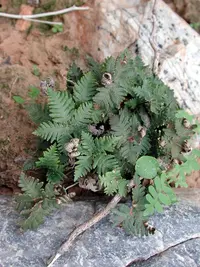
star cloak fern
Notholaena standleyi
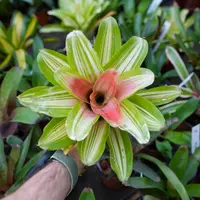
Neoregelia carolinae var. tricolor
Neoregelia carolinae var. tricolor
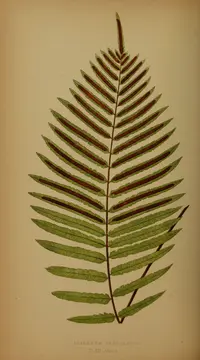
toothed midsorus fern
Telmatoblechnum serrulatum
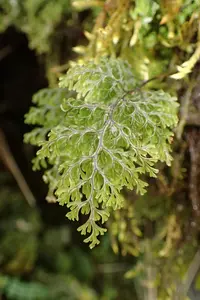
Hymenophyllum sanguinolentum
Hymenophyllum sanguinolentum
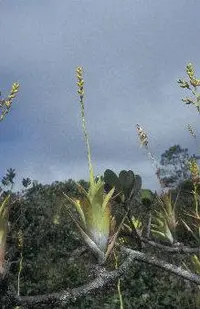
powdery strap airplant
Catopsis berteroniana
 POPULAR
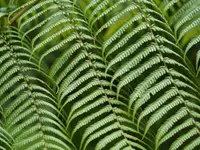
Tasmanian tree fern
Dicksonia antarctica
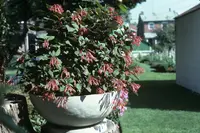
Fuchsia triphylla
Fuchsia triphylla
Diplazium proliferum
Diplazium proliferum