Pot choice strategy
Select a wide, shallow, unglazed clay pot with multiple drainage holes to mimic rocky crevice conditions and keep the root zone fast draining for this xeric fern.

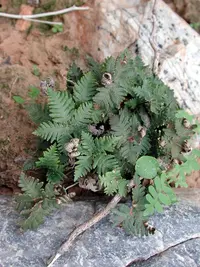
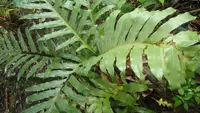
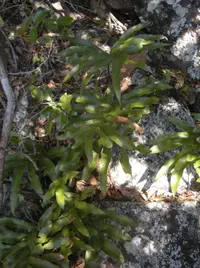
Star cloak fern, Notholaena standleyi, is a small xeric fern native to rocky deserts and arid canyons of the southwestern United States and northern Mexico. It often grows in crevices on sun-exposed cliffs and limestone outcrops.
Fronds are finely divided, with a silvery or gray-green coating that helps reduce water loss and gives the plant its distinctive, dusty look. The clumping habit stays compact, which suits small rock gardens and container displays.
Its drought tolerance and slow growth give it a different profile from typical moisture-loving ferns, but also mean it dislikes overwatering and heavy soils. Understanding how to care for star cloak fern starts with providing sharp drainage, good air flow, and bright, indirect to lightly filtered sun.

Care Difficulty
Moderate Care

Light Preference
Full Sun

Water Requirements
Low Water

Temperature Preference
Warm Climate

Hardiness Zone
8–11

Soil Texture
Sandy, Rocky, Loamy

Soil pH
Neutral (7.0), Slightly alkaline (7.0–7.5)

Soil Drainage
Well-drained

Fertilization
Minimal (feed rarely)
Scan your plant to receive care tips personalized for your specific plant
Available on iOS and Android
This small desert fern needs bright, direct light to thrive and keep its fronds compact.
Watering for this xeric fern should mimic brief desert rains followed by dry periods.
This fern is adapted to warm, dry climates with notable temperature swings.
This xeric fern tolerates very dry air, so humidity management is rarely critical indoors.
This desert fern needs a sharply draining, mineral-rich substrate that never stays wet for long.
This species is well suited to container growing when drainage and dryness are prioritized.
This drought-adapted fern needs only light feeding, since it is naturally adapted to lean, rocky soils.
Notholaena standleyi requires minimal pruning, mainly to keep the plant tidy and healthy.
This fern has a shallow, compact root system and dislikes frequent disturbance, so transplant only when clearly needed.
This species is most often propagated by spores, which is slow but maintains the species traits.
This dryland fern has good cold tolerance in many mild to moderately cold climates and usually needs little winter care.

Plant Health Check
Not sure what's wrong with your plant? Check your plant's health inside the app.
This fern grows on exposed desert rocks, where its fronds dry, curl, and appear dead during drought, then rapidly rehydrate and turn green again after rainfall.
The fronds often have a pale, waxy or farinose coating that reflects intense sunlight and reduces water loss, an unusual adaptation among ferns typically associated with moist habitats.
It anchors in cracks of limestone, sandstone, or volcanic rocks in arid regions of the southwestern United States and northern Mexico, using minimal soil and relying on brief moisture pulses to complete growth and spore production.

Chromosome studies have shown that this species is diploid and has been used in research on fern evolution and biogeography in arid North American regions, helping botanists understand how ferns adapted to desert climates.
This species is naturally adapted to dry, rocky outdoor habitats with high light and excellent drainage. It usually performs better outdoors in similar conditions; as a houseplant it can be difficult due to low light and excess humidity.
Keep your plants happy and healthy with plant identification, disease detection, and easy care guidance.