

Substrate hygiene
Remove and discard any decaying organic debris from the culture container or tray regularly to reduce mold competition and keep fruiting bodies developing cleanly.

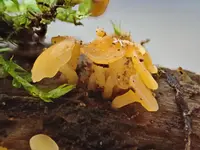
Hymenoscyphus calyculus is a small cup fungus, not a typical houseplant, and is usually found on decaying plant material in natural habitats. It forms tiny, pale cup-shaped fruiting bodies that appear in clusters, often overlooked due to their size.
This species occurs mainly in temperate regions, where it plays a role in breaking down dead leaves and stems. It is not commonly cultivated, and information on how to care for Hymenoscyphus calyculus in home settings is limited.
In nature it favors consistently moist, cool conditions and well-drained, organically rich substrates. Because it depends on specific decaying host material and microclimate, it is considered difficult to maintain outside its natural environment.

Care Difficulty
Moderate Care

Light Preference
Partial Shade

Water Requirements
Moderate Water

Temperature Preference
Warm Climate

Hardiness Zone
Unknown

Soil Texture
Loamy

Soil pH
Slightly acidic (6.5–7.0)

Soil Drainage
Well-drained

Fertilization
Minimal (feed rarely)
Scan your plant to receive care tips personalized for your specific plant
Available on iOS and Android
This fungus prefers low to moderate light typical of shaded woodland floors.
Moist, cool, but not waterlogged conditions best support this leaf-litter fungus.
Cool to mild temperatures support development of this species on fallen leaves.
This fungus is not typically grown as a house or garden specimen, so specific humidity control is rarely necessary.
This species is a saprophytic fungus that naturally colonizes decaying plant material, so conventional garden soil preparation is not applicable.
This species is not suitable for typical container growing as an ornamental or houseplant.
This saprophytic fungus typically grows on decaying plant material and does not require intentional fertilization in cultivation.
Hymenoscyphus calyculus does not need structured pruning, but limited hygiene work can be useful in managed settings.
This species is rarely grown in containers; management focuses on relocating or renewing its decaying substrate rather than classic repotting.
Propagation of Hymenoscyphus calyculus is mainly by spores and is not routinely managed by home growers.
Outdoor populations are naturally cold hardy and generally need no special winter care in temperate climates.

Plant Health Check
Not sure what's wrong with your plant? Check your plant's health inside the app.
This species forms very small, cup-shaped fruiting bodies (apothecia) on dead plant material, usually only a few millimeters across, which are typical for many discomycete fungi that release spores from an exposed surface.
It is frequently recorded on decomposing needle litter and small twigs of conifers, where it contributes to breaking down tough plant tissues and recycling nutrients in forest floor ecosystems.
Reliable identification depends on microscopic features such as the shape and size of its spores and asci, which are needed to distinguish it from other visually similar Hymenoscyphus species.
This is a small cup fungus with no established record as an edible species. It is not cultivated for food, and identification of tiny ascomycete fungi is difficult, so it is safest to treat it as inedible.
Keep your plants happy and healthy with plant identification, disease detection, and easy care guidance.

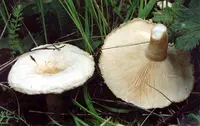
Downy milk cap
Lactarius pubescens
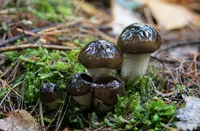
Hygrophorus fuligineus
Hygrophorus fuligineus
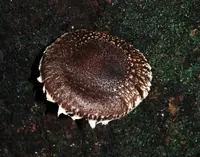
New Zealand shiitake
Lentinula novae-zelandiae
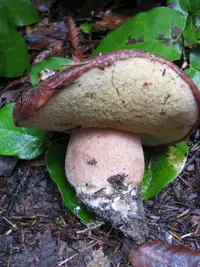
Queen Bolete
Boletus regineus
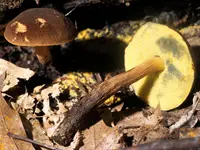
Boletellus chrysenteroides
Boletellus chrysenteroides
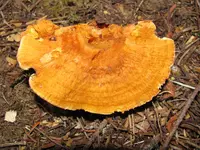
Pycnoporellus fulgens
Pycnoporellus fulgens
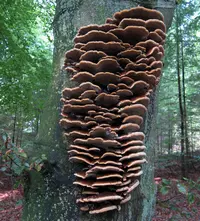
Clustered Bracket
Inonotus cuticularis
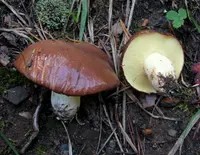
Short-stalked Suillus
Suillus brevipes