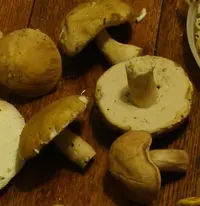
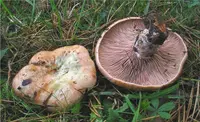
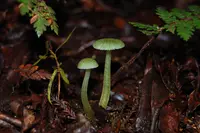
Clustered Bracket Care (Inonotus cuticularis)

Clustered Bracket

About Clustered Bracket

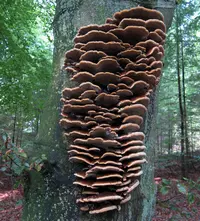
Clustered bracket, Inonotus cuticularis, is a wood-decaying bracket fungus rather than a traditional houseplant. It forms overlapping, fan-shaped fruiting bodies on dead or weakened hardwood trees, often in shaded, moist forests. Colors range from yellow-brown to dark brown, with a tough, corky texture. As a saprophyte, it helps break down wood and recycle nutrients in temperate ecosystems.

This species naturally occurs across parts of Europe, Asia, and North America, mainly in cool, humid woodland environments. It is not typically grown indoors, and attempts to care for Clustered Bracket focus on providing decaying hardwood, consistent moisture, and sheltered, low-light conditions outdoors.

Main Plant Requirements

Care Difficulty

Hard Care

Light Preference

Shade

Water Requirements

Keep Soil Moist

Temperature Preference

Cool Climate

Hardiness Zone

Unknown

Soil Texture

Loamy, Organic-rich

Soil pH

Acidic (5.5–6.5)

Soil Drainage

Moist but well-drained

Fertilization

Minimal (feed rarely)

Get Personalized Care Plan

Scan your plant to receive care tips personalized for your specific plant

Available on iOS and Android

How to Care for the Clustered Bracket

This wood-decay fungus prefers low to moderate light typical of shaded forests.

  • Provide dappled or filtered light under a tree canopy or on the shaded side of logs; 1–3 hours of weak morning sun is acceptable, while direct midday or afternoon sun can dry the substrate too quickly.
  • Clustered Bracket fruits best in partial to full shade, mimicking north- or east-facing woodland edges rather than open, exposed sites.
  • In summer, protect from strong sun and hot, reflective surfaces; in winter, reduced light is less critical as long as the host wood stays moist and not fully exposed.

This fungus depends on consistently moist, not waterlogged, wood rather than direct watering.

  • Check the host log or trunk; the outer 2–5 cm should feel slightly damp but not spongy or slimy before adding moisture to the area.
  • If cultivating Inonotus cuticularis on logs, hose or soak the wood when it feels dry and light, then let excess water drain away to avoid stagnant conditions.
  • In hot, windy periods, inspect moisture every few days; dark, shrinking caps indicate dryness, while soft, foul-smelling tissue suggests chronic over-saturation.

This species is adapted to cool to mild woodland climates with moderate seasonal variation.

  • Optimal growth and fruiting occur around 55–75°F (13–24°C), common in temperate forests during spring and fall.
  • The fungus tolerates short drops near 25°F (-4°C) once established, but repeated hard freezes below 20°F (-7°C) can damage exposed fruiting bodies.
  • Prolonged heat above 86°F (30°C), especially with dry air and sun-exposed wood, slows activity and can desiccate tissues, so shelter from extreme heat where possible.

This wood-decay fungus has low humidity demands when grown for study rather than ornamental display.

  • Ambient indoor humidity of 30–60% is usually adequate, as the mycelium develops inside moist wood or substrate rather than exposed air.
  • Humidity stress shows as stalled or patchy fruiting bodies, with edges drying, cracking, or failing to expand fully.
  • To support fruiting of Clustered Bracket, keep the colonized log or block slightly moist with occasional misting rather than trying to raise whole-room humidity.

Inonotus cuticularis develops on dead or living wood, so it needs a wood-based substrate rather than true soil.

  • Use a substrate of hardwood logs or chips with high lignin content, optionally mixed with coarse sawdust for structure and aeration.
  • Ensure the substrate drains freely yet stays evenly damp; waterlogged wood or chip piles without air flow encourage competing fungi and rot.
  • Maintain a slightly acidic environment around pH 5–6.5, which is typical for most hardwoods and supports stable mycelial growth.
  • Avoid mineral soil, dense compost, or peat-only mixes, which compact, hold stagnant water, and do not mimic the natural woody habitat of Inonotus cuticularis.

This species is suitable for container growing only when cultivated on wood-based substrates rather than potting soil.

  • Choose a sturdy, non-degradable container that fits the log or wood block snugly while leaving side gaps for air circulation and drainage space.
  • Elevate the container on blocks or a mesh stand so excess leachate can drain away and not pool around the wood.
  • Use an opaque or thick-walled container to limit light on the colonized substrate while still allowing fruiting bodies to emerge at openings or cutouts.

This wood-decaying fungus lives on host trees and normally does not need fertilization in garden or landscape settings.

Pruning focuses on removing infected wood on the host tree rather than shaping Inonotus cuticularis itself.

  • Inspect host trees in late winter or early spring when branches are bare and fruiting bodies are easy to see.
  • Cut out affected branches several inches below visible decay using clean, sharp pruning saws or loppers.
  • Disinfect tools between cuts with 70% alcohol or a 10% bleach solution to limit spread of fungal spores.
  • Dispose of removed wood off-site rather than chipping or composting to reduce reinfection risk.

Inonotus cuticularis is a wood-inhabiting fungus, so care focuses on managing colonized trees rather than repotting.

  • Transplanting is not recommended; the fungus is established within the heartwood and cannot be moved without the host tree.
  • If a colonized tree declines or becomes hazardous, schedule removal during dormant season for lower stress on surrounding vegetation.
  • After removal, grind or extract stumps where feasible to lower inoculum levels in high-value planting areas.
  • When replanting nearby, choose healthy, stress-tolerant tree species and maintain good watering and soil care to reduce new infections.

Intentional propagation of this decay fungus is not recommended in managed gardens or landscapes.

This fungus is cold hardy on host trees and usually needs no dedicated winter care.

  • Clustered Bracket fruiting bodies naturally weather and die back in freezing conditions without special intervention.
  • If infected branches become brittle in winter, arrange safe removal to prevent breakage near paths or structures.
  • For container-grown host trees, any winter protection should focus on tree root health rather than the fungus itself.

Care Tips

Select host logs

Use freshly cut, disease-free hardwood logs such as beech or maple with intact bark, as this species is a wood-decay fungus that establishes best on sound, recently felled material rather than old, heavily decomposed wood.

Control competing fungi

Before inoculation, store logs off bare soil and under cover, and briefly submerge them in clean water or steam-treat the surface if possible, to reduce existing fungal competitors that would otherwise outgrow your spawn.

Optimize inoculation pattern

Drill small, evenly spaced holes in a staggered grid along the log and seal inoculated points with food-grade wax so the mycelium can colonize efficiently while staying protected from drying and contamination.

Maintain shaded airflow

Place inoculated logs in a shaded, wind-sheltered but airy location, raised slightly off the ground on bricks or pallets so the wood stays moist without remaining in constant contact with wet soil, which encourages rot and unwanted fungi.

Monitor colonization progress

Periodically check cut ends and bark for white to cream mycelial growth under the surface; if colonization appears slow and the wood is drying, soak the logs in clean, cool water for 12–24 hours, then return them to their shaded rack to support growing Clustered Bracket.

Common Pests and Diseases

White rot of hardwoods

This disease causes a slow, selective decay of lignin in hardwood trunks and branches, leaving wood pale, stringy, and structurally weakened. Symptoms include thin, clustered brackets emerging from bark on already stressed or dying trees.

Solution

Management relies on arboricultural practices rather than treating the fungus directly: remove and safely dispose of heavily decayed limbs, avoid wounding host trees, and monitor structural stability of infected trunks. In managed landscapes, a certified arborist should assess hazard trees and, if necessary, remove or reduce the canopy to prevent limb or stem failure.

Bark canker complex

This disease results from the fungus colonizing existing bark injuries and dead patches, where brackets form around cankered, sunken, or cracked areas. Symptoms include dieback above the infected zone and progressive girdling of small branches or stems.

Solution

Prune out affected branches well below visible cankers during dry weather and disinfect tools between cuts with 70% alcohol or a 10% bleach solution. Reduce stress on host trees by avoiding soil compaction, overmulching, and unnecessary bark wounds, since healthy trees are less likely to develop extensive canker formation.

Wood-boring beetles

These insects exploit the structurally weakened, fungus-colonized wood, creating galleries that accelerate decay and can lead to branch breakage. Symptoms include small exit holes, fine frass under the trunk or branches, and increased brittleness of infected wood.

Solution

Remove and destroy severely infested and decayed branches to reduce habitat for borers and lower breakage risk. In high-value trees, an arborist may recommend targeted trunk or systemic insecticides, alongside improving tree vigor through proper watering, mulching, and avoiding additional mechanical injury.

Sap beetles

These insects are attracted to the moist, spore-producing surfaces of the brackets and may help spread spores to new wounds or trees. This pest can also introduce secondary fungi and bacteria into fresh injuries on susceptible hosts.

Solution

Limit attraction by removing loose, heavily sporulating brackets from high-traffic or sensitive areas and disposing of them away from host trees. Keeping pruning wounds small, making clean cuts, and timing pruning during drier, cooler periods reduces fresh entry points and lowers beetle and pathogen activity.

Interesting Facts

Specialist on smooth-barked trees

This fungus strongly prefers smooth-barked broadleaf trees, especially beech, hornbeam, and birch, and is rarely found on rough-barked hosts. It typically colonizes shaded, humid forests where such trees are abundant.

White rot wood decay

It causes white rot, a type of decay where the fungus breaks down both lignin and cellulose, leaving wood pale and fibrous. This process plays an important role in nutrient cycling and structural weakening of older trees.

Annual brackets with zoned caps

The fruiting bodies are thin, leathery brackets that form new each year, usually in overlapping shelves. Their upper surface often shows fine concentric zoning and a velvety to finely hairy texture that helps distinguish it from similar bracket fungi.

Botan icon

Did you know?

Molecular studies have shown that this species is part of a distinct lineage within the Hymenochaetaceae, and its presence is sometimes used by forest ecologists as an indicator of long continuity of mature, undisturbed broadleaf woodland in parts of Europe.

FAQs about Clustered Bracket

This fungus spreads slowly through the heartwood of already stressed or wounded broadleaf trees. It does not jump rapidly between healthy hosts but can gradually expand within a trunk, causing internal decay over several years.

Grow Healthy Plants with Botan Care

Keep your plants happy and healthy with plant identification, disease detection, and easy care guidance.

Botan plant care app — identify plants on mobile

Explore More Plants