Suede Bolete Care (Xerocomus subtomentosus)

Also known as: Boring Brown Bolete
Suede Bolete

About Suede Bolete

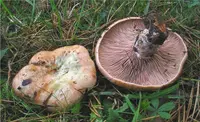
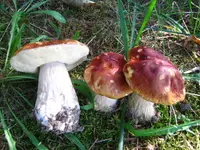
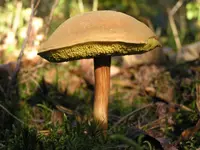
Suede bolete, Xerocomus subtomentosus, is a wild mushroom-forming fungus, not a true garden plant. It typically produces yellow‑brown, velvety caps with a pale pore surface and a sturdy, light-colored stem. Caps often crack slightly in dry weather, giving a patchy appearance.

This species grows in mixed woodlands, often with broadleaf trees, across temperate regions of Europe and North America. It forms mycorrhiza, a nutrient-exchanging partnership with tree roots, so it does not adapt well to regular pot culture.

Because it depends on living trees and specific soil fungi, it is considered challenging to cultivate intentionally. Most people who want to care for Suede Bolete focus on protecting its woodland habitat rather than growing it indoors or in containers.

Main Plant Requirements

Care Difficulty

Moderate Care

Light Preference

Partial Shade

Water Requirements

Keep Soil Moist

Temperature Preference

Cool Climate

Hardiness Zone

Unknown

Soil Texture

Loamy, Silty, Organic-rich

Soil pH

Acidic (5.5–6.5), Slightly acidic (6.5–7.0)

Soil Drainage

Moist but well-drained

Fertilization

Minimal (feed rarely)

Get Personalized Care Plan

Scan your plant to receive care tips personalized for your specific plant

Available on iOS and Android

How to Care for the Suede Bolete

This ectomycorrhizal fungus prefers woodland light conditions rather than full open sun.

  • Provide bright dappled shade or light filtered sun under trees, with about 2–4 hours of gentle morning sun and no harsh afternoon exposure.
  • Allow partial shade (under a canopy or near shrubs); fruiting bodies form best where leaf litter stays slightly moist but not dark and sunless all day.
  • Avoid full, unbroken midday sun, which can dry the soil surface quickly and shorten Suede Bolete fruiting, especially during warm, dry spells.

This forest-dwelling fungus depends on evenly moist, well-drained soil around its tree partners.

  • Aim for soil that stays slightly moist in the top 3–5 cm, never waterlogged; natural rainfall usually suffices in many temperate woodlands.
  • In dry periods, use gentle irrigation that mimics rain, stopping if puddles form; Xerocomus subtomentosus declines in compacted, saturated ground.
  • Watch for signs of stress such as cracked, very dry soil (too little moisture) or slimy, collapsing fruiting bodies and standing water (too much moisture).

This species prefers cool to mild conditions typical of temperate woodlands.

  • Optimal fruiting occurs around 55–70°F (13–21°C), with mycelium growth continuing across a somewhat wider cool range in the soil.
  • The organism tolerates cool nights down to about 32°F (0°C), but repeated hard freezes below 28°F (-2°C) damage exposed fruiting bodies.
  • Heat above 80–85°F (27–29°C), especially combined with dry soil, shortens cap lifespan; shaded, moist forest microclimates buffer summer extremes for how to take care of Suede Bolete.

This ectomycorrhizal mushroom prefers ambient outdoor humidity and usually does not need targeted humidity management in cultivation.

This mushroom fruits best in loose, moist, aerated soil that supports its tree-root partners.

  • Aim for a loamy, organic-rich mineral soil with 10–30% leaf litter or compost worked into the upper 10–15 cm.
  • Ensure free drainage; soil should hold moisture yet never stay waterlogged, as stagnant conditions suppress mycelium growth.
  • Keep pH slightly acidic to neutral, around 5.0–6.5, which favors Xerocomus subtomentosus association with host trees.
  • Avoid compacted clay, heavy peat-only substrates, or sterilized mixes; these reduce aeration and microbial partners essential for fruiting.

This species is generally unsuitable for container growing because it relies on extensive root associations with mature trees in undisturbed soil.

This mycorrhizal fungus grows with host tree roots and generally does not need supplemental fertilizer in natural or garden soils.

Xerocomus subtomentosus is not pruned in the usual horticultural sense, but minimal hygiene around the fruiting area is useful.

  • Remove decaying, moldy, or insect-riddled mushrooms with a clean knife to limit disease spread in the patch.
  • Cut mushrooms at the base rather than pulling to avoid disturbing fine tree roots and fungal mycelium.
  • Clear only heavy leaf mats or debris that block air flow; leave normal leaf litter to support soil life.

This species is a mycorrhizal mushroom that associates with living trees, so care focuses on transplanting host trees rather than moving the fungus itself.

  • Transplant young host trees in cool, moist seasons such as early spring or early fall to limit stress.
  • Choose a site with similar light, soil type, and drainage to the original location to help the fungal network reestablish.
  • Minimize root disturbance when lifting and planting the tree, keeping as much native soil around the roots as possible.
  • Water deeply after transplanting and maintain even soil moisture until new root growth stabilizes.

Propagation of Xerocomus subtomentosus is challenging because it depends on a living tree partner and complex soil conditions.

In the ground, this fungus is naturally cold hardy across most temperate climates and usually needs no special winter care.

  • Allow fallen leaves to remain as a light mulch over the root zone to buffer soil temperature and conserve moisture.
  • Avoid deep soil disturbance or heavy compaction in winter so the underground mycelium stays intact.
  • Container-grown host trees in very cold climates can be moved to a sheltered, unheated space to prevent root freezing.

Care Tips

Host tree selection

Establish the fungus near compatible host trees such as oak, beech, or birch, since Suede Bolete forms mycorrhiza with their roots and will fruit more reliably when growing in a stable, mixed woodland setting.

Minimal soil disturbance

Mark the fruiting area and avoid digging, heavy raking, or compacting the soil there, because undisturbed leaf litter and fine roots help maintain the mycelial network that supports regular fruiting.

Leaf litter management

Allow a light, continuous layer of deciduous leaf litter to remain over the colonized area, only removing thick, matted layers that block gas exchange, to keep moisture while still letting the soil breathe.

Gentle harvesting method

Cut the mushrooms at the base with a clean knife rather than pulling them out, and replace any disturbed leaf litter, so the underground mycelium stays intact for future flushes.

Drought protection strategy

During extended dry spells, lightly irrigate the surrounding root zone of the host trees (not directly on the fruit bodies) in the evening to buffer the mycelium against desiccation and support more consistent yields when caring for Suede Bolete.

Common Pests and Diseases

Mycophagous insects

These insects feed directly on the fruiting bodies, causing pits, tunnels, and premature collapse of caps and stems. Symptoms include soft, discolored tissue and visible larvae or small beetles within the mushroom flesh.

Solution

Harvest fruiting bodies promptly when they reach maturity and discard any with obvious tunneling or larvae. Where collection is allowed, trim away damaged tissue in the field, avoid leaving cut stems in place, and reduce nearby decaying organic piles that attract fungus-feeding insects.

Parasitic fungi

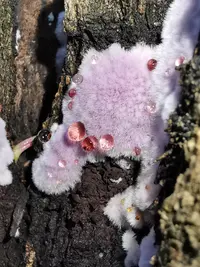
This disease appears as abnormal surface growths, discoloration, or rapid degradation of the cap and pores, often starting as small spots that spread across the fruiting body. Symptoms include deformed caps and a felted or moldy coating that overrides the normal suede-like texture.

Solution

Remove and discard affected fruiting bodies as soon as they are noticed to limit spore spread. Avoid disturbing or trampling the surrounding mycelium layer, and do not transport visibly parasitized mushrooms with healthy collections to other areas.

Slug and snail damage

These invertebrates graze on caps and stems, leaving large irregular bite marks, slime trails, and sometimes only the stem base remaining. Symptoms include rapid loss of cap tissue overnight and wet, ragged edges on the remaining mushroom parts.

Solution

Harvest mushrooms as soon as they are in good condition, since delay increases grazing damage. In gardens or private woodland, hand-pick slugs and snails in the evening and reduce dense groundcover or debris that provides their daytime hiding places, while avoiding direct disturbance of the fungal habitat.

Bacterial soft rot

This disease causes patches of water-soaked, slimy tissue on caps and stems, often with a sour odor and rapid collapse of the fruiting body. Symptoms include glassy, translucent areas that quickly turn mushy and disorganized.

Solution

Do not harvest or consume mushrooms showing soft, slimy, or foul-smelling patches; remove and leave them on site to decompose naturally, without mixing them with healthy specimens. For foragers focused on caring for Suede Bolete populations, avoid handling slimy mushrooms and then touching healthy ones, and minimize collecting during extended wet, warm periods when soft rot is common.

Interesting Facts

Widespread mycorrhizal partner

This bolete forms ectomycorrhizal associations with a wide range of trees, including oaks, beeches, birches, and conifers, which helps these hosts absorb water and mineral nutrients more efficiently.

Color-changing pores

The pores on the underside of the cap are yellow when young but slowly turn olive and may show faint bluish or greenish bruising when handled, a subtle reaction that helps separate it from more strongly blue-staining boletes.

Suede-like cap surface

The cap surface is densely velvety when young, giving the characteristic suede appearance that inspired its common name, and gradually becomes smoother and sometimes slightly cracked with age or dry weather.

Botan icon

Did you know?

This species tolerates a wide range of soil types, from acidic sandy substrates to more neutral loams, which contributes to its broad distribution across temperate regions of Europe, Asia, and North America and makes growing Suede Bolete possible in many different forest habitats.

FAQs about Suede Bolete

This mushroom is considered edible when correctly identified, but quality is moderate and texture can become soft. As with all wild fungi, misidentification risks serious poisoning, so only consume specimens confirmed by an experienced mycologist.

Grow Healthy Plants with Botan Care

Keep your plants happy and healthy with plant identification, disease detection, and easy care guidance.

Botan plant care app — identify plants on mobile

Explore More Plants