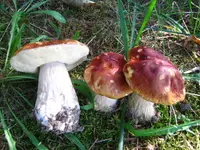
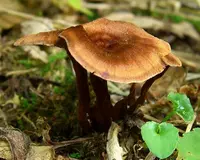
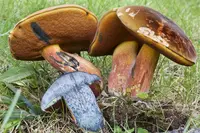
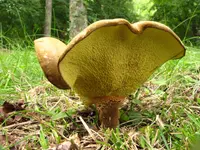
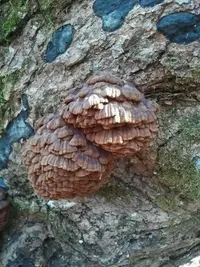
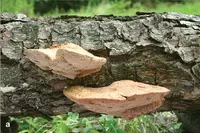
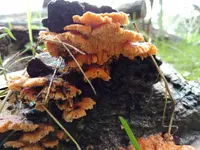
Purple Fuzz Care (Punctularia atropurpurascens)

Also known as: Violet Crust, Violet Crust Fungus
Purple Fuzz

About Purple Fuzz

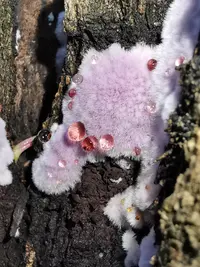
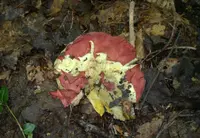
Purple Fuzz is a crust-like wood-decay fungus, not a typical leafy houseplant. It forms thin, velvety patches with a distinctive lilac to deep purple surface. The texture is usually fine and fuzzy, which gives rise to its common name.

Punctularia atropurpurascens naturally colonizes dead or decaying wood in temperate forests, especially on fallen branches and logs. It plays an ecological role in breaking down lignin and other woody tissues.

In cultivation, it is rarely grown intentionally and is better viewed as a curiosity for fungus enthusiasts than a decorative feature. It has specific substrate and humidity needs, so attempts to care for Purple Fuzz at home are usually challenging without controlled, specialized conditions.

Main Plant Requirements

Care Difficulty

Moderate Care

Light Preference

Partial Shade

Water Requirements

Moderate Water

Temperature Preference

Warm Climate

Hardiness Zone

Unknown

Soil Texture

Loamy, Organic-rich

Soil pH

Slightly acidic (6.5–7.0)

Soil Drainage

Well-drained

Fertilization

Minimal (feed rarely)

Get Personalized Care Plan

Scan your plant to receive care tips personalized for your specific plant

Available on iOS and Android

How to Care for the Purple Fuzz

This crust fungus prefers stable, shaded woodland light with only brief weak direct sun.

  • Provide bright dappled or filtered light, such as under a deciduous canopy, with no more than 1–2 hours of low-intensity morning sun per day.
  • Aim for conditions that mimic a north- or east-facing woodland edge; sustained strong midday or afternoon sun can desiccate the substrate and fade the Purple Fuzz surface.
  • In summer, protect from canopy gaps that create sudden full sun, while in winter increased indirect light is acceptable if humidity and moisture remain high.

This wood-decaying fungus depends on consistently moist, not waterlogged, substrate rather than direct watering to the fruiting body.

  • Maintain host wood or woody debris evenly moist; if managed in a garden, water when the outer 2–5 cm of the log or bark feels only slightly damp, not dripping.
  • Ensure excellent drainage around the wood so free water does not pool, since prolonged saturation encourages competing molds and bacterial rot.
  • Reduce supplemental watering in cool, wet seasons and increase during hot, dry spells; signs of underwatering include brittle, pale crusts, while sour odor and slimy patches suggest over-saturation affecting Punctularia atropurpurascens.

This species develops best in cool to mild, stable woodland temperatures without hard freezes or extreme heat.

  • Aim for 50–70°F (10–21°C) for active growth, with the most reliable fruiting often in the 55–65°F (13–18°C) range under consistent moisture.
  • It tolerates brief drops to around 32°F (0°C), but repeated hard frost or freeze–thaw cycles can damage the fruiting crust and dry the substrate.
  • Sustained heat above 80–85°F (27–29°C), especially with low humidity, slows activity and can cause crust shrinkage, so favor shaded, humid microsites during hot summers.

Humidity is not a significant factor for this crust fungus compared with substrate and moisture availability.

This wood-decaying fungus relies on the right woody substrate rather than conventional soil conditions.

  • Grow Punctularia atropurpurascens on well-seasoned hardwood with a coarse, fibrous structure instead of any mineral soil mix.
  • Choose logs or thick branches that drain freely and do not stay waterlogged, as stagnant moisture encourages competing molds.
  • Keep the substrate slightly moist but never saturated by using intermittent soaking or misting rather than constant submersion.
  • Avoid conifer wood, treated lumber, or substrates contaminated with oils or chemicals, which can inhibit fungal colonization.

This species is only loosely suitable for container growing when cultivated on wood sections rather than in potting soil.

  • Stand hardwood logs vertically or at a stable angle in a heavy container to prevent tipping as the wood softens over time.
  • Fill gaps around the wood with coarse gravel or large bark chunks to improve air movement and avoid stagnant moisture at the base.
  • Use a non-porous container if higher moisture retention is needed, monitoring closely so the lower part of the wood does not stay submerged.

This crust-forming wood fungus usually needs no fertilizer when growing on suitable dead wood substrates.

Punctularia atropurpurascens does not require conventional pruning, but some management of its host wood may be useful in cultivated or display settings.

  • Remove heavily decayed, unsafe, or unwanted host branches or logs during dry weather to limit accidental spread and maintain safety.
  • Cut and dispose of colonized wood with clean saws or loppers if the fungus appears on structural or valuable trees.
  • Avoid frequent disturbance of lightly colonized logs to allow stable fruiting and easier observation.
  • Disinfect tools after cutting infected wood to reduce chances of transferring decay organisms to healthy trees.

This species is not grown in pots; care focuses on positioning or replacing colonized wood rather than repotting.

  • Select fresh, non-treated hardwood logs or branches if aiming to encourage new colonization, placing them in shaded, humid positions.
  • Move display logs only when fruiting bodies are dormant and the wood is stable, to limit physical damage.
  • Avoid frequent relocation; fungal mycelium inside the wood is sensitive to cracking and desiccation after severe disturbance.
  • Replace fully decayed or crumbling logs with new wood pieces if long-term observation of Purple Fuzz is desired.

Propagation of this wood-inhabiting fungus is specialized and not typically attempted by casual growers.

This fungus is naturally cold hardy in temperate climates and generally needs no special winter care once established on suitable wood.

Care Tips

Stable host choice

Install this crust fungus only on permanently placed, untreated hardwood logs or dead branches in a shaded spot, so the host does not get moved or cleaned and the mycelium can establish undisturbed over several seasons.

Encouraging colonization

Lightly roughen smooth bark or wood with a wire brush before inoculation so spores or colonized chips catch in the surface texture and the fungus can penetrate the outer layers more easily.

Moisture buffering

Mulch the soil around the host log with a 3–5 cm layer of wood chips or leaf litter to buffer moisture swings and create the cool, humid microclimate that favors consistent fruiting.

Minimal surface disturbance

Avoid scrubbing, scraping, or brushing the purple crust, and if debris must be removed, gently rinse with low-pressure water so the thin fruiting layer is not damaged.

Seasonal monitoring

During dry or windy periods, briefly mist the surrounding air and nearby substrate in the early morning rather than the fungus directly, and keep a simple log of when fruiting bodies appear to refine long-term Punctularia atropurpurascens care.

Common Pests and Diseases

Competing wood-decay fungi

This disease involves other aggressive wood-decay fungi colonizing the same log or stump, reducing Purple Fuzz fruiting and vigor. Symptoms include patchy or declining purple crusts and replacement by other colored fungal crusts or brackets.

Solution

Physically remove heavily competing fruiting bodies from the same substrate and, if possible, provide fresh, undecayed hardwood for new colonization to support stable Punctularia atropurpurascens care instructions. Maintain moderate, consistent moisture and good airflow so the host wood does not become excessively wet and anaerobic, which favors stronger competitors.

Mite grazing

These insects are tiny arachnids that feed on the spore-bearing surface, leaving dull, roughened, or lightly pitted patches on the purple crust. Symptoms include uneven discoloration, fine surface scarring, and reduced spore production on affected areas.

Solution

Limit very dry, stagnant conditions by keeping humidity moderate and ensuring gentle air movement, as extreme dryness encourages mite activity. If damage is significant, lightly mist and brush the surface with a soft, clean brush to remove mites and damaged tissue, avoiding excessive water that could cause secondary decay issues.

Bacterial surface rot

This disease develops on persistently waterlogged fruiting bodies, causing slimy patches, sour or unpleasant odor, and eventual collapse of sections of the purple crust. Symptoms include soft, translucent areas and loss of the normal dense, felted texture.

Solution

Reduce continuous wetting by improving drainage around the wood, avoiding direct overhead irrigation, and ensuring air can move freely around the substrate. Remove and discard severely softened or slimy sections with a clean tool, then allow the remaining tissue and wood surface to dry slightly between wet periods to discourage further bacterial growth.

Mold overgrowth

This disease occurs when fast-growing molds colonize the wood or existing crust, forming white, gray, or green fuzzy layers over the purple surface. Symptoms include a powdery or cottony coating that obscures the normal color and texture and may halt spore release.

Solution

Increase airflow and reduce excess humidity peaks by spacing substrates apart and avoiding enclosed, poorly ventilated spots. Gently wipe or brush away mold growth from the surface, then adjust watering or misting frequency so the wood remains moist but not dripping for long periods, limiting mold advantage while allowing the crust fungus to recover.

Interesting Facts

Crust-like fruiting body

This species forms thin, resupinate fruiting bodies that lie flat and tightly attached to the underside of dead wood, creating a smooth crust rather than the typical mushroom cap and stem.

Distinct purple coloration

The fertile surface is characteristically violet to purple, a coloration that helps distinguish it from many other corticioid fungi that are usually whitish or pale.

Wood-decaying specialist

It is a saprotrophic fungus that decomposes dead hardwood, contributing to nutrient cycling in forest ecosystems by breaking down complex plant polymers such as cellulose.

FAQs about Purple Fuzz

This crust fungus is best grown outdoors on decaying hardwood, its natural substrate. Indoor cultivation is difficult without controlled humidity, fresh air exchange, and sterilized wood. For most people, outdoor observation on naturally fallen logs is more practical.

Grow Healthy Plants with Botan Care

Keep your plants happy and healthy with plant identification, disease detection, and easy care guidance.

Botan plant care app — identify plants on mobile

Explore More Plants